Image 1 of 5
1 / 5
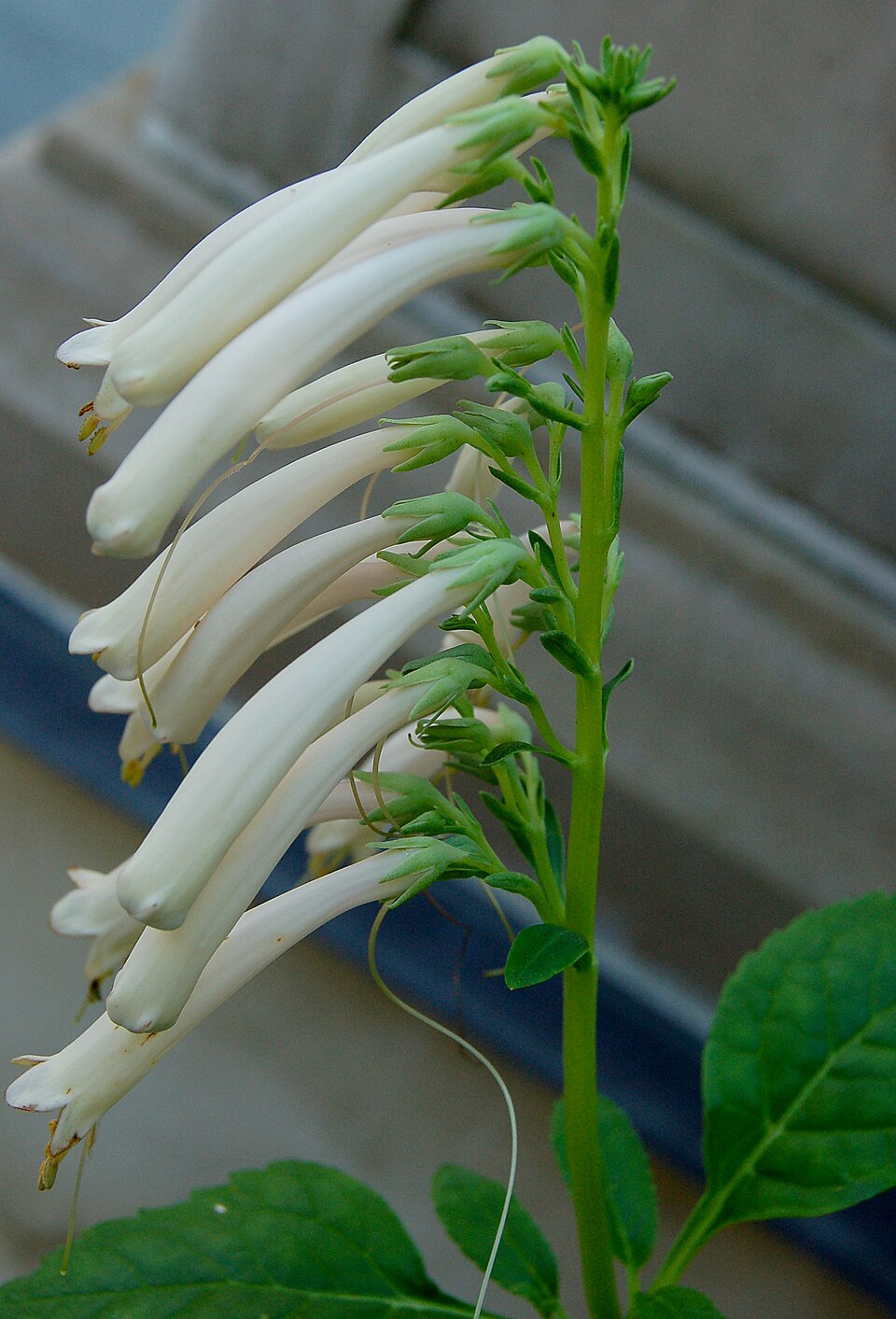
© Photo by and (c)2006 Derek Ramsey (Ram-Man). Location credit to the Chanticleer Garden., some rights reserved (CC-BY-SA) · Wikimedia Commons
Phygelius, Genus, ×, Hybrid, rectus, Species,
- Genus & species
- Hybrid
Cape fuchsia
South Africa and Lesotho (parent species); hybrid of garden origin
Overview
Phygelius × rectus is the cape fuchsia, a semi-evergreen perennial growing 36–60 inches (90–150 cm) tall and 36–48 inches (90–120 cm) wide. One-sided panicles of pendant tubular flowers 1.5–2 inches (4–5 cm) in orange-red, salmon, yellow, or cream from midsummer through fall (July–October) — a 10–12 week bloom season. Not a true fuchsia (Fuchsia) — the common name 'cape fuchsia' references the pendant tubular flower shape and the South African ('Cape') origin. A hybrid between P. aequalis and P. capensis, both native to streambanks and moist rocky slopes in the Drakensberg mountains of South Africa and Lesotho. In the figwort family (Scrophulariaceae). Hummingbird-visited — the pendant tubular flowers are a late-season nectar source. Spreads by suckering underground stems — can colonize adjacent ground. Semi-evergreen in zones 8–9; dies to the ground in zone 7 and regrows from the roots in spring (mulch the crown). Cultivars: 'Moonraker' (cream-yellow), 'Devil's Tears' (orange-red), 'African Queen' (salmon-orange). Cut to the ground in early spring in zones where it dies back. Drought-tolerant once established. Non-toxic. Deer-resistant. Full sun. Zones 7–9. Growth rate is fast.
Native Range
Hybrid of garden origin — P. aequalis and P. capensis are native to streambanks and moist rocky slopes in the Drakensberg mountains of South Africa and Lesotho.Suggested Uses
Grown in borders and containers in zones 7–9. The 10–12 week bloom season and the hummingbird attraction are the features. Spreads by suckering. 'Moonraker' for cream-yellow. Non-toxic. Deer-resistant.How to Identify
Appearance
Size & Dimensions
Height3' - 5'
Width/Spread3' - 4'
Bloom Information
Detailed Descriptions
Flower Description
Orange-red, salmon, yellow, or cream depending on cultivar; tubular, pendant, 1.5-2 inches (4-5 cm), in one-sided paniclesFoliage Description
Dark green, ovate, opposite, 2-4 inches (5-10 cm), finely toothedGrowing Conditions
Sun Requirements
Requires 5-10 hours of direct sunlight daily
• Full Sun: 6+ hours of direct sunlight
• Partial Shade: 3-6 hours of direct sunlight
• Full Shade: Less than 3 hours of direct sunlight
Care & Maintenance
Care Guide
Full sun. Dies to the ground in zone 7 (mulch crown) — semi-evergreen in zones 8–9. Spreads by suckering underground stems. Cut to ground in early spring. Drought-tolerant once established. Hummingbird-visited. Non-toxic. Deer-resistant. Zones 7–9.Pruning
Cut to the ground in early spring (March) in zones where it dies back. Remove spent flower panicles during bloom. Contain suckering spread by removing unwanted shoots.Pruning Schedule
Prune: March
early spring
Container Growing
Suitable for container growing
Minimum container size: 5 gallons