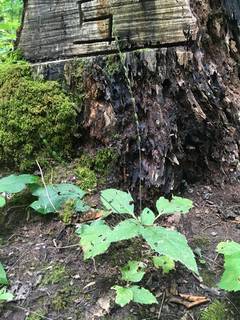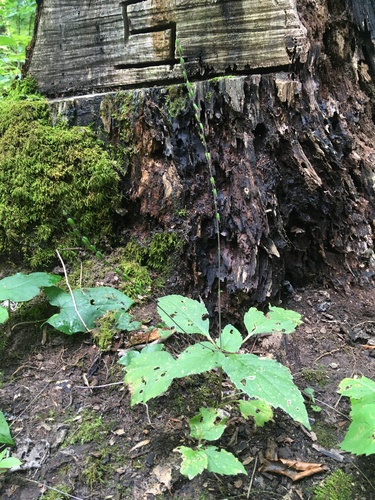
Phryma, Genus, spp., Multiple species,
- Genus
- Multiple species
lopseed
Eastern North America and temperate East Asia
Overview
Phryma is a small genus of perennial herbs in the family Phrymaceae, traditionally treated as the single species Phryma leptostachya with North American and East Asian populations sometimes separated as varieties. Plants grow upright on slender four-angled stems 12-36 inches (30-90 cm) tall from a short rhizome. The opposite leaves are ovate, coarsely toothed, and 2-6 inches (5-15 cm) long, tapering to a pointed tip. Small two-lipped flowers, 0.2-0.3 inch (5-8 mm) long and white to pale pink or lavender, are spaced in pairs along slender terminal and axillary spikes. As each flower fades, the developing fruit bends sharply downward and presses flat against the spike, a movement that gives rise to the common name lopseed. The single-seeded fruits are enclosed by the persistent calyx, whose hooked teeth catch on fur and clothing for dispersal. Phryma grows in the shade of deciduous woodlands on moist, humus-rich soils, and spreads slowly into open colonies. It tolerates deep shade but flowers sparsely there, and the thin spikes carry little color, so it is grown mainly as woodland groundcover rather than for floral show.
Native Range
Phryma leptostachya occurs across eastern and central North America and, as eastern Asian populations, in China, Korea, Japan, and the Himalaya. It grows on the floor of moist deciduous and mixed woodlands.Suggested Uses
Used as a groundcover and filler in shade and woodland gardens, native plant borders, and naturalized plantings beneath deciduous trees. It combines with ferns and other woodland perennials on moist soils.How to Identify
Appearance
Size & Dimensions
Height1' - 3'
Width/Spread1' - 2'
Bloom Information
Flowering occurs in summer, roughly June through August, with flowers opening a few at a time up the spike. Bloom is sparse and brief on each plant. Fruiting follows quickly, and the reflexed calyces persist into autumn.
Detailed Descriptions
Flower Description
White to pale pinkFoliage Description
GreenGrowing Conditions
Sun Requirements
Requires 1-5 hours of direct sunlight daily
• Full Sun: 6+ hours of direct sunlight
• Partial Shade: 3-6 hours of direct sunlight
• Full Shade: Less than 3 hours of direct sunlight