Pholistoma, Genus, spp., Multiple species,
- Genus
- Multiple species
fiestaflower
Southwestern North America (California, Arizona, Baja California)
SunPart Shade – Full Shade
WaterMedium
Overview
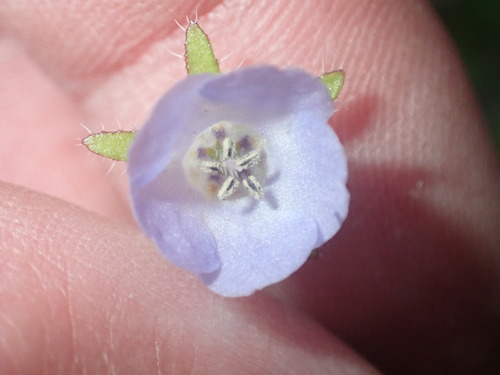
Pholistoma is a genus of three annual herbs in the family Boraginaceae, formerly placed in Hydrophyllaceae, native to southwestern North America. Plants produce weak, brittle, four-angled stems 6-40 inches (15-100 cm) long that sprawl over the ground or scramble through surrounding vegetation, held in place by small downward-pointing prickles along the stems and leaf stalks. The leaves are pinnately lobed or divided into several segments, the lower ones often clasping the stem with ear-like bases. Flowers are bowl- to saucer-shaped, 0.2-1 inch (5-25 mm) across, with five rounded lobes ranging from white through pale lavender to blue-purple, often with darker spotting near the throat. Pholistoma auritum carries the largest flowers, while P. membranaceum and P. racemosum have smaller blooms. Flowering occurs in spring, after which small capsules each release a few seeds. The genus grows on shaded slopes, in canyon bottoms, among rocks, and beneath shrubs in coastal sage, chaparral, and desert-edge habitats, completing its life cycle before summer drought. As an annual it dies after seeding and persists only through its seed bank, and the prickly stems readily catch on clothing.
Native Range
Pholistoma is native to the southwestern United States and northwestern Mexico, including California, Arizona, and Baja California. It grows in shaded, often rocky sites within chaparral, coastal sage scrub, oak woodland, and desert margins.Suggested Uses
Used in native and wildlife plantings, shaded rock gardens, and informal borders in mild-winter regions. The scrambling stems fill gaps between shrubs and along banks where cool-season annuals are wanted.How to Identify
Appearance
Size & Dimensions
Height6" - 3'
Width/Spread1' - 3'4"
Bloom Information
Flowering runs from late winter into spring, typically March through May, with peak bloom following winter rains. Individual plants flower over several weeks as the stems lengthen. Seed capsules mature quickly and the plant dies as soils dry in early summer.
Detailed Descriptions
Flower Description
White to blue-purpleFoliage Description
GreenGrowing Conditions
Sun Requirements
Requires 2-6 hours of direct sunlight daily
• Full Sun: 6+ hours of direct sunlight
• Partial Shade: 3-6 hours of direct sunlight
• Full Shade: Less than 3 hours of direct sunlight
Water & Climate
Water Needs
Care & Maintenance
Care Guide
Pholistoma is grown from seed sown in autumn or late winter where plants are to flower, in part shade to dappled light on freely draining soil. It establishes during cool, moist weather and needs regular moisture from germination through flowering, then completes its cycle as conditions warm. Because the stems are brittle and scrambling, plants are usually grown among shrubs or low supports that hold them off the ground. Extra summer water after flowering serves no purpose, as the annual dies once seed sets. Plants self-sow where conditions suit, returning from the seed bank in following years. No fertilizing is needed on moderately fertile soils.Pruning
No pruning is required. Spent plants are cleared after they set seed and die back in early summer. Stems left in place will scatter seed for the next season.Toxicity: Not assessed
UnknownPlanting Guide
Planting Methods & Timing
Planting Method
direct sow
Direct Sow Timing
Autumn to late winter in mild-winter climates
Days to Maturity
90–150 days
Plant Spacing
8 inches
Companion Planting
Good Companions