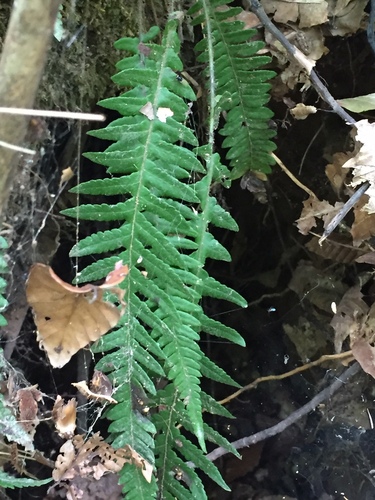
Phegopteris, Genus, decursive-pinnata, Species,
- Genus & species
Japanese beech fern
East Asia — Japan, Korea, China, and Taiwan
Overview
Phegopteris decursive-pinnata is a deciduous fern that grows 12–24 inches (30–60 cm) tall and spreads 18–30 inches (45–75 cm) wide by creeping rhizomes. The species name 'decursive-pinnata' describes the key diagnostic feature: each pinna has a wing of tissue (decurrent margin) that runs down along the rachis to the next pinna below, connecting all the pinnae in a continuous winged blade rather than having separate, detached pinnae. This winged structure gives the frond a flowing, uninterrupted quality unlike the clearly segmented fronds of most ferns. Bright green, softly textured pinnate fronds arch gracefully from the spreading rhizome. The moderate spreading habit forms a lush ground-cover colony over 2–3 years without the aggressive takeover of hay-scented fern. The species is closely related to the native North American beech fern (P. connectilis) but has a more refined, compact form suited to garden use. Moist, humus-rich acidic to neutral soil in shade is required. The soft frond texture is less durable than leathery-fronded ferns like Dryopteris and may tatter in exposed, windy sites. Fall frond color is warm yellow before the deciduous fronds drop. Deer rarely browse ferns.
Native Range
Phegopteris decursive-pinnata is native to East Asia, occurring in Japan, Korea, China, and Taiwan. It grows in moist, shaded forests and along woodland stream margins.Suggested Uses
Used as a shade ground cover that spreads at a manageable rate. The winged frond texture adds visual interest distinct from other common ferns. Container culture in pots of 3 gallons (11 liters) or more. Pairs with hostas, epimediums, and woodland wildflowers in layered shade plantings.How to Identify
Growing Conditions
Sun Requirements
Requires 2-5 hours of direct sunlight daily
• Full Sun: 6+ hours of direct sunlight
• Partial Shade: 3-6 hours of direct sunlight
• Full Shade: Less than 3 hours of direct sunlight
Care & Maintenance
Care Guide
Plant in partial to full shade with 2–5 hours of filtered light. Moist, humus-rich, acidic to neutral soil. Water during dry spells. Mulch with leaf mold. The moderate rhizome spread forms a ground cover within 2–3 years. Remove brown fronds in early spring. Shelter from strong wind to protect the soft fronds.Pruning
Remove brown fronds in early spring before new growth emerges. No other maintenance needed.Pruning Schedule
Prune: March
early spring
Container Growing
Suitable for container growing
Minimum container size: 3 gallons

