Petroselinum, Genus, crispum, Species,
- Genus & species
Parsley
Overview
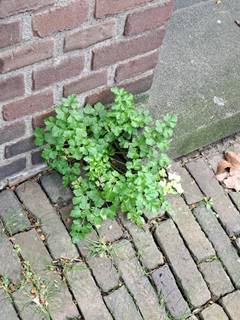
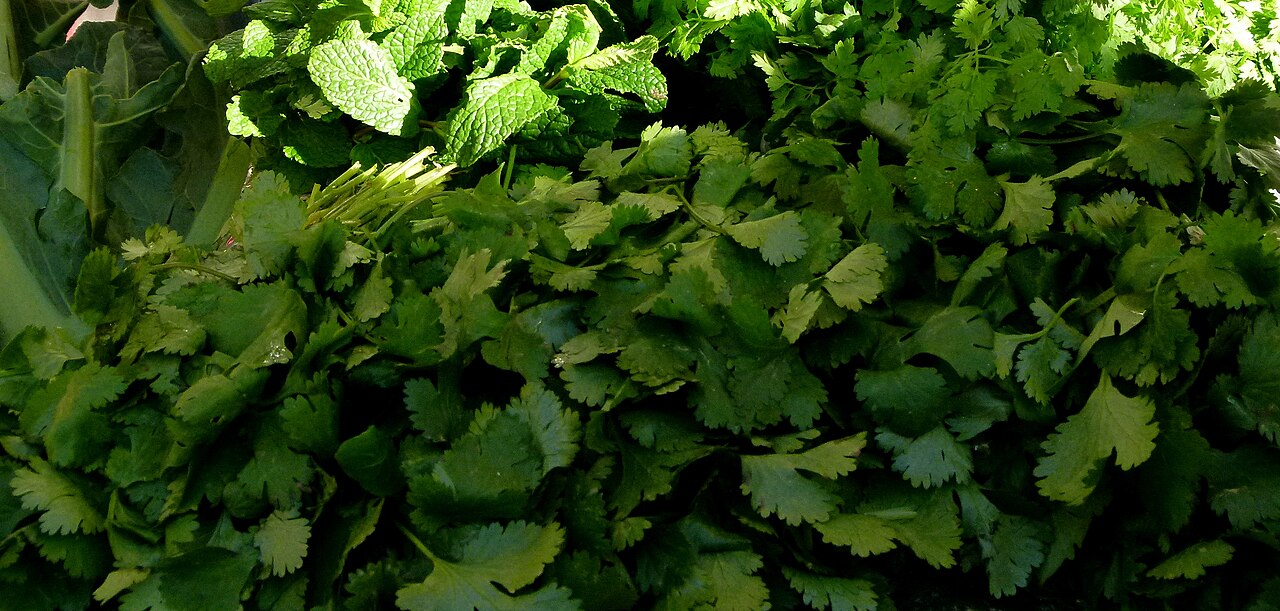
Petroselinum crispum is a biennial in the carrot family grown as an annual leaf crop. First-year growth forms a basal rosette 8-12 inches (20-30 cm) tall and 8-12 inches (20-30 cm) wide, with long-petioled leaves divided into three leaflets that are again cut into toothed segments. Curled-leaf forms carry tightly crisped dark green segments; flat-leaf forms carry broader, deeply cut, flat-bladed leaflets. In the second season the plant bolts, sending up a branched ribbed stem 24-36 inches (60-90 cm) tall topped by compound umbels of small yellow-green flowers. Seed ripens by late summer and the plant then dies. The root is a slender taproot reaching 6-10 inches (15-25 cm) deep, which reduces transplant survival once seedlings exceed 4 inches (10 cm). Germination is slow, typically 14-28 days at soil temperatures of 50-70 F (10-21 C). Leaf quality declines sharply once the flowering stem elongates, so most plantings are replaced each season rather than carried into a second year. Leaves and sap contain furanocoumarins, and prolonged skin contact followed by sun exposure can produce phytophotodermatitis in sensitive individuals. Established rosettes tolerate frost to about 20 F (-7 C) and continue producing harvestable leaves into early winter in mild climates.
Native Range
Petroselinum crispum originates in the central and eastern Mediterranean, with wild and long-naturalized populations recorded in Greece, the Balkan coast, Sardinia, and coastal Algeria and Tunisia. Cultivation spread through Roman Europe and the species now occurs as a garden escape across temperate Europe, North America, and Australasia.Suggested Uses
Grown in herb beds, vegetable rows, and containers, spaced 8-10 inches (20-25 cm) apart. Curled forms are used as low edging 8-10 inches (20-25 cm) tall along kitchen-garden paths. Second-year umbels are worked by hoverflies, parasitic wasps, and small solitary bees.How to Identify
Appearance
Size & Dimensions
Height8" - 3'
Width/Spread8" - 1'
Bloom Information
Flowering occurs only in the second season, from June to August in temperate gardens. Compound umbels 1.5-2.5 inches (4-6 cm) wide carry many yellow-green flowers, each about 0.08 inch (2 mm) across. Individual umbels stay open 2-3 weeks and the whole flowering period spans 6-8 weeks. Ribbed seeds about 0.1 inch (2.5 mm) long ripen 4-6 weeks after flowering, and the plant dies once seed is shed.
Detailed Descriptions
Foliage Description
Dark greenGrowing Conditions
Sun Requirements
Requires 4-8 hours of direct sunlight daily
• Full Sun: 6+ hours of direct sunlight
• Partial Shade: 3-6 hours of direct sunlight
• Full Shade: Less than 3 hours of direct sunlight
Care & Maintenance
Care Guide
Grows in full sun to part shade, with 4-6 hours of direct sun sufficient in summer-hot regions where afternoon shade slows bolting. Soil should be moist, free-draining loam enriched with organic matter at pH 6.0-7.0. Seed germinates in 14-28 days; a 24-hour water soak before sowing shortens that window by roughly a week. Water demand runs near 1 inch (2.5 cm) per week, and dry spells of more than 10 days trigger early bolting and bitter leaves. A nitrogen-led feed every 4-6 weeks during active leaf growth sustains rosette size. In zones 5-9 the rosette overwinters outdoors, though it runs to flower the following spring rather than continuing as a leaf crop.Pruning
Cutting is done as harvest: outer stems are removed at the base with the central growing point left intact, and up to one third of the rosette can be taken at a time without checking regrowth. Flower stalks appearing in the second season can be cut at the base to extend leaf production by 2-3 weeks, after which leaf texture coarsens regardless. Plants left to set seed self-sow readily and produce volunteer seedlings the following spring.Pruning Schedule
Prune: June–September
summerfall
Container Growing
Suitable for container growing
Minimum container size: 2 gallons
Toxicity Warning
Toxic to petsPlanting Guide
Planting Methods & Timing
Planting Method
both
Indoor Start
8 weeks before last frost
Direct Sow Timing
2-4 weeks before the last spring frost, once soil reaches 50 F (10 C)
Days to Maturity
70–90 days
Plant Spacing
9 inches