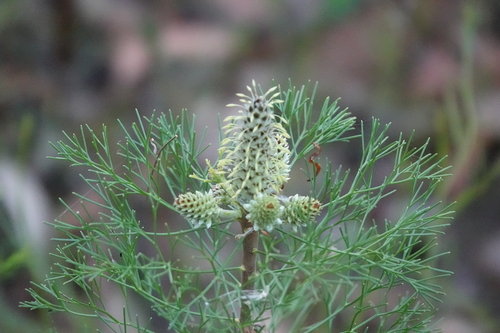
Petrophile, Genus, pulchella, Species,
- Genus & species
Conesticks
Overview
Petrophile pulchella is an evergreen shrub in the Proteaceae reaching 3-5 feet (0.9-1.5 m) tall and 2-3 feet (0.6-0.9 m) wide. Stems are erect and woody, branching from near the base. Leaves are stiff and divided into narrow, cylindrical segments 1.5-3 inches (4-8 cm) long, each segment tipped with a sharp point, giving the foliage a rigid, grey-green texture. Yellow flowers are grouped in dense terminal heads 0.8-1.2 inches (2-3 cm) across, opening in spring. After flowering, the heads develop into grey, woody cone-like structures 0.8-1.6 inches (2-4 cm) long that persist on the plant for several years and release winged seeds when heated. Growth is slow, with plants taking 4-6 years to reach mature size. The species regenerates from seed after fire, and the persistent woody cones hold seed on the plant until fire triggers release. Sharp-tipped foliage makes the plant difficult to handle. It grows in nutrient-poor sandy soils and develops leaf blackening and dieback when grown in phosphorus-enriched garden soil.
Native Range
Native to coastal and near-coastal New South Wales, Australia, from the Sydney region south to the Illawarra. Grows in heathland and dry sclerophyll woodland on low-nutrient sandstone soils from sea level to about 1,500 feet (450 m) elevation.Suggested Uses
Planted in native and habitat gardens on sandy soils, spaced 3-4 feet (0.9-1.2 m) apart. Used in coastal and low-water plantings where soil phosphorus is low. Cut stems bearing persistent cones are used in dried arrangements.How to Identify
Appearance
Size & Dimensions
Height3' - 5'
Width/Spread2' - 3'
Colors
Bloom Information
Flowers from September to December in its native range, with peak bloom in October and November. Individual flower heads remain open for 2-3 weeks; total display lasts 4-6 weeks. Flowering is reduced in shaded positions.
Detailed Descriptions
Foliage Description
Grey-greenGrowing Conditions
Sun Requirements
Requires 6-10 hours of direct sunlight daily
• Full Sun: 6+ hours of direct sunlight
• Partial Shade: 3-6 hours of direct sunlight
• Full Shade: Less than 3 hours of direct sunlight
Care & Maintenance
Care Guide
Grows in full sun to light shade in sandy, sharply drained soil of low fertility. Water during the first two years to establish, then reduce irrigation; established plants tolerate extended dry periods. Phosphorus-containing fertilisers cause leaf blackening and dieback in this Proteaceae. Wet, poorly drained soils promote root rot from Phytophthora. Plants are slow to recover after root disturbance from transplanting. Routine pest treatment is rarely required.Pruning
Tip-prune lightly after flowering in summer to maintain density. The species does not reshoot reliably from bare leafless wood, so cutting back into old stems can kill branches. Spent woody cones can be left in place, as they cause no harm to the plant.Pruning Schedule
Prune: December–January
summer