Petalostigma, Genus, pubescens, Species,
- Genus & species
quinine bush
Overview
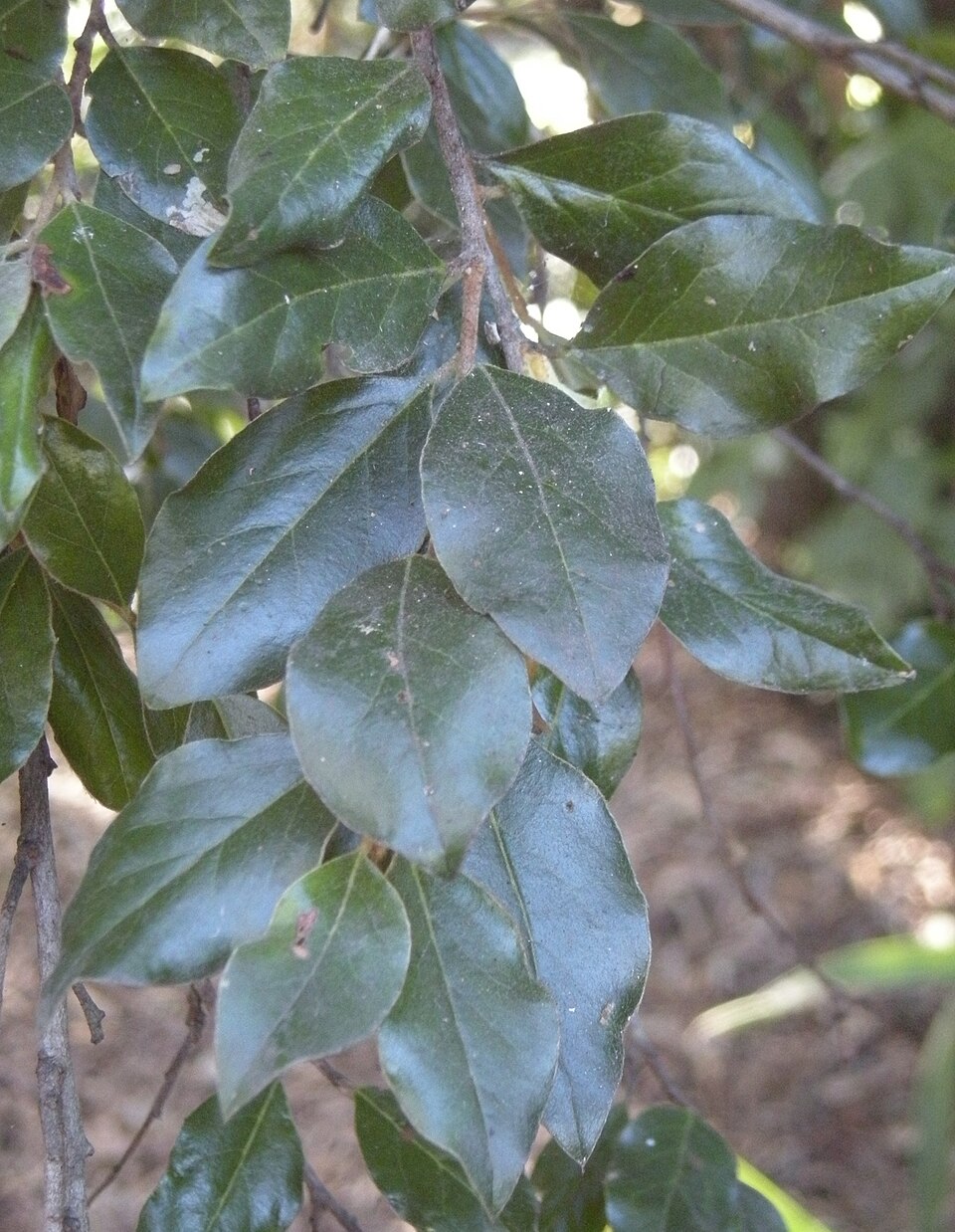
Petalostigma pubescens is a shrub or small tree growing 6-20 feet (2-6 m) tall with rough, dark grey, furrowed bark and rusty-hairy young stems. Leaves are alternate, oblong to elliptic, 1-2.5 inches (2.5-6 cm) long and 0.4-1.2 inches (1-3 cm) wide, dark green and becoming nearly hairless above, with dense rust-coloured hairs on the lower surface. The species is dioecious, with separate male and female plants; flowers are small, greenish-cream, and lack petals, the males clustered and the females solitary. Female plants bear a rounded capsule about 0.6-0.9 inch (15-22 mm) across that ripens from green to orange-red and is intensely bitter. The dry capsule splits open with force, ejecting the segments and seeds several feet from the plant. Wood is hard and dense. The plant tolerates drought, poor soils, and fire, resprouting from the base and lignotuber after burning. Growth is slow, and plants form a dense, twiggy crown in open positions and a more open form in shade.
Native Range
Native to northern and eastern Australia, occurring across Queensland, the northern parts of the Northern Territory, and northern Western Australia, with extensions into northern New South Wales. Grows in open eucalypt woodland, on rocky slopes, and along watercourses in tropical and subtropical regions, on sandy, gravelly, and skeletal soils.Suggested Uses
Grown in dry tropical and subtropical gardens, native plantings, and revegetation on poor soils, spaced 6-10 feet (1.8-3 m) apart. Used as a screening or hedge shrub in low-water landscapes and as habitat for native birds and insects. The hard, dense wood has been used for small turnery and tool handles.How to Identify
Appearance
Size & Dimensions
Height6' - 20'
Width/Spread5' - 12'
Bloom Information
Flowers in spring and early summer, mainly from September to December, with timing varying by latitude and rainfall. Flowers are small and greenish-cream without petals, so they are inconspicuous. Female plants carry ripening orange-red fruit through summer and into the dry season, often persisting on the plant for several months.
Detailed Descriptions
Foliage Description
dark green above, rust-brown beneathGrowing Conditions
Sun Requirements
Requires 5-10 hours of direct sunlight daily
• Full Sun: 6+ hours of direct sunlight
• Partial Shade: 3-6 hours of direct sunlight
• Full Shade: Less than 3 hours of direct sunlight
Care & Maintenance
Care Guide
Grows in full sun to part shade on free-draining sandy, gravelly, or rocky soils and tolerates seasonally dry tropical climates. Established plants are drought-tolerant and fire-tolerant, resprouting from a lignotuber after burning. Watering during the first one to two summers aids establishment, after which little supplementary water is needed. The species has separate male and female plants, so fruit forms only where both are present. Few pests affect it; the hard wood and bitter foliage limit browsing. Growth is slow, particularly on shallow soils.Pruning
Tolerates pruning to shape or to maintain a single-stemmed small tree, carried out after the main flowering period. Resprouts readily from the base if cut hard, producing multiple stems. Removal of lower branches raises the crown where a tree form is grown.Pruning Schedule
Prune: January–February
summer