Overview
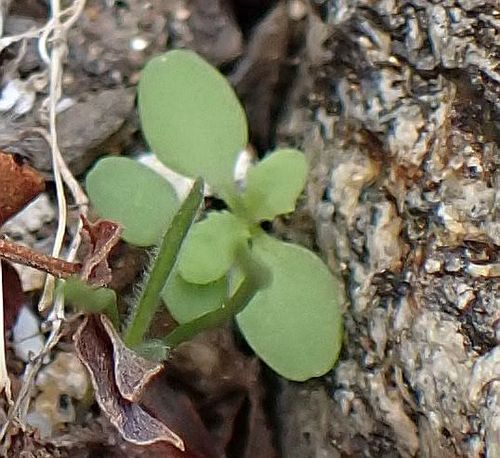
Perityle emoryi is a low-growing annual in the daisy family, reaching 4-16 inches (10-40 cm) tall with brittle, much-branched stems. The somewhat fleshy leaves are 0.5-2 inches (1.5-5 cm) long and irregularly lobed or toothed, becoming fewer toward the stem tips. From late winter into spring it produces many small flower heads about 0.4 inch (10 mm) across, each with a ring of short white ray florets around a yellow disk. Flowering is triggered by winter rains, so the size and timing of displays vary widely from year to year. The seeds are small, flattened achenes tipped with one or two short bristles. Native to the deserts of the southwestern United States and Mexico, it grows in rock crevices, on cliff faces, and along gravelly washes, often rooting in shallow pockets of soil. It tolerates heat and drought but completes its short life cycle quickly once soil moisture runs out.
Native Range
Perityle emoryi is native to the southwestern United States and Mexico, from California and Nevada east to Texas and south through Baja California and Sonora, with disjunct populations in coastal Chile and Peru. It grows in the Mojave, Sonoran, and Chihuahuan deserts.Suggested Uses
Grown in rock gardens, crevice plantings, and desert wildflower mixes for late-winter and spring bloom. It self-sows into gravel and stone walls in arid gardens. It fills small pockets of soil where larger plants cannot root.How to Identify
Appearance
Size & Dimensions
Height4" - 1'4"
Width/Spread4" - 1'
Bloom Information
Detailed Descriptions
Flower Description
white with yellow centerFoliage Description
greenGrowing Conditions
Sun Requirements
Requires 6-10 hours of direct sunlight daily
• Full Sun: 6+ hours of direct sunlight
• Partial Shade: 3-6 hours of direct sunlight
• Full Shade: Less than 3 hours of direct sunlight
Water & Climate
Water Needs
Drought Tolerance
Drought tolerant when established
Care & Maintenance
Care Guide
Grow Perityle emoryi in full sun and gritty, sharp-draining soil, including rock crevices and gravelly beds. Seed is sown in autumn to use winter and spring moisture, the natural growing season in its desert range. Water lightly to start germination, then rely mostly on seasonal rain, as the plant rots in steadily wet ground. No feeding is needed in lean, rocky soil. As a short-lived annual it dies after seeding and returns from self-sown seed where conditions repeat. Volunteers appear in crevices and gravel after rain.Pruning
No pruning is required for this small annual. Spent plants are cleared once they dry and set seed. Leaving some seed heads allows self-sowing for the following season.Container Growing
Suitable for container growing
Minimum container size: 1 gallons
Toxicity: Not assessed
UnknownPlanting Guide
Planting Methods & Timing
Planting Method
direct sow
Plant Spacing
6 inches