Pentanema, Genus, squarrosum, Species,
- Genus & species
Ploughman's-spikenard
Overview
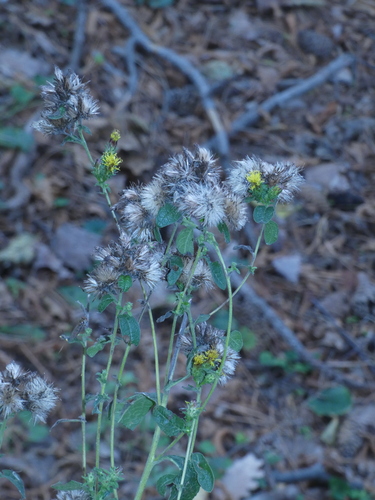
Pentanema squarrosum, formerly Inula conyzae, is an erect biennial or short-lived perennial reaching 2-4 feet (60-120 cm) tall on stiff, often purple-tinged stems. In the first year it forms a rosette of oval to lance-shaped leaves 3-6 inches (8-15 cm) long that resemble those of foxglove, downy beneath and short-stalked. In the second year it bolts and branches into a leafy flowering stem topped by clusters of many small flowerheads, each 0.25-0.4 inch (6-10 mm) across with a dingy yellow disc and very short, inconspicuous ray florets, often tinged purple at the tips. Flowering runs through mid- to late summer, drawing flies, bees, and small butterflies, and the heads ripen into tufted, wind-borne seed. It grows on dry calcareous and base-rich soils in grassland, scrub, hedge banks, quarry spoil, and open woodland. The plant tolerates poor, stony, alkaline ground and drought once rooted but dislikes wet, acidic soils. Its flowers are small and muted rather than showy, so it is grown mainly in wild and conservation plantings. After setting seed the parent plant usually dies, and colonies persist by self-sowing.
Native Range
Pentanema squarrosum is native across much of Europe, extending into western Asia and North Africa, on dry, lime-rich soils. It grows in calcareous grassland, scrub, hedge banks, quarry ground, and open woodland.Suggested Uses
Grown in wildflower meadows, conservation plantings, and dry, chalky banks, spaced 12-18 inches (30-45 cm) apart. Suits naturalistic and pollinator gardens on lime-rich soil. The seed heads add structure to winter borders before they shed.How to Identify
Appearance
Size & Dimensions
Height2' - 4'
Width/Spread1' - 1'6"
Bloom Information
Flowering occurs in the second year from July into September, with branched clusters of small yellow heads opening over many weeks. The heads are followed by tufted seed that disperses on the wind into autumn. Bloom is modest and held over a long period rather than in a single flush.
Detailed Descriptions
Foliage Description
GreenGrowing Conditions
Sun Requirements
Requires 6-10 hours of direct sunlight daily
• Full Sun: 6+ hours of direct sunlight
• Partial Shade: 3-6 hours of direct sunlight
• Full Shade: Less than 3 hours of direct sunlight
Care & Maintenance
Care Guide
Grow in full sun in dry, free-draining, alkaline to neutral soil; chalky, stony, and lean ground suits it. Water only to establish, after which the deep root supports the plant through drought; wet or acidic soils cause rot. No feeding is needed, as rich soil produces soft, floppy growth. Sow seed in spring or autumn where plants are to grow, since the rosette and taproot transplant poorly. Leave some seed heads to ripen if a self-sustaining colony is wanted, or remove them to limit spread. Hardy in USDA zones 5 through 8, the rosette overwinters and flowers the following summer.Pruning
Cut spent flowering stems to the ground after seed disperses, or sooner to prevent self-sowing. Remove the dead biennial stems entirely once flowering finishes, as they do not regrow. No other pruning applies.Pruning Schedule
Prune: September
fall
Toxicity
Non-toxicPlanting Guide
Planting Methods & Timing
Planting Method
direct sow
Direct Sow Timing
Spring or autumn where plants are to grow
Plant Spacing
15 inches