Pentagramma, Genus, triangularis, Species,
- Genus & species
goldback fern
Overview
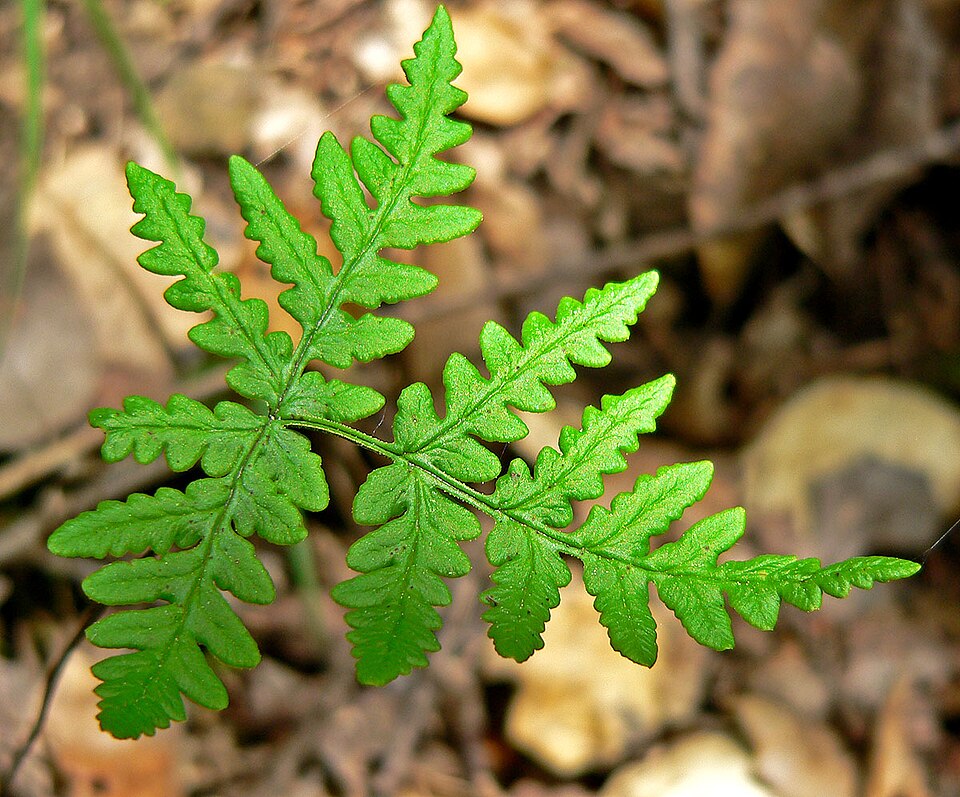
Pentagramma triangularis is a small terrestrial fern of western North America, producing tufts of fronds 4-12 inches (10-30 cm) long from a short, scaly rhizome. The blades are triangular to pentagonal, 1-3 inches (2.5-8 cm) wide, divided into a few pairs of pinnae, and held on dark reddish-brown to black stipes that roughly equal the blade in length. The upper surface is green, while the lower surface is coated with a powdery farina that ranges from pale yellow to deep golden. During dry summers the fronds curl inward, exposing the gold undersides, and the plant becomes dormant; fronds rehydrate and flatten after autumn and winter rains. It grows on shaded rock outcrops, road cuts, and slopes, often rooted in cracks of igneous and metamorphic rock. As a fern it reproduces by spores borne along the veins on the frond undersides rather than by flowers or seed. It withstands seasonal drought but declines in sites with summer irrigation or standing moisture, and it transplants poorly because of its rock-crevice root system.
Native Range
Native to western North America, from British Columbia south through California to Baja California, and east into parts of the Great Basin. It occurs in the Coast Ranges, Sierra Nevada foothills, and other rocky habitats below about 7,200 feet (2,200 m).Suggested Uses
Used in shaded rock gardens, dry-stone walls, and crevice plantings where summer drought dormancy is acceptable. Suited to containers with sharp drainage and to native-plant gardens within its western range.How to Identify
Appearance
Size & Dimensions
Height4" - 1'
Width/Spread6" - 1'
Bloom Information
As a fern, Pentagramma triangularis does not flower. Spores mature in summer within linear sori that follow the veins on the frond undersides, then disperse on dry air. New fronds expand after the first autumn rains.
Detailed Descriptions
Foliage Description
green above, golden-yellow farina beneathGrowing Conditions
Sun Requirements
Tolerates up to 4 hours of direct sunlight daily
• Full Sun: 6+ hours of direct sunlight
• Partial Shade: 3-6 hours of direct sunlight
• Full Shade: Less than 3 hours of direct sunlight
Care & Maintenance
Care Guide
Grows in part to full shade on fast-draining rocky or gravelly substrate with a slightly acidic to neutral pH. Established plants take little summer water and enter dormancy during dry periods, so soils that stay wet through summer cause rot. Hardy in USDA zones 7-10, it withstands light frost but not prolonged hard freezes. In cultivation it suits rock gardens, crevice plantings, and containers with a gritty mineral mix. Propagation is by spores, as the brittle rhizomes are easily damaged by disturbance and division. Salt-laden coastal wind and heavy clay soils both reduce vigor.Pruning
Pruning is limited to removing dead or damaged fronds. Spent fronds can be cut at the base in late winter before new growth emerges. No shaping or routine cutting is required.Container Growing
Suitable for container growing
Minimum container size: 1 gallons