Peltandra, Genus, spp., Multiple species,
- Genus
- Multiple species
Overview
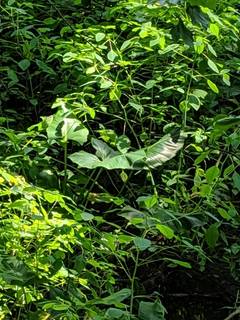
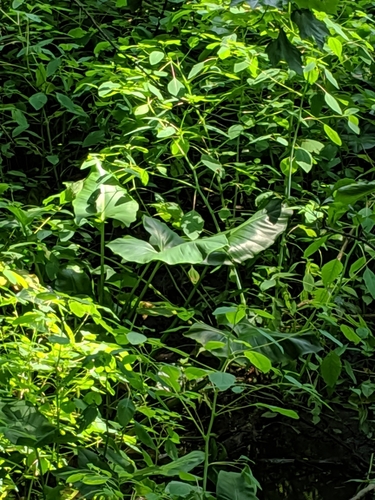
Peltandra is a small genus of two perennial wetland aroids native to eastern North America. Plants grow from thick underground rhizomes in shallow water and saturated soil, producing clumps of long-stalked, arrowhead-shaped leaves 8-30 inches (20-75 cm) long on petioles that lift the blades 1-3 feet (30-90 cm) above the mud. The inflorescence is a narrow green to white spathe wrapped around a spadix, typical of the arum family, appearing from late spring into summer. P. virginica, the green arrow arum, ranges widely across eastern wetlands and bears a green spathe followed by clusters of green to brown berries; P. sagittifolia, the white arrow arum of the southeastern coastal plain, has an open white spathe and red berries. The fleshy fruit ripens as the stalk bends toward the water, dropping seed into the mud. Like many aroids, all parts contain calcium oxalate crystals that cause burning and swelling if the raw tissue is chewed. The genus needs permanently wet ground and full to partial sun, and it dies back to the rhizome in winter across its range. Plants spread slowly into colonies at pond and marsh edges.
Native Range
Peltandra is native to eastern North America, from southeastern Canada through the eastern and southeastern United States. Plants grow in marshes, swamps, pond margins, slow streams, and other permanently wet, shallow-water habitats.Suggested Uses
Peltandra is planted at pond and stream margins, in bog gardens, and on the marshy shelves of constructed water features. It supports wetland restoration and naturalized plantings where soils stay saturated.How to Identify
Appearance
Size & Dimensions
Height1' - 3'
Width/Spread1' - 3'
Bloom Information
The spathe-and-spadix inflorescence appears from late spring into summer, roughly May through July. P. virginica bears a tightly furled green spathe, while P. sagittifolia opens a white one. Pollination is chiefly by flies and small bees drawn into the spathe, after which green to red berries ripen by late summer.
Detailed Descriptions
Foliage Description
greenGrowing Conditions
Sun Requirements
Requires 3-8 hours of direct sunlight daily
• Full Sun: 6+ hours of direct sunlight
• Partial Shade: 3-6 hours of direct sunlight
• Full Shade: Less than 3 hours of direct sunlight
Care & Maintenance
Care Guide
Peltandra grows in full sun to part shade in permanently wet, mucky, acidic to neutral soil, and tolerates standing water 2-6 inches (5-15 cm) deep over the crown. The genus suits pond margins, bog gardens, and the shallow shelves of water gardens, and it will not tolerate drying out. Plants are cold-hardy through much of the temperate East and die back to the rhizome each winter. Few pests trouble the foliage, though leaves can be grazed by waterfowl. Rhizomes can be divided in spring to propagate or limit spread. All parts contain calcium oxalate and are not edible raw.Pruning
Remove yellowing or frost-killed leaves at the base in autumn as the plant goes dormant. Spent fruiting stalks can be cut off if self-seeding is not wanted. No other pruning is needed.Container Growing
Suitable for container growing
Minimum container size: 3 gallons