Pediomelum, Genus, tenuiflorum, Species,
- Genus & species
slimflower scurfpea
Central North America (Great Plains)
Overview
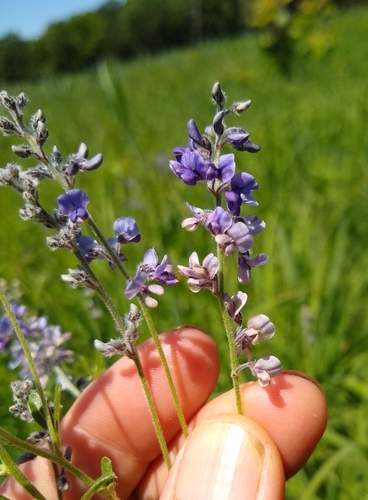
Pediomelum tenuiflorum is a deep-rooted herbaceous perennial legume of the central North American prairies, often called slimflower scurfpea or wild alfalfa. From a woody taproot it sends up many slender, much-branched gray-green stems forming a bushy mound 18-42 inches (45-105 cm) tall and 18-36 inches (45-90 cm) wide. The palmately compound leaves carry three to five narrow leaflets dotted with tiny resin glands that release a scent when crushed. From June to August the stems bear slim, interrupted spikes of small blue to violet pea flowers about 0.25 inch (6 mm) long, followed by short one-seeded pods. In autumn the brittle stems break away at the base and the dried plant tumbles in the wind, scattering seed. P. tenuiflorum grows in dry, open grassland and tolerates poor rocky or sandy soils, deep drought, and full exposure, but declines in rich, moist, or shaded ground. The foliage contains psoralen, a furanocoumarin that can cause skin photosensitivity in grazing animals and people. It is slow to establish from its taproot, and mature plants are difficult to transplant once settled.
Native Range
Native to the Great Plains and central United States, from Montana and North Dakota south to Texas, and into the prairies of adjacent Canada and northern Mexico. It grows on dry prairies, rocky hillsides, and open plains.Suggested Uses
Grown in native prairie restorations, dryland meadows, and pollinator plantings on the Great Plains. As a legume it adds nitrogen to lean soils. The tumbling dried stems also spread it through naturalized grassland.How to Identify
Appearance
Size & Dimensions
Height1'6" - 3'6"
Width/Spread1'6" - 3'
Colors
Bloom Information
Bloom runs from June through August. The small blue to violet flowers are clustered in slender, well-spaced spikes and are visited by native bees and other small pollinators. Flowering is heaviest in the first weeks of summer and tapers as pods ripen.
Detailed Descriptions
Flower Description
blue to violetFoliage Description
gray-greenGrowing Conditions
Sun Requirements
Requires 6-12 hours of direct sunlight daily
• Full Sun: 6+ hours of direct sunlight
• Partial Shade: 3-6 hours of direct sunlight
• Full Shade: Less than 3 hours of direct sunlight
Care & Maintenance
Care Guide
Plants need full sun and dry, sharp-draining rocky or sandy soil. Water is needed only to establish young plants, and once rooted they draw on a deep taproot and tolerate prolonged drought. They are hardy from about USDA zone 3 to zone 8 and die back to the root each winter. No fertilizer is needed, and rich or moist soil shortens their life. Crown or root rot can develop in ground that stays wet. Mature plants move poorly because of the taproot, so they are grown from seed in their final position.Pruning
No pruning is required. Dead stems can be cleared in late winter before new growth, though in the wild they detach on their own. Removing spent spikes before seed drops limits self-sowing.Pruning Schedule
Prune: February–March
winterearly spring