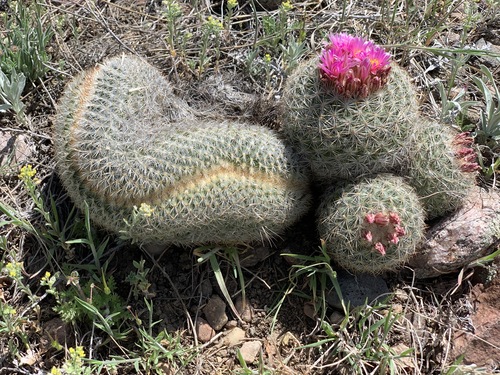
Pediocactus, Genus, spp., Multiple species,
- Genus
- Multiple species
Overview
Pediocactus is a genus of about seven to nine small cacti native to arid and semi-arid regions of western North America. Plants form solitary or clustered stems that are globose to short-cylindric, typically 1-6 inches (2.5-15 cm) tall and 1-4 inches (2.5-10 cm) in diameter, with the surface divided into spiraled tubercles. Spines range across the genus from short and comb-like to dense and bristly, in white, gray, tan, or pink-brown. Funnel-shaped flowers open near the stem apex in early spring, measuring 0.5-1.2 inches (1.3-3 cm) across in pink, magenta, white, yellow, or cream, followed by small greenish to tan fruit that dries and splits at maturity. Most species grow in cold high-desert, sagebrush steppe, and montane gravel between 4,000 and 9,000 feet (1,200-2,750 m), where they endure winter freezes and summer drought. Several Pediocactus species occupy very restricted ranges and are protected under federal and state law, including P. knowltonii and P. peeblesianus. The genus is slow-growing and contracts below the soil line during dormancy, so plants are hard to locate in the field outside the brief flowering window. In cultivation it requires sharp drainage and a dry winter rest, and stems rot quickly in moist or poorly drained soil. Collection from the wild is restricted for the protected species.
Native Range
Pediocactus is endemic to western North America, ranging across the Great Basin, Colorado Plateau, and Rocky Mountain foothills from Washington and Montana south to Arizona, New Mexico, and northern Mexico. Species occupy high-desert flats, sagebrush steppe, and gravelly montane slopes.Suggested Uses
Pediocactus is grown in rock gardens, trough plantings, and specialized cactus collections in cold-winter regions. The small stature suits container display and alpine houses where winter moisture can be controlled.How to Identify
Appearance
Size & Dimensions
Height1" - 6"
Width/Spread1" - 4"
Bloom Information
Flowering occurs in early to mid spring, often March through May, triggered by rising temperatures after winter cold. Individual funnel-shaped flowers last several days and open during daylight, measuring 0.5-1.2 inches (1.3-3 cm) across. Bloom timing shifts later at higher elevations.
Detailed Descriptions
Flower Description
pink, magenta, white, yellow, or creamGrowing Conditions
Sun Requirements
Requires 6-12 hours of direct sunlight daily
• Full Sun: 6+ hours of direct sunlight
• Partial Shade: 3-6 hours of direct sunlight
• Full Shade: Less than 3 hours of direct sunlight
Care & Maintenance
Care Guide
Across the genus, Pediocactus requires gritty, fast-draining mineral soil and full sun. Plants need a dry, cold winter rest and tolerate hard frost when kept dry, though stems rot in soils that stay wet. Water sparingly during active spring and autumn growth and withhold water through summer heat and winter cold. Most species draw down into the soil during dormancy and re-emerge as growth resumes. Deep containers filled with mineral grit suit the genus because they give control over moisture. Root mealybugs and rot are the main problems in cultivation.Pruning
No pruning is required for Pediocactus. Remove shriveled or rotted stem tissue with a clean blade only when decay appears. Spent flowers and dried fruit drop on their own.Container Growing
Suitable for container growing
Minimum container size: 1 gallons
