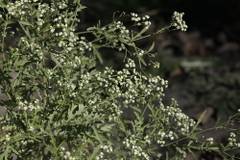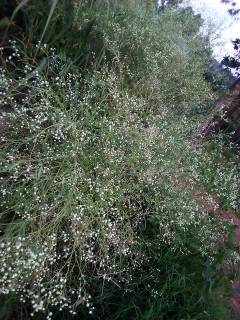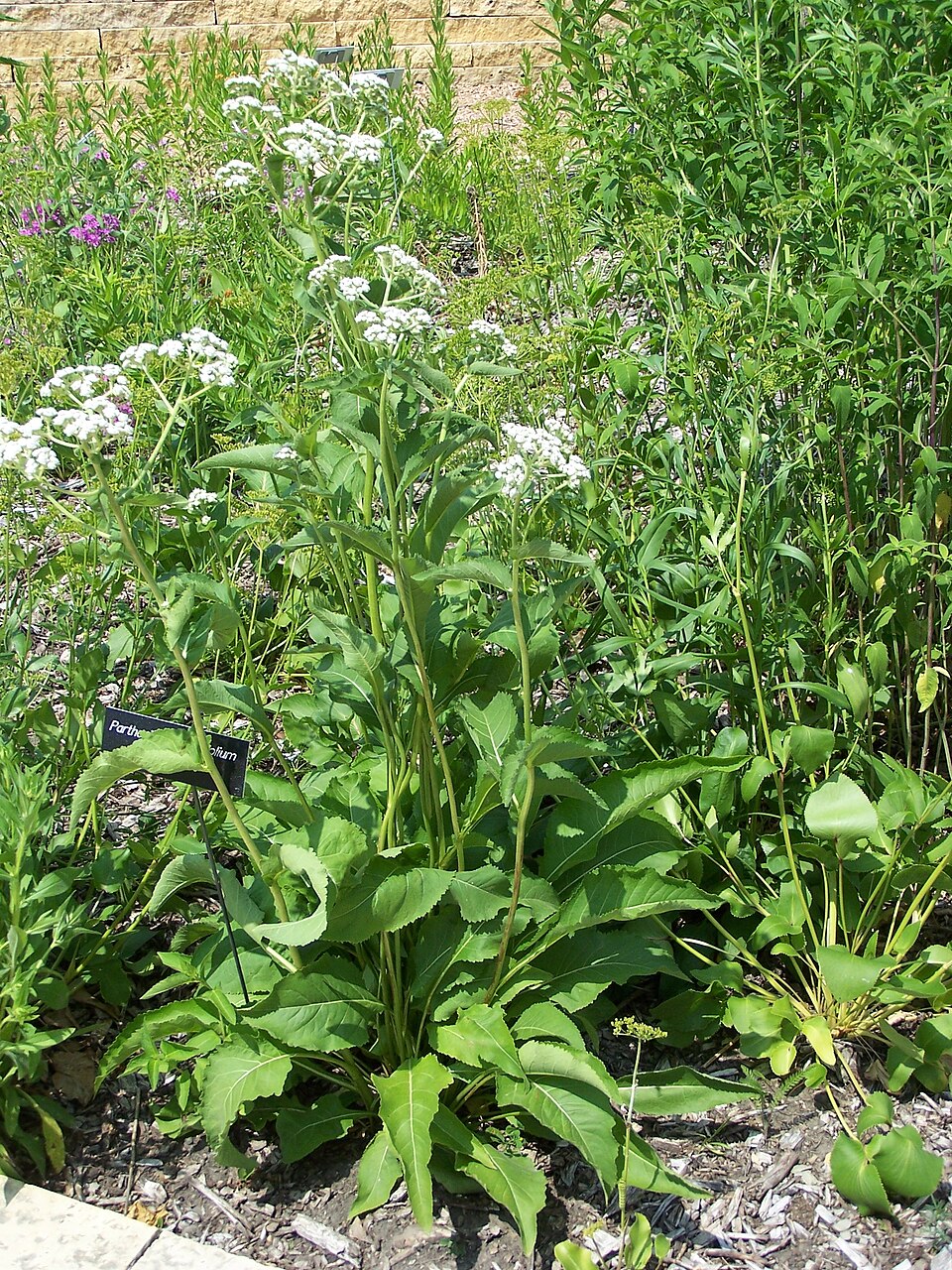
Parthenium, Genus, integrifolium, Species,
- Genus & species
wild quinine
Overview
Parthenium integrifolium is an upright perennial in the aster family, native to dry prairies, glades, and open woods of the central and eastern United States. Stiff, unbranched stems rise 24-48 inches (60-120 cm) from a thick, woody rootstock. The lance-shaped to oval leaves are 3-8 inches (8-20 cm) long, with toothed margins and a rough, sandpapery surface on both sides. From June to September, the stems are topped by flat clusters 2-4 inches (5-10 cm) wide of many small white flower heads, each about 0.25 inch (6 mm) across, resembling tiny composite buttons. The species grows in full sun on dry to medium soils, including clay, loam, and rocky ground, and withstands drought once established. Plants in rich or shaded sites grow taller and may lean. Bloom continues over several weeks and the dried clusters persist into autumn. Foliage dies back after frost to the rootstock. Wild quinine draws bees, wasps, and small butterflies, and the rough foliage is usually left by deer. It grows slowly, taking two to three years to reach full size from seed.
Native Range
Native to the central and eastern United States, from Wisconsin and Massachusetts south to Georgia, Texas, and the Gulf states. It grows in prairies, glades, savannas, and open dry woodland.Suggested Uses
Grown in prairie and meadow plantings, native gardens, and pollinator borders. Spaced 18-24 inches (45-60 cm) apart, plants form upright clumps. The dried flower clusters are used in cut and dried arrangements.How to Identify
Appearance
Size & Dimensions
Height2' - 4'
Width/Spread1'6" - 2'
Bloom Information
Flowers open from June to September, lasting about twelve weeks. The flat clusters open gradually and hold their shape as they dry. Plants begin flowering in their second or third year.
Detailed Descriptions
Flower Description
Small white flower heads in flat-topped clustersFoliage Description
Dark green, rough, sandpaperyGrowing Conditions
Sun Requirements
Requires 6-10 hours of direct sunlight daily
• Full Sun: 6+ hours of direct sunlight
• Partial Shade: 3-6 hours of direct sunlight
• Full Shade: Less than 3 hours of direct sunlight
Care & Maintenance
Care Guide
Grows in full sun in dry to medium, well-drained soil, including clay, loam, and rocky ground. Water through the first season; established plants are drought-tolerant and need no summer irrigation. Rich or partly shaded sites produce taller, weaker stems that can lean. No fertilizer is needed, and excess nutrients reduce sturdiness. Cut stems to the ground in late autumn, or leave the dried clusters standing through winter. Plants form a deep rootstock and transplant poorly once mature, so divide only in early spring if needed.Pruning
Cut stems to the ground in late autumn or late winter. Spent flower clusters can be left standing for winter structure and seed. No other pruning is required.Pruning Schedule
Prune: November
fall
Container Growing
Suitable for container growing
Minimum container size: 3 gallons