Pandanus, Genus, spp., Multiple species,
- Genus
- Multiple species
screwpines
Old World tropics - Africa, Madagascar, South and Southeast Asia, northern Australia, and Indian and Pacific Ocean islands
Overview
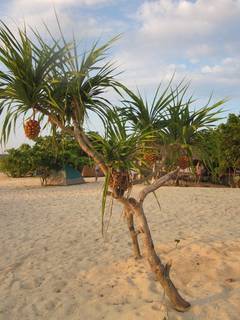
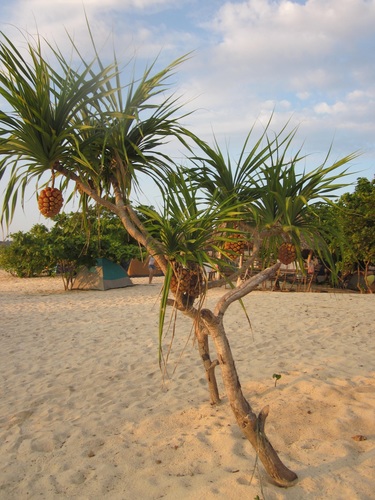
Pandanus is a large genus of about 600 evergreen tropical trees and shrubs in the family Pandanaceae, the screwpines, native to the Old World tropics. Plants range from low shrubs to trees 20-65 ft (6-20 m) tall, branching sparsely and standing on stout aerial prop roots that brace the trunk, especially in coastal sand. Long, strap-shaped leaves 2-10 ft (0.6-3 m) long are arranged in three spiraling ranks, giving the screw-like look behind the common name, and most carry sharp spines along the margins and midrib. Plants are dioecious; female trees bear large, rounded compound fruits 4-12 in (10-30 cm) across that break into woody, wedge-shaped segments and resemble a pineapple. The fruit of P. tectorius is eaten across the Pacific, and the fragrant leaves of P. amaryllifolius flavor Southeast Asian cooking. Many species line tropical shores and tolerate salt spray, wind, and sandy soil. The genus needs frost-free warmth and is grown indoors or under glass in temperate regions. Spiny leaf margins make handling awkward.
Native Range
Pandanus is native to the tropics of the Old World, spanning West Africa, Madagascar, South and Southeast Asia, northern Australia, and the islands of the Indian and Pacific Oceans. Many species grow along coasts, in mangrove margins, swamps, and lowland forest, while others reach montane rainforest. The genus is not native to the Americas, though some species are planted in tropical regions worldwide.Suggested Uses
Grown as a specimen and coastal shade plant in tropical gardens, as a container and conservatory foliage plant in cooler climates, and in coastal stabilization plantings. The leaves are woven into mats, baskets, and thatch, and the fruit and leaves of some species are used as food and flavoring. Spaced 8-15 ft (2.4-4.6 m) apart as landscape specimens.How to Identify
Appearance
Size & Dimensions
Height3' - 65'
Width/Spread6' - 25'
Bloom Information
Pandanus flowers irregularly in warm, frost-free climates, often more than once a year rather than in a set season. Male plants release fragrant flowers in branched, drooping clusters, while female flowers form dense heads with no petals. Flowering is followed on female plants by the large compound fruit, which ripens over several months.
Detailed Descriptions
Flower Description
Cream to white, inconspicuousFoliage Description
Green to blue-green, some variegated with cream or yellowGrowing Conditions
Sun Requirements
Requires 4-10 hours of direct sunlight daily
• Full Sun: 6+ hours of direct sunlight
• Partial Shade: 3-6 hours of direct sunlight
• Full Shade: Less than 3 hours of direct sunlight
Care & Maintenance
Care Guide
Pandanus grows in full sun to part shade in warm, frost-free climates on free-draining sandy or loamy soil at a soil pH from about 6.0 to 7.5. Plants tolerate salt spray, coastal wind, and drought once established, which suits them to seaside planting. They are hardy only in USDA zones 10-12 and are damaged below about 40F (4C), so in cooler areas they are grown in containers and kept warm over winter. Bright light and steady warmth keep indoor plants in good condition, while cold drafts and wet, cold roots cause leaf dieback. Scale and mealybugs can affect plants grown under glass.Pruning
Little pruning is needed beyond removing dead lower leaves as they brown and droop. The spiny leaf margins make this work slow, and thick gloves and long sleeves are usual. Offsets and suckers can be cut from the base to propagate or to limit clumping.Container Growing
Suitable for container growing
Minimum container size: 10 gallons