Image 1 of 7
1 / 7
Plant Reference
Pachysandra, Genus, terminalis, Species,
- Genus & species
Japanese spurge
Japan and northeastern China; deciduous forest understory
Overview
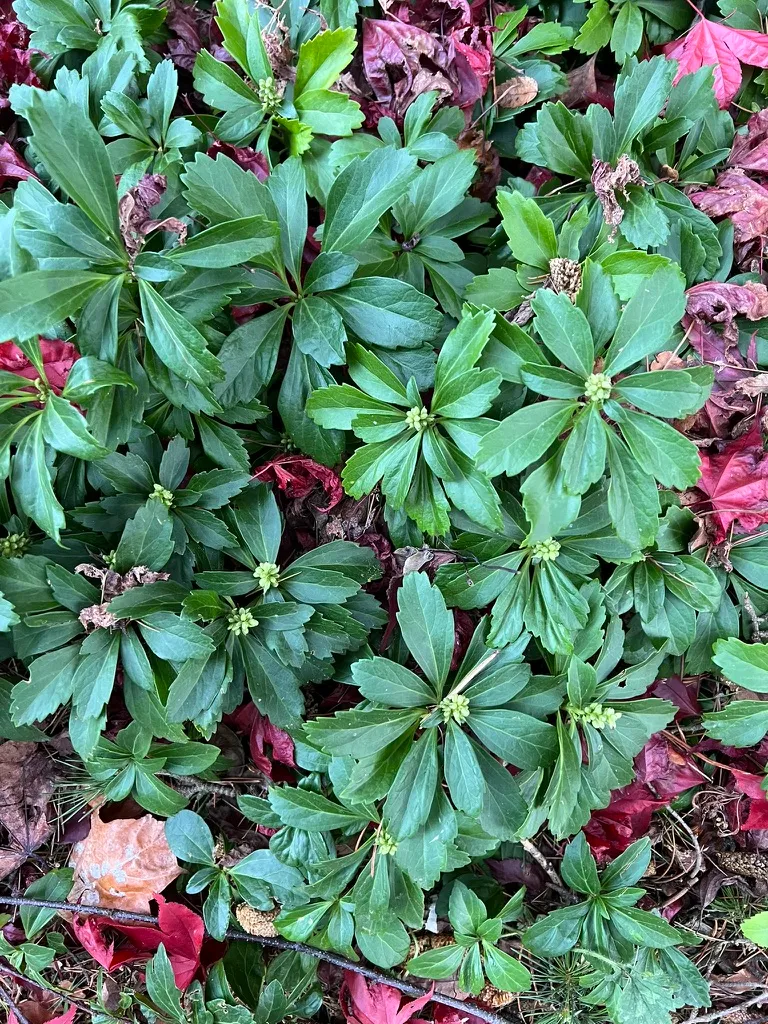
Pachysandra terminalis is Japanese spurge (Japanese pachysandra), a spreading evergreen perennial growing 6-12 inches (15-30 cm) tall and 12-36 inches (30-90 cm) wide per colony. White to cream bottlebrush-like flower spikes 1-2 inches (2.5-5 cm) in April-May (3 weeks). Lightly fragrant. Glossy dark green obovate coarsely toothed leaves 2-4 inches (5-10 cm) whorled at stem tips. In Buxaceae — not related to Euphorbia (spurge). Terminalis = terminal. Spreads by underground stolons to form a dense weed-suppressing carpet. Native to Japan and northeastern China. Susceptible to Volutella blight (Volutella pachysandricola) — tan leaf spots and stem canker in humid, crowded, stressed plantings. This Volutella susceptibility is the primary disease limitation. Strictly a shade plant — yellows in sun. Not drought-tolerant. All parts contain steroidal alkaloids (pachysandrine) — toxic if ingested. Deer-resistant. Zones 4-8. Full shade to part shade. Growth rate is moderate (via stolons).
Native Range
Native to Japan and northeastern China. Found in deciduous forest understory.Suggested Uses
Grown as an evergreen shade ground cover under trees and in north-facing beds, spaced 12-36 inches (30-90 cm). Shade-only. Weed-suppressing. Monitor for Volutella blight. All parts toxic. Zones 4-8.How to Identify
Appearance
Size & Dimensions
Height6" - 1'
Width/Spread1' - 3'
Bloom Information
Mid to late spring (April-May). White to cream bottlebrush-like flower spikes 1-2 inches (2.5-5 cm). Lightly fragrant. 3 weeks. Bee-visited.
Detailed Descriptions
Flower Description
White to cream, small, in dense upright terminal spikes 1-2 inches (2.5-5 cm) — bottlebrush-like; April-May; lightly fragrant (sweet); followed by white fleshy drupes 0.3 inch (8 mm) in fall (infrequent in cultivation)Foliage Description
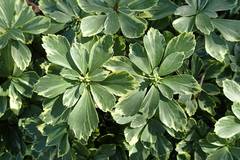
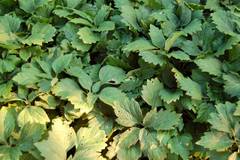
Glossy dark green, obovate to spatulate, coarsely toothed in the upper half, 2-4 inches (5-10 cm), whorled near the stem tips; evergreen year-round — foliage may yellow in full sun or in very cold wintersGrowing Conditions
Sun Requirements
Requires 1-4 hours of direct sunlight daily
• Full Sun: 6+ hours of direct sunlight
• Partial Shade: 3-6 hours of direct sunlight
• Full Shade: Less than 3 hours of direct sunlight
Care & Maintenance
Care Guide
Full shade to part shade (1-4 hours). Well-drained acidic soil pH 5.0-6.5. Not drought-tolerant. Strictly shade — yellows in sun. Susceptible to Volutella blight in humid, crowded, stressed plantings — thin and improve air circulation to reduce. All parts toxic (pachysandrine). Deer-resistant. Zones 4-8.Pruning
Mow or shear in early spring (February-March) to 3-4 inches (7-10 cm) to rejuvenate tattered plantings. Remove Volutella-infected stems promptly — cut well below visible damage.Pruning Schedule
Prune: February–March
early spring