Image 1 of 11
Plant Reference
1 / 11
Pachira, Genus, aquatica, Species,
- Genus & species
money tree
Native to Central and South America growing naturally in swamps, riverbanks, and seasonally flooded forest habitats from southern Mexico through Central America to Brazil and Bolivia at low elevations
Overview
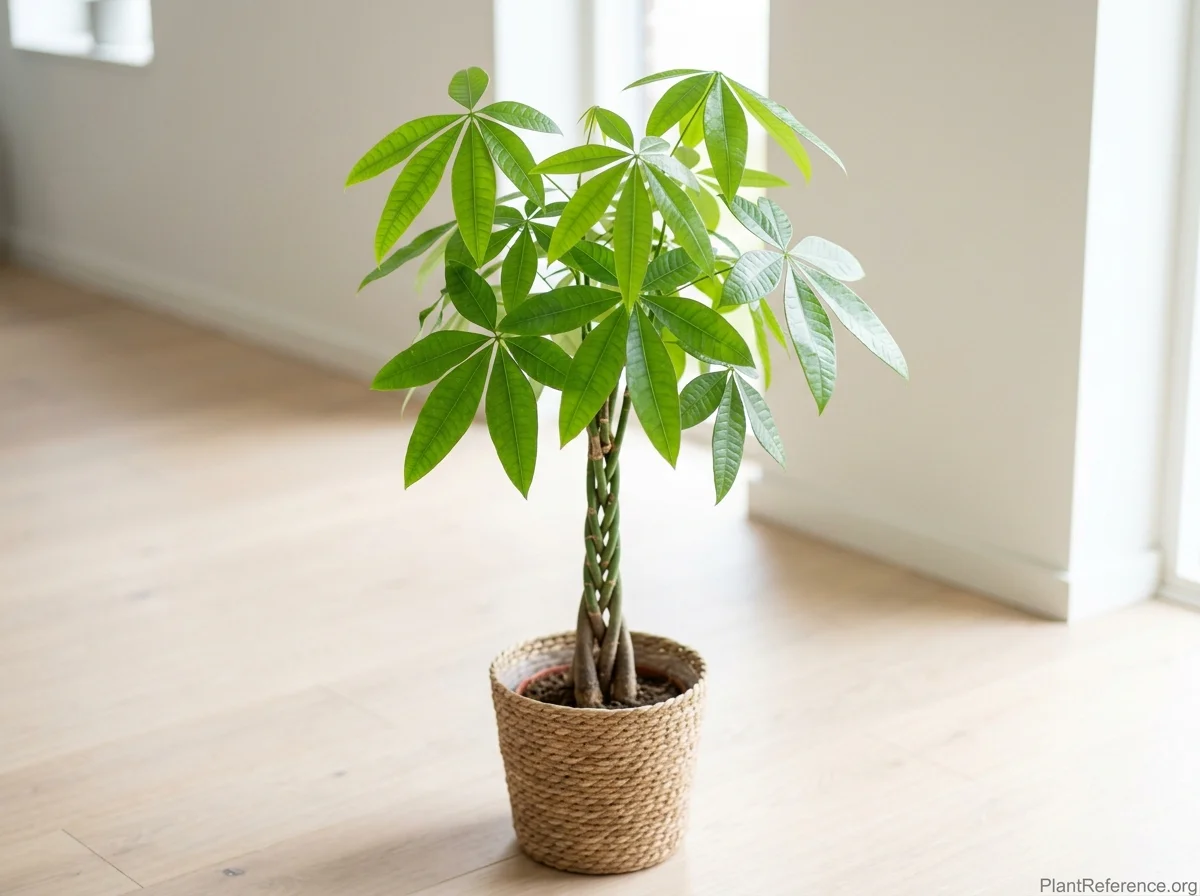
Pachira aquatica is the money tree — a tropical tree species in the mallow family (Malvaceae) widely cultivated as a gift houseplant across global indoor-plant markets, growing 48–96 inches (120–240 cm) tall indoors. Bright green palmate (hand-shaped) leaves with 5–7 glossy leaflets radiate from a central point on a characteristic braided trunk. The braided trunk form runs as a commercial creation rather than a natural growth habit — nursery growers braid 3–5 young seedlings together while the trunks remain flexible, and the trunks fuse and continue growing as a single visually unified specimen. The 'money tree' association derives from feng shui tradition where the five leaflets correspond to the five elements (earth, water, fire, wind, metal), and the plant runs as a symbolic prosperity gift in business openings, housewarmings, and similar life-event contexts. The species name 'aquatica' references the natural swamp and riverbank habitat across the species's native Central and South American range. The species runs non-toxic to humans, cats, and dogs — a culturally safe large houseplant tree for homes and offices where toxic alternatives such as Ficus and Dracaena would pose ingestion risk to pets and children. Bright indirect light suits the species; water when the top 1–2 inches (2.5–5 cm) of potting mix dries; avoid overwatering — the swollen trunk base stores water and rots in chronically wet conditions. The swollen trunk base develops with age and runs as part of the species's ornamental character.
Native Range
Pachira aquatica is native to Central and South America, growing naturally in swamps, riverbanks, and seasonally flooded forest habitats from southern Mexico through Central America to Brazil and Bolivia at low elevations.Suggested Uses
Used as an indoor gift houseplant for housewarmings, business openings, and feng shui-themed gifting; in office interiors where the species's tolerance of variable light suits commercial spaces; and as a non-toxic large houseplant tree for homes with cats, dogs, and young children where toxic alternatives such as Ficus elastica (rubber tree, latex toxicity) and Dracaena (saponin toxicity to pets) pose ingestion risk. The braided trunk form runs as the principal commercial selling feature and gives the species visual interest beyond the foliage display alone. The widespread availability across indoor-plant retail channels and the gift-association cultural framing make the species a staple of the global houseplant trade.How to Identify
Appearance
Size & Dimensions
Height4' - 8'
Width/Spread2' - 4'
Bloom Information
Extremely rare indoors — the species requires outdoor tropical conditions and decades of maturity to flower in cultivation. The braided trunk and palmate foliage run as the year-round display. When flowering does occur in mature outdoor specimens in tropical climates, large creamy-white flowers with long red stamens emerge and produce edible nuts inside woody capsules — the alternative common name 'Guiana chestnut' references this nut crop that runs as a minor regional food source in the species's native range.
Detailed Descriptions
Flower Description
Creamy-white with long red stamens (extremely rare indoors)Foliage Description
Bright green; palmate (hand-shaped) glossy leaves with 5-7 leaflets radiating from a central pointGrowing Conditions
Sun Requirements
Requires 4-8 hours of direct sunlight daily
• Full Sun: 6+ hours of direct sunlight
• Partial Shade: 3-6 hours of direct sunlight
• Full Shade: Less than 3 hours of direct sunlight
Care & Maintenance
Care Guide
Place in bright indirect light — the species tolerates lower light better than many tropical trees but requires meaningful brightness for healthy new growth. Direct full sun on indoor specimens may scorch the leaflets, particularly in south-facing windows during summer. Water when the top 1–2 inches (2.5–5 cm) of potting mix dries; avoid overwatering — the swollen trunk base stores water and rots in chronically wet conditions, which runs as the principal cause of indoor decline for the species. Well-draining potting mix (peat-based houseplant mix with added perlite or pumice) suits the species. The species runs non-toxic to humans, cats, and dogs — a safe selection for homes with pets or young children. Rotate the container quarterly for even growth on all sides. Repot every 2–3 years into a slightly larger container to maintain growth.Pruning
Prune to control overall height and shape — the species tolerates moderate pruning and responds with branching from below the cut. The braided trunk form cannot be un-braided once mature and the trunk fusion runs permanent. Remove dead or yellowing leaflets at the petiole.Container Growing
Suitable for container growing
Minimum container size: 5 gallons