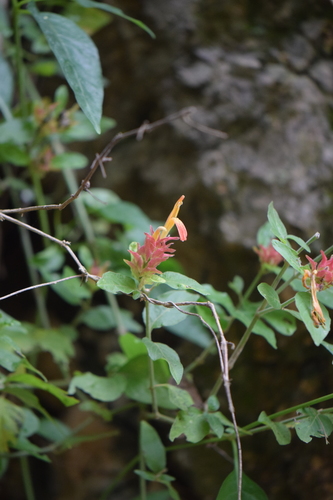
Justicia, Genus, fulvicoma, Species,
- Genus & species
orange shrimp plant
Overview
Justicia fulvicoma is an evergreen tropical shrub reaching 24-48 inches (60-120 cm) tall and wide, with a spreading mounding habit and soft-stemmed branches that root where they touch moist soil. Leaves are ovate, 2-4 inches (5-10 cm) long, medium green with prominent veins, arranged opposite along the stems. Terminal flower spikes 3-5 inches (8-13 cm) long carry overlapping orange to rust-colored bracts that persist for 4-6 weeks, with small tubular white flowers emerging from between the bracts and lasting only a few days each. The bracts give the plant its common name, resembling cooked shrimp in shape and color. In zones 10-11 the shrub flowers year-round; in cooler zones it dies back to the ground after frost and resprouts in late spring, blooming June through October. Stems become woody with age and may flop under their own weight, requiring support or hard pruning every 2-3 years. Hummingbirds and butterflies feed on the tubular flowers. Susceptible to spider mites in hot dry indoor conditions. Frost damage occurs below 32°F (0°C); plants in zones 9 and below should be grown in containers and brought indoors for winter.
Native Range
J. fulvicoma is native to Mexico and Central America, where it grows in moist understory habitats of tropical and subtropical forests. Found at elevations from sea level to 4,000 feet (1,200 m).Suggested Uses
Grown in tropical borders, containers, and as a houseplant in zones 9 and below. In zones 10-11 used as a low informal hedge, spaced 24-30 inches (60-75 cm) apart. Container culture at 3+ gallons (11+ liters) with regular watering.How to Identify
Appearance
Size & Dimensions
Height2' - 4'
Width/Spread2' - 4'
Bloom Information
Year-round in zones 10-11 with peaks in spring and fall; June through October in zones 8-9 where plants die back in winter. Bracts persist for 4-6 weeks per spike; individual white flowers last 2-3 days. Removing spent spikes extends flowering by 4-8 weeks.
Detailed Descriptions
Flower Description
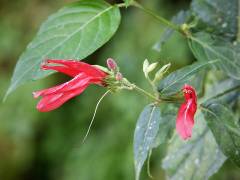
Tubular white flowers emerging from overlapping orange to rust-colored bractsFoliage Description
Medium green, ovate, with prominent venationGrowing Conditions
Sun Requirements
Requires 4-8 hours of direct sunlight daily
• Full Sun: 6+ hours of direct sunlight
• Partial Shade: 3-6 hours of direct sunlight
• Full Shade: Less than 3 hours of direct sunlight
Care & Maintenance
Care Guide
Water weekly during the first growing season to establish; established plants tolerate brief dry periods but flower less without consistent moisture. Apply a balanced liquid fertilizer monthly during active growth from March through October. Spider mites develop in hot dry conditions, particularly on indoor container plants in winter; rinse foliage with water to reduce populations. Whiteflies may appear on stressed plants. Stems become leggy after 2-3 years and benefit from hard pruning to 6-8 inches (15-20 cm) above the soil to renew dense growth. Hardy in zones 10-11 only; container culture is required in zones 9 and below with overwintering at 50-60°F (10-16°C) indoors.Pruning
Cut back to 6-8 inches (15-20 cm) above the soil in late winter or early spring to maintain a compact form and encourage dense regrowth. Pinch growing tips through the season to promote branching. Remove spent flower spikes at the base to extend the bloom period.Pruning Schedule
Prune: February–March
early spring
Container Growing
Suitable for container growing
Minimum container size: 3 gallons