Ononis, Genus, spp., Multiple species,
- Genus
- Multiple species
restharrows
Europe, Mediterranean, North Africa, western Asia
Overview
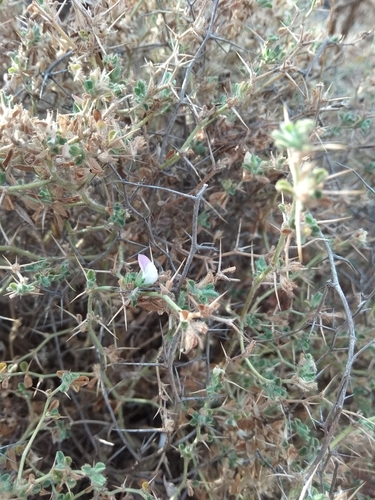
Ononis is a genus of about 75 species of annuals, perennials, and small subshrubs in the pea family (Fabaceae), centred on Europe, the Mediterranean, and western Asia. Most species form low, branching, often sticky-hairy plants 6-32 in (15-80 cm) tall, and several carry stiff spines on the stems. The leaves are usually trifoliate, like a clover, with toothed leaflets, and many are glandular and aromatic when touched. Pea-type flowers appear in summer in shades of pink, rose, purple, or yellow, 0.3-0.8 in (8-20 mm) long, borne singly or in leafy spikes. Flowers give way to short pods holding a few seeds. Perennial species develop deep, tough, woody roots that historically resisted the plough, the source of the name restharrow. The genus grows in dry grassland, on rocky slopes, dunes, and field margins, mostly on lime-rich soils. As legumes, the roots fix nitrogen and improve poor ground. Some species spread by creeping stems and can become weedy on disturbed agricultural land.
Native Range
The genus is native to Europe, the Mediterranean basin, North Africa, and western Asia, with the greatest diversity around the Mediterranean. Species grow in dry grassland, on rocky and sandy slopes, coastal dunes, and field edges, mostly over chalk and limestone.Suggested Uses
Grown in dry gardens, gravel and rock gardens, and wildflower plantings on chalk or sandy soils. The summer pea flowers draw bees, and O. spinosa and O. repens are used in native grassland and dune plantings.How to Identify
Appearance
Size & Dimensions
Height6" - 2'8"
Width/Spread1' - 3'
Bloom Information
Flowering runs through summer, roughly June to September, with pink to purple pea flowers opening in the leaf axils along the stems. Bloom continues over several weeks as new growth extends. Short seed pods ripen from late summer.
Detailed Descriptions
Flower Description
pink, rose, purple, or yellowFoliage Description
greenGrowing Conditions
Sun Requirements
Requires 6-12 hours of direct sunlight daily
• Full Sun: 6+ hours of direct sunlight
• Partial Shade: 3-6 hours of direct sunlight
• Full Shade: Less than 3 hours of direct sunlight
Care & Maintenance
Care Guide
Plants grow in full sun and sharply drained, lime-rich soils of low fertility, including chalk, sand, and rocky ground. Established plants are drought-tolerant and need little water, drawing on deep roots. Rich or wet soils cause soft, short-lived growth, so lean conditions suit them. As nitrogen-fixing legumes, they need no feeding and can improve poor soil. Perennial species resent root disturbance once established because of their deep taproots. Annual species self-seed where conditions allow.Pruning
Subshrubby species can be trimmed lightly in spring to remove dead stems and keep a compact shape. Spent growth is cut back after seeding on plants where self-sowing is not wanted.Pruning Schedule
Prune: March
early spring
