Overview
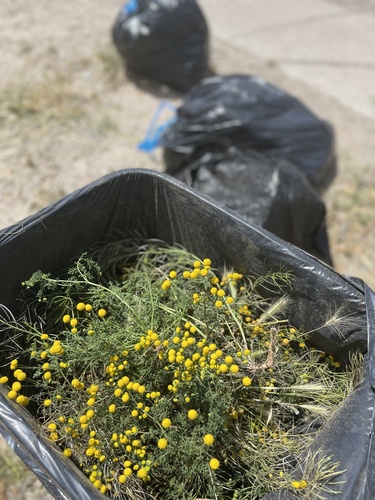
Oncosiphon pilulifer is an aromatic annual in the Asteraceae, reaching 6-24 inches (15-60 cm) tall and 6-16 inches (15-40 cm) wide in a single growing season. Stems branch from the base and carry finely dissected, fern-like leaves 0.8-2 inches (2-5 cm) long that release a strong resinous odor when crushed. From late winter into spring the plant produces numerous spherical flower heads 0.2-0.4 inch (5-10 mm) across, composed entirely of tiny yellow disc florets with no ray petals, giving each head a button-like outline. A single plant can set thousands of seeds, which germinate after autumn and winter rains. In its introduced range across the Sonoran Desert of Arizona and parts of southern California, dense stands form on disturbed soils, roadsides, and desert flats, where the dried plants increase the dry fuel load and raise spring fire risk. The pollen and crushed foliage can trigger allergic skin and respiratory reactions in sensitive people. Oncosiphon pilulifer is listed as a noxious or invasive weed in Arizona and is targeted for removal in many Sonoran Desert preserves. It tolerates poor, compacted soils and full sun, completing its life cycle before summer heat. Growth is limited to a single season, and control depends on removing plants before seed set.
Native Range
Native to the winter-rainfall region of the Western Cape in South Africa. It has naturalized in Arizona and southern California, where it spreads on disturbed desert soils, roadsides, and vacant ground.Suggested Uses
Oncosiphon pilulifer has no horticultural use and is treated as an invasive weed in its introduced range. It is encountered on roadsides, vacant lots, and disturbed desert ground rather than in planted gardens.How to Identify
Appearance
Size & Dimensions
Height6" - 2'
Width/Spread6" - 1'4"
Bloom Information
Detailed Descriptions
Foliage Description
bright greenGrowing Conditions
Sun Requirements
Requires 6-12 hours of direct sunlight daily
• Full Sun: 6+ hours of direct sunlight
• Partial Shade: 3-6 hours of direct sunlight
• Full Shade: Less than 3 hours of direct sunlight
Water & Climate
Water Needs
Drought Tolerance
Drought tolerant when established