Nymphaea, Genus, spp., Multiple species,
- Genus
- Multiple species
waterlilies
Worldwide in temperate and tropical fresh water
Overview
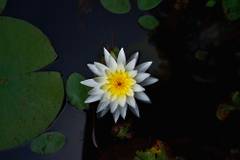
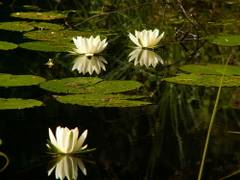
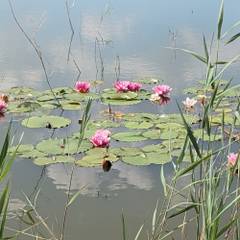
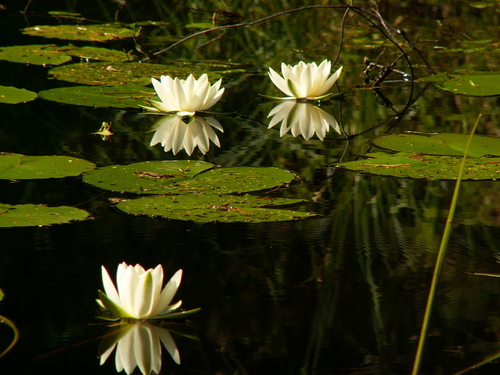
Nymphaea is a genus of about 35 to 50 species of rhizomatous aquatic perennials in the family Nymphaeaceae, the waterlilies, found in still and slow fresh water worldwide. Plants root in mud at the bottom of ponds and lakes and send up long stalks bearing round to oval floating leaves, or pads, 4–18 in (10–45 cm) across with a notch where the stalk joins. The flowers float on the surface or stand just above it and open by day or, in some species, at night, with many pointed petals in blooms 2–12 in (5–30 cm) across in white, pink, red, yellow, blue, and purple. Hardy waterlilies die back to the rhizome each winter and survive under ice, while tropical species are frost-tender and may hold their leaves year-round. Each flower lasts about three to four days, opening and closing with the light. The fruit is a spongy berry that ripens underwater and releases seeds in a gelatinous coat. The leaves and flowers shade the water and can cover a pond surface, reducing light and oxygen below. The genus grows in ponds, lake margins, and slow streams across temperate and tropical regions.
Native Range
Nymphaea is found on every continent except Antarctica, in temperate and tropical fresh water. North American native species include the fragrant waterlily N. odorata and yellow waterlily N. mexicana. The white waterlily N. alba is native to Europe, and the night-blooming N. caerulea to Africa.Suggested Uses
Nymphaea species are grown in garden ponds, water features, and large containers for their floating leaves and surface flowers. The pads shade the water and shelter fish and aquatic life. The flowers of some species are fragrant and are visited by bees and beetles.How to Identify
Appearance
Size & Dimensions
Height2" - 1'
Width/Spread1' - 8'
Bloom Information
Most Nymphaea species flower through summer, roughly June to September, with each flower opening and closing over three to four days. Day-blooming species open in morning sun and close by afternoon, while some tropical species open at night. A healthy plant produces a succession of flowers across the season. Flower color spans white, pink, red, yellow, blue, and purple depending on species.
Detailed Descriptions
Flower Description
white, pink, red, yellow, blue, or purpleFoliage Description
green, sometimes bronze-mottledGrowing Conditions
Sun Requirements
Requires 6-12 hours of direct sunlight daily
• Full Sun: 6+ hours of direct sunlight
• Partial Shade: 3-6 hours of direct sunlight
• Full Shade: Less than 3 hours of direct sunlight
Care & Maintenance
Care Guide
Nymphaea species grow in full sun in still or slow fresh water 1–4 ft (30–120 cm) deep, rooted in heavy loam topped with gravel in a planting basket. They flower poorly in shade and in moving or turbulent water. Hardy species overwinter in place where the rhizome sits below the freezing line, while tropical species are lifted or treated as annuals in cold climates. Plants draw heavily on nutrients and are fed with aquatic fertilizer tablets pressed into the soil during the growing season. Leaves and rhizomes spread to cover the surface, so plants are divided every 2 to 3 years to control spread and renew flowering. Removing yellowing leaves keeps the water clear.Pruning
Yellowing or damaged Nymphaea leaves and spent flowers are cut off at the base below the water to keep the pond clear. Crowded rhizomes are lifted and divided every few years in spring to renew vigor. Tropical species are cut back and stored frost-free over winter in cold regions.Container Growing
Suitable for container growing
Minimum container size: 5 gallons