Notholithocarpus, Genus, densiflorus, Species,
- Genus & species
Tanoak
Overview
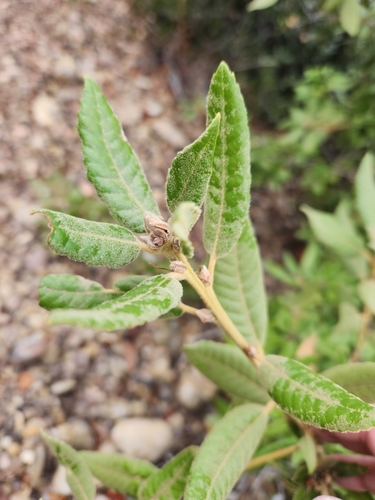
Notholithocarpus densiflorus is an evergreen tree in the Fagaceae, reaching 50-150 feet (15-46 m) tall in forests and forming a shorter, shrubbier form on exposed sites. The leathery, oblong leaves are 2-5 inches (5-13 cm) long with sharply toothed margins, glossy dark green above and pale and woolly beneath when young. It bears erect, pale catkins of densely packed flowers in summer that give off a strong odor; male and female flowers occur on the same stalks. The acorns take about 18 months to mature, sitting in shallow cups covered in slender, spreading bristles rather than the overlapping scales of true oaks. It is native to the Coast Ranges and Sierra Nevada foothills of California and southwestern Oregon, growing in mixed evergreen and redwood forests on well-drained slopes. Once placed in the oak genus, it is now treated as the single species of Notholithocarpus, intermediate between the oaks and the tropical genus Lithocarpus. The species is highly susceptible to sudden oak death, a disease caused by the pathogen Phytophthora ramorum that has killed many trees in coastal California. The hard, heavy wood and tannin-rich bark were once used for leather tanning. Growth is slow and the tree is difficult to transplant.
Native Range
Native to the Pacific Coast of North America, from the Coast Ranges and Sierra Nevada foothills of California north into southwestern Oregon. It grows in mixed evergreen forests, redwood forests, and on wooded slopes below about 5,000 feet (1,500 m).Suggested Uses
Notholithocarpus densiflorus is used as a shade and forest tree in cool coastal regions within its native range and in restoration of mixed evergreen and redwood forests. Its acorns are an important food source for deer, bears, squirrels, and birds, and were a staple food for Indigenous peoples of California. It is rarely planted outside its native range because of its disease susceptibility and slow establishment.How to Identify
Appearance
Size & Dimensions
Height50' - 150'
Width/Spread20' - 50'
Bloom Information
Erect, pale catkins of densely clustered flowers open in summer, mainly June to July, and give off a strong odor. Both male and female flowers occur on the same catkins. Acorns develop slowly and take about 18 months to ripen.
Detailed Descriptions
Foliage Description
dark greenGrowing Conditions
Sun Requirements
Requires 4-10 hours of direct sunlight daily
• Full Sun: 6+ hours of direct sunlight
• Partial Shade: 3-6 hours of direct sunlight
• Full Shade: Less than 3 hours of direct sunlight