Nitraria, Genus, spp., Multiple species,
- Genus
- Multiple species
Nitre bush
Arid and coastal regions of Asia, North Africa, SE Europe, and Australia
Overview
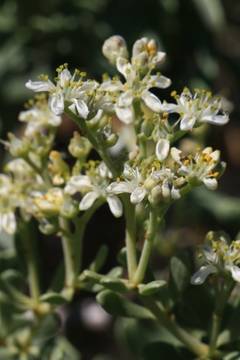
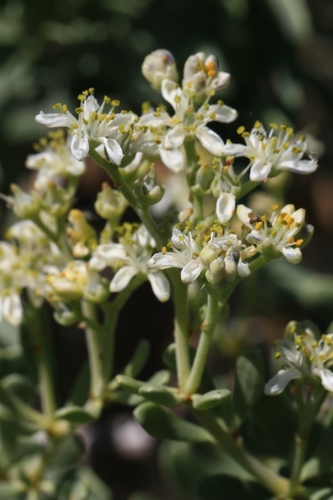
Nitraria is a genus of about ten spiny, salt-tolerant shrubs in the family Nitrariaceae, spread across the arid and coastal regions of Asia, North Africa, south-eastern Europe, and Australia. Plants form low, spreading, intricately branched mounds 0.5-2 m (1.6-6.6 ft) tall and often wider, the rigid branchlets tipped with spines. The small leaves are fleshy, grey-green, and wedge-shaped, clustered along the stems and suited to drying winds and salty ground. Clusters of small white to cream flowers open in spring and early summer, followed by fleshy drupes 6-15 mm (0.2-0.6 in) long that ripen red, purple, or near-black and hold a single hard stone. The juicy fruit is edible and has long been gathered by Aboriginal peoples in Australia and by communities across the genus range. N. billardierei, dillon bush, grows around salt lakes and floodplains in inland and southern Australia, while N. schoberi ranges from the Mediterranean across Central Asia. Plants withstand salinity, drought, and shifting sand, and can trap windblown sand into low hummocks.
Native Range
Nitraria is native to arid, semi-arid, and coastal saline habitats across Asia, North Africa, south-eastern Europe, and Australia. Species grow around salt lakes, on saltpans, coastal dunes, and floodplains, often where few other shrubs survive. N. billardierei is the main Australian species, while others span the deserts and steppes of Central Asia and the Middle East.Suggested Uses
Grown in dry, coastal, and saline gardens and used in revegetation of salt-affected and sandy land, spaced 1-2 m (3-6.6 ft) apart. The edible fruit is harvested as bush food, and the dense spiny habit gives shelter and nesting sites for small birds.How to Identify
Appearance
Size & Dimensions
Height1'7" - 6'7"
Width/Spread3' - 8'
Bloom Information
Small white to cream flowers open in clusters in spring and early summer, mainly September to December in Australia and the northern-hemisphere spring elsewhere. Flowering follows soil moisture and may be sparse in very dry years. Fleshy drupes ripen over the following weeks to red, purple, or black.
Detailed Descriptions
Flower Description
White to creamFoliage Description
Grey-greenGrowing Conditions
Sun Requirements
Requires 6-12 hours of direct sunlight daily
• Full Sun: 6+ hours of direct sunlight
• Partial Shade: 3-6 hours of direct sunlight
• Full Shade: Less than 3 hours of direct sunlight