Nerine, Genus, bowdenii, Species,
- Genus & species
Bowden's nerine
South Africa (Eastern Cape, KwaZulu-Natal; grasslands and rocky slopes; 2600-6500 ft / 800-2000 m elevation; summer-rainfall climate region)
Overview
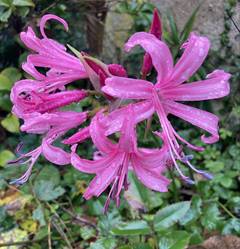
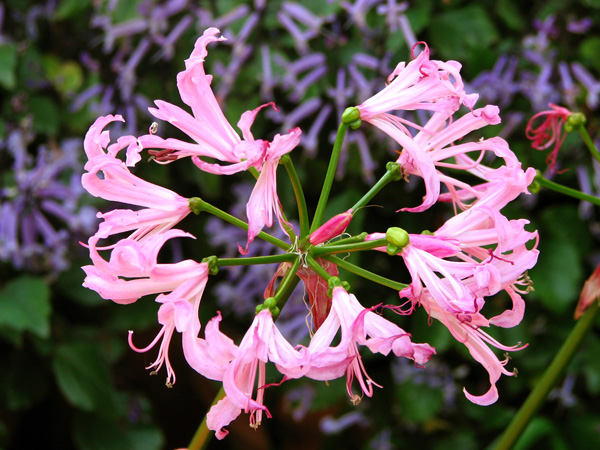
Nerine bowdenii is a bulbous perennial reaching 18–24 inches (45–60 cm) tall with a spread of 4–6 inches (10–15 cm) per bulb. Native to South Africa (Eastern Cape and KwaZulu-Natal provinces), this species runs the hardiest member of the genus Nerine in temperate cultivation and reaches zone 7 cold tolerance where most other Nerine species fail below zone 9. Flowers appear in autumn (September through November) on leafless flowering stems—the strap-shaped basal leaves emerge after or during the autumn flowering period and persist through winter and spring, dying back in early summer as the bulb enters dormancy. Each flower stem carries an umbel of 5–12 funnel-shaped flowers; each flower runs 2–3 inches (5–8 cm) across with 6 narrow recurved wavy-edged tepals in pink with a deeper pink midrib, and the tepal surface catches sunlight in a crystalline sparkle that supplies the species' primary ornamental character. Growth rate runs slow. Hardy to zone 7, with zone 8 conditions supplying more reliable annual flowering. The species wants a warm sheltered position at the base of a south- or west-facing wall where reflected summer heat warms the bulbs during dormancy and initiates flower-bud formation for the following autumn.
Native Range
Nerine bowdenii is native to South Africa across the Eastern Cape and KwaZulu-Natal provinces, growing in grasslands and rocky slopes at 2,600–6,500 feet (800–2,000 m) elevation in summer-rainfall climate regions. The summer-rainfall native ecology combined with winter dormancy in the species' home range translates in cultivation to a hot summer-dormancy requirement that most northern-hemisphere bulbs do not share.Suggested Uses
Planted at the base of a south- or west-facing warm wall at 4–6 inch (10–15 cm) spacing with the bulb neck at or just above soil level in zone-7-and-warmer gardens. The autumn pink umbels open at a time of year when most perennials have finished flowering, which fills a late-season floral gap in temperate garden design. Summer dormancy heat requirements mean the species needs a position where summer irrigation of surrounding plants does not reach the bulb zone. Slow establishment requires patience across 2–3 years before first flowering. Flowering is strongest when bulbs run congested in the clump, so frequent division runs counterproductive. Cold climates below zone 7, shaded positions, summer-irrigated perennial beds, and climates without warm summer dormancy conditions are poor fits for the species.How to Identify
Appearance
Size & Dimensions
Height1'6" - 2'
Width/Spread4" - 6"
Bloom Information
Umbels of 5–12 funnel-shaped pink flowers open on leafless flowering stems in September through November. Each flower runs 2–3 inches (5–8 cm) across with 6 narrow recurved wavy-edged tepals; the tepals carry a deeper pink midrib and a crystalline sparkle that catches sunlight across the bloom window. Fresh bloom duration runs 3–4 weeks.
Detailed Descriptions
Flower Description
Pink with deeper pink midrib; crystalline sparkle in sunlight; 5-12 flowers per umbel; recurved wavy-edged tepals 2-3 inches; September-November on leafless stemsFoliage Description
Medium green; strap-shaped; emerges after or during autumn flowering; persists through winter and spring; dies back in summerGrowing Conditions
Sun Requirements
Requires 6-10 hours of direct sunlight daily
• Full Sun: 6+ hours of direct sunlight
• Partial Shade: 3-6 hours of direct sunlight
• Full Shade: Less than 3 hours of direct sunlight
Care & Maintenance
Care Guide
Plant bulbs with the bulb neck at or just above soil level in full sun at the base of a warm sheltered south- or west-facing wall, in well-drained soil (pH 6.0–7.5). Hardy to zone 7 (0°F / −18°C), with zone 8 conditions (10°F / −12°C) supplying more reliable annual flowering. Bulbs require summer baking during dormancy to initiate flower-bud formation for the following autumn, so summer irrigation of the bulb zone disrupts flowering. The leaves emerge after or during autumn flowering and persist through winter and spring before dying back in early summer. Establishment runs slow, and the species may take 2–3 years from planting to reach first flowering. Frequent division runs counterproductive because flowering intensifies when bulbs run congested in the clump.Pruning
Spent flower stems are removed after bloom completes. Foliage is allowed to die back naturally in early summer as the bulb enters dormancy—green leaves are not removed while active because they photosynthesize to replenish bulb reserves for the following autumn's flowering.Pruning Schedule
Prune: November–December
fall
Container Growing
Suitable for container growing
Minimum container size: 2 gallons