Nephroia, Genus, spp., Multiple species,
- Genus
- Multiple species
moonseed
Overview
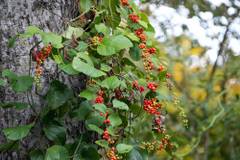
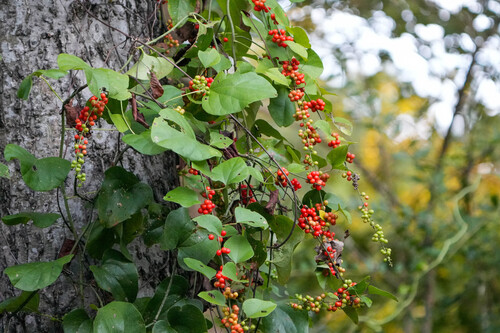
Nephroia is a genus of twining vines in the moonseed family (Menispermaceae), found in the Americas and eastern Asia and including species formerly placed in Cocculus. Plants twine to 3-5 m (10-16 ft) over shrubs, fences, and woodland edges, with slender stems that are woody at the base and die back partly in cold winters. The alternate leaves vary from heart-shaped to lobed, 4-12 cm (1.5-4.5 in) long, often with a slightly leathery feel and a notched or pointed tip. The plants are dioecious, bearing small, greenish-white flowers in loose clusters through summer that are individually inconspicuous. Female vines follow with rounded drupes 5-8 mm (0.2-0.3 in) that ripen bright red or black, each holding a single flattened, crescent- or kidney-shaped seed that gives the family its moonseed name. N. carolina, the Carolina coralbead, is widely recognised across the south-eastern United States. The berries of moonseed vines contain alkaloids and are poisonous if eaten, resembling wild grapes closely enough to be mistaken for them.
Native Range
Nephroia is native to the Americas and eastern Asia. N. carolina ranges through the south-eastern and south-central United States into Mexico, growing along woodland edges, fencerows, thickets, and streambanks. Other species occur in eastern Asia in comparable scrub and forest-margin habitats.Suggested Uses
Grown on fences and trellises in native and naturalistic plantings for its autumn berries, spaced 1.5-3 m (5-10 ft) apart. The red or black fruit is taken by birds, which spread the seed. The poisonous berries make it unsuited to areas used by young children.How to Identify
Appearance
Size & Dimensions
Height10' - 16'
Width/Spread3' - 6'
Bloom Information
Small greenish-white flowers open in loose clusters through summer, mainly June to August. Male and female flowers occur on separate plants, so fruit forms only on female vines. Red or black drupes ripen from late summer into autumn and can persist after the leaves fall.
Detailed Descriptions
Foliage Description
Mid-greenGrowing Conditions
Sun Requirements
Requires 4-8 hours of direct sunlight daily
• Full Sun: 6+ hours of direct sunlight
• Partial Shade: 3-6 hours of direct sunlight
• Full Shade: Less than 3 hours of direct sunlight