Nelumbo, Genus, nucifera, Species,
- Genus & species
Sacred lotus
Volga delta and Caspian basin east through Iran, the Indian subcontinent, China, and Southeast Asia to New Guinea and northern Australia
Overview
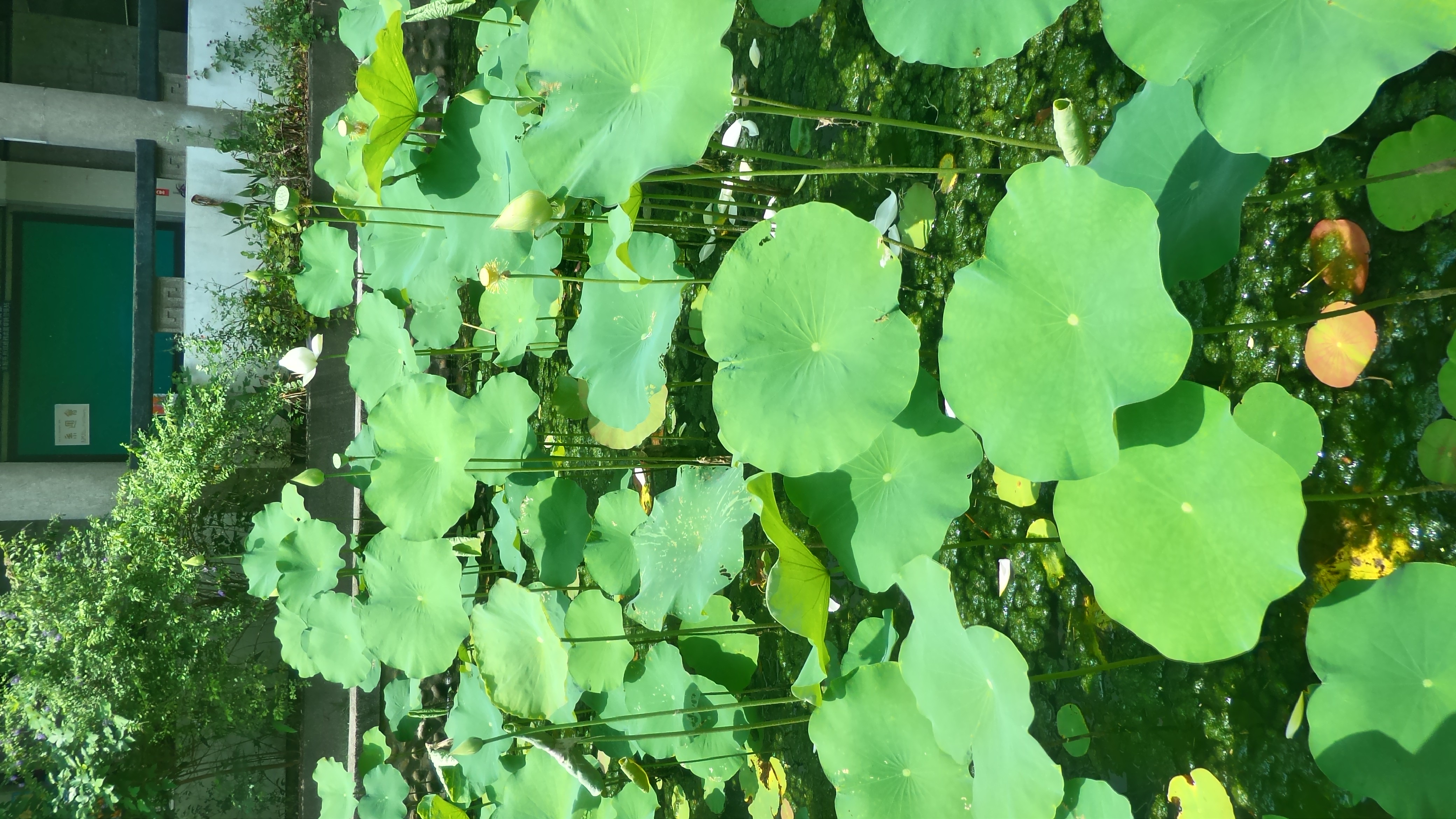
Nelumbo nucifera is an aquatic perennial growing from a jointed rhizome buried in pond mud, sending peltate leaf blades 12-24 inches (30-60 cm) across on stalks that hold them 3-6 feet (0.9-1.8 m) above the water. The leaf surface carries wax crystals 10-100 nanometres tall over papillae about 0.0004 inch (10 micrometres) high, so water beads and rolls off, taking dust with it. Flowers are 6-12 inches (15-30 cm) across with 20-30 pink or white petals around a flat-topped yellow receptacle. Each flower opens at dawn and closes by midday over three consecutive days, holding its receptacle at 86-95 F (30-35 C) whatever the air temperature. The receptacle enlarges into an obconic seed head 3-4 inches (7-10 cm) across holding 10-30 nuts in separate pits. Seeds carry a hard pericarp and stay viable for centuries; germination has been recorded from nuts radiocarbon-dated at about 1,300 years. Rhizomes and seeds are grown as vegetables across East and South Asia. Rhizomes extend 4-8 feet (1.2-2.4 m) per season and fill a small pond within three years, crowding out submerged and floating species. Hardy in USDA zones 4-11 where the rhizome sits below the ice line.
Native Range
Nelumbo nucifera occurs naturally from the Volga delta on the Caspian Sea east through Iran, the Indian subcontinent, China, and Southeast Asia to New Guinea and northern Australia. Populations occupy still and slow-moving fresh water 1-8 feet (0.3-2.4 m) deep over a silt or clay bed. Cultivation across that range goes back at least 3,000 years, and naturalised stands sit outside the original distribution in Japan, Hawaii, and parts of the eastern United States.Suggested Uses
Grown in ponds, formal water bowls, half-barrels, and paddy-style plots in botanical and temple gardens. Rhizomes are harvested in autumn as the vegetable renkon, and seeds are eaten fresh, dried, or ground into flour. Dried seed heads are used in floral work. A pot or lined basin holds the rhizomes within a set area in ponds under 400 square feet (37 sq m).How to Identify
Appearance
Size & Dimensions
Height3' - 6'
Width/Spread4' - 8'
Bloom Information
Flowering runs from mid-June to early September in USDA zone 6 and from May to October in zones 9-11. Individual flowers last three days, opening near sunrise and closing by early afternoon, with scent strongest on the first morning. A mature colony carries 5-15 open flowers at a time. Plants raised from seed usually flower in their second or third season, while rhizome divisions flower in the first.
Detailed Descriptions
Flower Description
pink to white, often deeper pink toward the petal tipsFoliage Description
blue-green with a water-repellent surface, turning yellow before dying backGrowing Conditions
Sun Requirements
Requires 6-12 hours of direct sunlight daily
• Full Sun: 6+ hours of direct sunlight
• Partial Shade: 3-6 hours of direct sunlight
• Full Shade: Less than 3 hours of direct sunlight
Care & Maintenance
Care Guide
Six or more hours of direct sun daily carries flowering; plants in less than five hours produce leaves and no buds. Rhizomes sit in 6-8 inches (15-20 cm) of heavy clay loam under 6-18 inches (15-45 cm) of standing water in containers, or under 2-4 feet (0.6-1.2 m) in ponds. Water pH runs 6.0-8.0, and water temperature above 70 F (21 C) is needed before growth starts each spring. Aquatic tablet fertiliser at 1 tablet per 4 gallons (15 L) of soil is pushed into the pot every three to four weeks from leaf emergence until late August. In zones 4-6 the container is lowered so the rhizome sits below the ice line, since freezing of the growing tip kills the plant. Aphids gather on new leaf stalks, and lotus leaf beetle chews the emergent blades.Pruning
Yellowing leaves are cut above the water line, since stalks severed below the surface flood the rhizome and rot it. Whole top growth is taken off after the first hard frost in autumn. Rhizomes are lifted and divided every two to three years in spring as growing tips break dormancy, with each division carrying at least two nodes and one growing tip. Seed heads are cut at the green stage where self-sowing into a pond is not wanted.Pruning Schedule
Prune: October–November
fall
Container Growing
Suitable for container growing
Minimum container size: 25 gallons