Image 1 of 17
1 / 17
Plant Reference
Nassella, Genus, tenuissima, Species,
- Genus & species
Mexican feather/hair grass
Mexico (Chihuahua, Coahuila), New Mexico, and Texas.
Overview
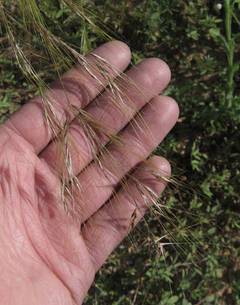
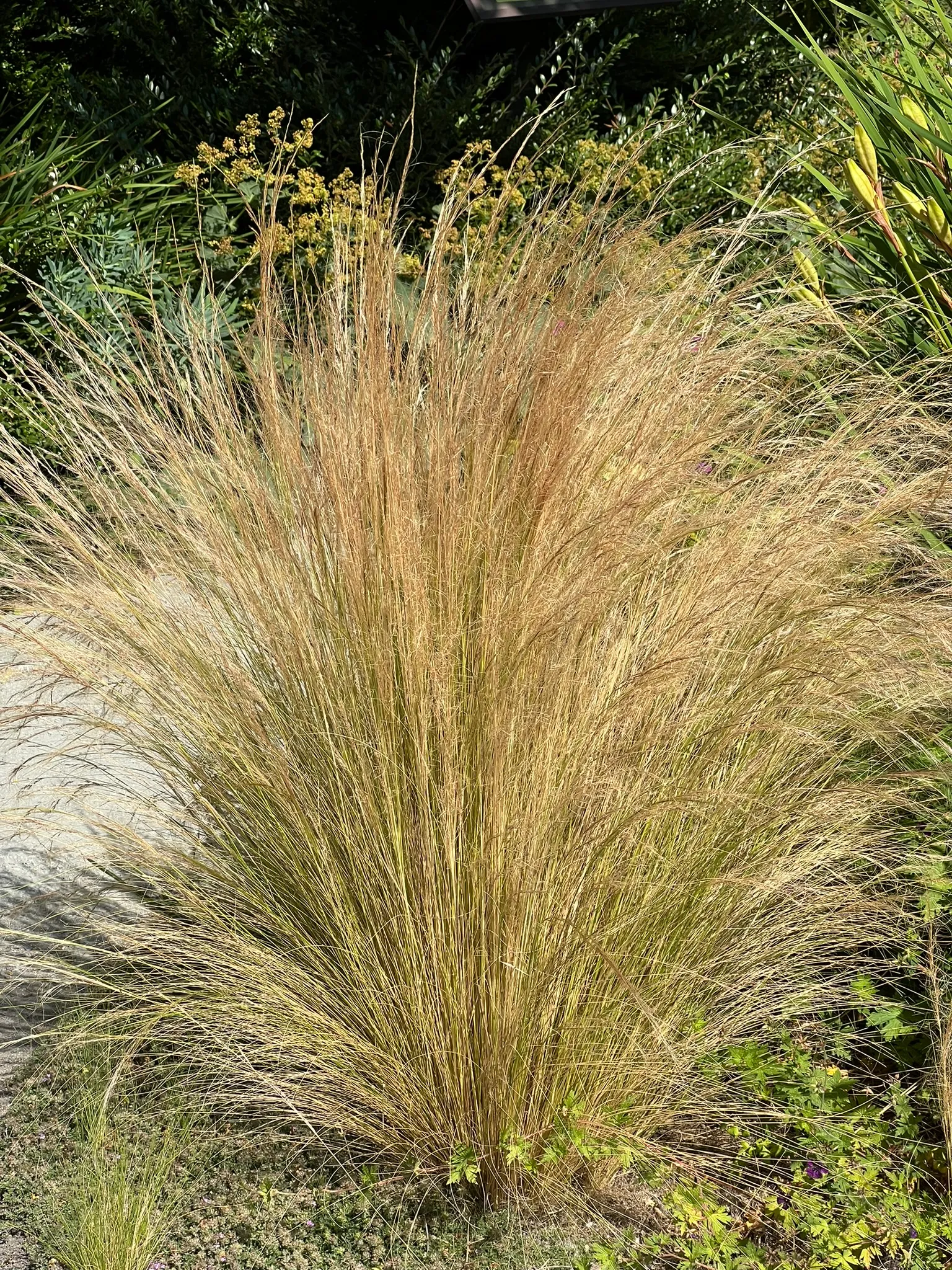
Nassella tenuissima (synonym Stipa tenuissima) is a semi-evergreen, warm-season, clumping ornamental grass reaching 12-24 inches (30-60 cm) tall and 18-24 inches (45-60 cm) wide. Leaf blades are thread-like and approximately 0.02 inch (0.5 mm) wide, bright green in spring and shifting to gold-tan by late summer. Silvery-white to golden-tan feathery panicles rise just above the foliage from May through July and blend in color with the blades. The foliage and seed heads move continuously in even light air movement. The species self-seeds prolifically on disturbed, open ground and is listed as invasive in California, parts of New Mexico and Texas, and Australia. Removing seed heads before dispersal reduces escape into surrounding landscape. Dried foliage and seed heads persist on the plant through fall and winter. The entire clump is cut back to 3-4 inches (7-10 cm) in late winter before new growth begins. Hardy to USDA zone 7 (0°F / -18°C); crowns decline in wet winter soils.
Native Range
Nassella tenuissima is native to northern Mexico (Chihuahua, Coahuila), New Mexico, and Texas, where it grows on dry, rocky, open slopes and disturbed ground. Populations have also naturalized across California, parts of Australia, and the Mediterranean.Suggested Uses
Planted in gravel gardens, dry borders, meadow-style plantings, and containers of 3 gallons (11 L) or more at 18-24 inch (45-60 cm) spacing in USDA zones 7-9. The thread-like texture and constant motion in air movement make this species a vertical and kinetic element in xeriscape plantings. The invasive classification limits use near natural areas in California, parts of New Mexico and Texas, and Australia, where self-sowing into surrounding vegetation is documented. Not grown in wet or heavy clay soils, where crown rot reduces lifespan to 1-2 seasons.How to Identify
Appearance
Size & Dimensions
Height1' - 2'
Width/Spread1'6" - 2'
Bloom Information
Silvery-white to golden-tan feathery panicles emerge May through July and persist in dried gold-tan form on the plant through autumn and winter. Seed set is rapid, with mature seeds dispersing by wind within 3-4 weeks of panicle emergence in dry years, or 5-6 weeks in cooler maritime summers. Each mature clump produces thousands of seeds per season.
Detailed Descriptions
Flower Description
Silvery-white to golden-tan feathery panicles; blending with the foliage; May-JulyFoliage Description
Bright green in spring, aging to gold-tan by late summer; thread-like blades approximately 0.02 inch (0.5 mm) wideGrowing Conditions
Sun Requirements
Requires 6-10 hours of direct sunlight daily
• Full Sun: 6+ hours of direct sunlight
• Partial Shade: 3-6 hours of direct sunlight
• Full Shade: Less than 3 hours of direct sunlight
Care & Maintenance
Care Guide
Plants grow in full sun in lean, sharply drained soil with a pH of 6.0-8.0, including sand, rocky ground, and chalk. Hardy to USDA zone 7 (0°F / -18°C); crown rot develops in wet winter soils and plants are short-lived in heavy clay or poorly drained beds. Drought tolerant once established; supplemental water is only needed during the first growing season. The species is listed as invasive in California, parts of New Mexico and Texas, and Australia, and self-seeds prolifically on disturbed, open ground; cutting off and bagging seed heads before dispersal reduces escape into surrounding areas. Seed heads are disposed of rather than composted, as seeds survive home compost temperatures.Pruning
Cut the entire clump to 3-4 inches (7-10 cm) above ground in late winter, February through March, before new growth begins. Seed heads can be removed through the growing season in summer to reduce self-seeding. Combing dead foliage out of the clump in early spring with a gloved hand removes tan blades and improves airflow.Pruning Schedule
Prune: February–March
early spring
Container Growing
Suitable for container growing
Minimum container size: 3 gallons