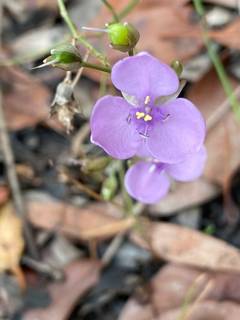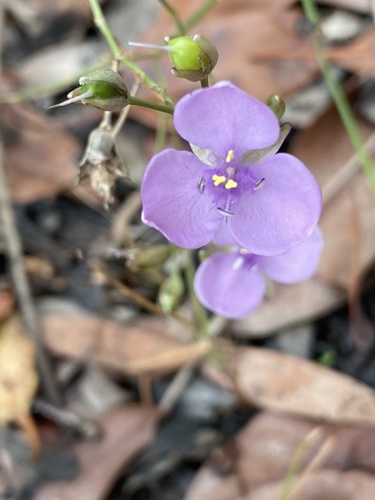
Murdannia, Genus, spp., Multiple species,
- Genus
- Multiple species
Tropics and subtropics worldwide (mainly Asia)
Overview
Murdannia is a genus of around 50 annual and perennial herbs in the dayflower family (Commelinaceae), spread through tropical and subtropical regions worldwide and most diverse in Asia. Plants range from creeping, rooting stems to erect or tufted growth, generally 4-24 inches (10-60 cm) tall, with soft, grass-like to lance-shaped leaves that sheathe the stem. The three-petaled flowers are short-lived, opening for part of a day, in shades of blue, violet, lilac, pink, or white, and are carried singly or in small clusters. Murdannia nudiflora is a widespread weed of lawns, paths, and rice fields, while Murdannia keisak has become invasive in wetlands of the southeastern United States. Many species occupy moist or seasonally wet ground and root freely from the nodes, letting them spread quickly. Several behave as persistent weeds in warm climates.
Native Range
Murdannia is native across the tropics and subtropics of Asia, Africa, Australia, and the Americas, with the center of diversity in Asia. Plants grow in moist to wet open ground, including marsh edges, ditches, rice fields, lawns, and disturbed soil.Suggested Uses
Some species are grown in bog gardens, pond margins, and damp containers for their short-lived blue to lilac flowers. More often the genus is encountered as a lawn, rice-field, or wetland weed. Containment is needed for the spreading and wetland-invasive species.How to Identify
Appearance
Size & Dimensions
Height4" - 2'
Width/Spread6" - 2'
Bloom Information
Detailed Descriptions
Flower Description
Blue to violet, lilac, pink, or whiteFoliage Description
GreenGrowing Conditions
Sun Requirements
Requires 4-10 hours of direct sunlight daily
• Full Sun: 6+ hours of direct sunlight
• Partial Shade: 3-6 hours of direct sunlight
• Full Shade: Less than 3 hours of direct sunlight
Care & Maintenance
Care Guide
Most species grow in full sun to part shade on moist to wet soil and tolerate poor and disturbed ground. Steady moisture suits the genus, and several species thrive in shallow water or saturated soil at pond and marsh edges. Stems root readily at the nodes, so plants spread on their own and can move beyond their intended area. Frost kills top growth, and tender species are grown as warm-season plants outside the tropics. Propagation is by seed or by rooted stem pieces. Where the wetland species are unwanted, removal before seed set helps limit spread.Pruning
Trim or mow spreading stems to control the size of patches and reduce reseeding. Remove rooted fragments to keep plants from moving into new ground. No formal pruning is needed.Container Growing
Suitable for container growing
Minimum container size: 2 gallons