Pseudogynoxys, Genus, chenopodioides, Species,
- Genus & species
Mexican flame vine
Overview
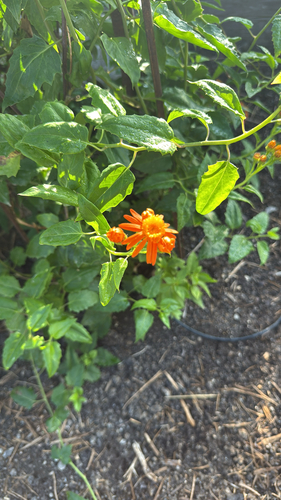
Pseudogynoxys chenopodioides is the Mexican flame vine (orange glow vine), a tropical climbing or sprawling perennial in the daisy family (Asteraceae) growing 96-240 inches (240-600 cm). Bright orange to red-orange daisy-like flowers 1.5-2 inches (4-5 cm) with a yellow disc center cluster in terminal heads from spring through fall (year-round in tropics) — orange-flowered vines are uncommon in southern gardens, and this species fills that color niche. The flame-orange color is the species' defining trait. Medium green ovate leaves 2-4 inches (5-10 cm) with toothed margins on twining stems. Butterfly magnet — particularly heavily visited by monarchs, queens, and other large nectar-feeding butterflies; the butterfly traffic in bloom is heavy. Native to Mexico, Belize, and Honduras. Formerly classified as Senecio confusus. Non-toxic. Frost-tender: foliage damage at 32°F (0°C); roots resprout from zone 9 with mulch. Full sun for heaviest flowering. Drought-tolerant once established. Adapts to a range of soils. Hummingbirds also visit the orange flowers. Growth rate is fast — 60-120 inches (150-300 cm) per year. Containers of 5-10 gallons (20-40 liters). Zones 9-11.
Native Range
Native to Mexico, Belize, and Honduras. Formerly classified as Senecio confusus.Suggested Uses
Grown on trellises, fences, arbors, and as a sprawling ground cover in zones 9-11. Containers of 5-10 gallons (20-40 liters). Full sun for heaviest bloom. Heavy butterfly traffic — placement near seating areas and butterfly gardens. Non-toxic. Hummingbird-visited. The orange flower color fills a niche in tropical vine palettes.How to Identify
Appearance
Size & Dimensions
Height8' - 20'
Width/Spread5' - 10'
Bloom Information
Detailed Descriptions
Flower Description
Bright orange to red-orange daisy clusters with yellow disc centersFoliage Description
Medium green, ovate, toothed marginsGrowing Conditions
Sun Requirements
Requires 5-10 hours of direct sunlight daily
• Full Sun: 6+ hours of direct sunlight
• Partial Shade: 3-6 hours of direct sunlight
• Full Shade: Less than 3 hours of direct sunlight
Care & Maintenance
Care Guide
Full sun for heaviest bloom; tolerates partial shade. Drought-tolerant once established. Frost-tender at 32°F (0°C); roots resprout from zone 9 with mulch. Twining stems wrap supports. Non-toxic. Heavily butterfly-visited. Hummingbird-visited. Zones 9-11.Pruning
Pruning to control size happens after flowering or in late winter. Cut back by one-third to one-half. Tolerates aggressive cutback and resprouts vigorously. The fast growth rate calls for annual pruning in tight spaces.Container Growing
Suitable for container growing
Minimum container size: 5 gallons