Image 1 of 4
1 / 4
Photo byCommunity
Mesembryanthemum, Genus, spp., Multiple species,
- Genus
- Multiple species
ice plants
Overview
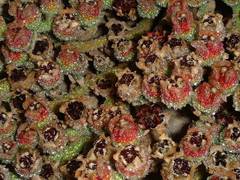
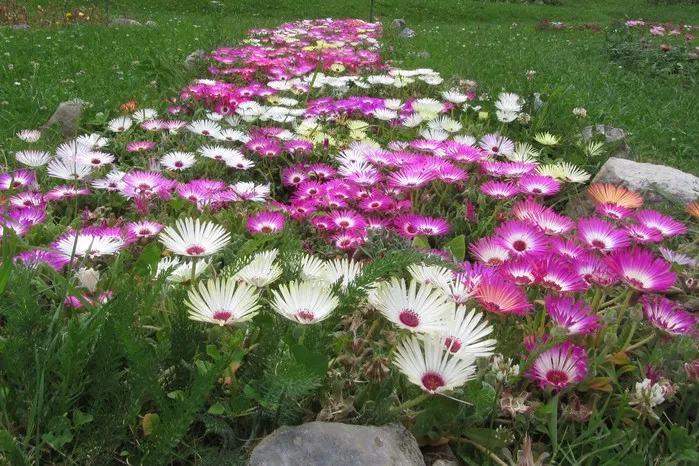
Mesembryanthemum is a genus of succulent annual, biennial, and short-lived perennial plants in the ice-plant family, native chiefly to southern Africa. Plants are low and spreading, 2-12 inches (5-30 cm) tall and trailing 8-24 inches (20-60 cm) wide, with fleshy, water-storing leaves that are flat, cylindrical, or spoon-shaped and 0.4-4 inches (1-10 cm) long. The surface of stems and leaves is studded with large, glistening bladder cells that catch the light like beads of ice, the feature behind the common name. Daisy-like flowers 0.4-2 inches (1-5 cm) across open in sun and close in shade, with many narrow petals in white, pale yellow, pink, or red surrounding a cluster of stamens. Bloom runs through the warm season, each flower lasting a few days. Plants set abundant seed in capsules that open when wet. The bladder cells store salt and water, allowing growth in saline, arid soils, and M. crystallinum can accumulate enough salt to alter the surrounding ground. Foliage often flushes red or pink under drought, salt, or cold stress. Most species are frost-tender and complete their cycle quickly in a single warm season.
Native Range
The genus Mesembryanthemum is native chiefly to southern Africa, with the greatest diversity in South Africa and Namibia, extending into northern Africa, the Mediterranean, and southwestern Asia. Plants grow in coastal sand, saline flats, semi-desert, and disturbed dry ground. Several species, including M. crystallinum and M. nodiflorum, have naturalized in California, Australia, and other warm, dry coastal regions.Suggested Uses
Grown in coastal gardens, gravel and rock gardens, dry banks, and containers, spaced 8-12 inches (20-30 cm) apart. Used as warm-season ground cover in sandy, saline, or drought-prone sites where many plants struggle. M. crystallinum is also grown as an edible leaf crop in some regions.How to Identify
Appearance
Size & Dimensions
Height2" - 1'
Width/Spread8" - 2'
Bloom Information
Blooms through the warm season, mainly spring and summer, with timing depending on rainfall and temperature. Flowers open in bright sun and close in shade or at night, each lasting two to four days. In hot, dry climates flowering follows rain. Plants bloom heavily as annuals before setting seed and dying.
Detailed Descriptions
Flower Description
white, pale yellow, pink, or redFoliage Description
green, reddening under stressGrowing Conditions
Sun Requirements
Requires 6-12 hours of direct sunlight daily
• Full Sun: 6+ hours of direct sunlight
• Partial Shade: 3-6 hours of direct sunlight
• Full Shade: Less than 3 hours of direct sunlight
Water & Climate
Water Needs
Drought Tolerance
Drought tolerant when established
Care & Maintenance
Care Guide
Grows in full sun in sandy, sharply drained soil, tolerating salt and drought once established; wet or heavy soil causes rot. Seed is sown on the surface in warm conditions, as light aids germination. Plants need little water and no routine feeding, and overwatering produces soft, collapse-prone growth. Aphids and mealybugs occur on stressed plants. Most species are frost-tender and finish in one season, self-seeding where soil is open. In containers, a free-draining cactus mix and full sun keep growth compact.Pruning
No formal pruning is needed for these low succulents. Straggly or frost-damaged growth is trimmed back to tidy the plant or removed entirely at the end of the season. Spent plants are cleared once seed has set, leaving some to self-sow where more plants are wanted.Container Growing
Suitable for container growing
Minimum container size: 1 gallons
Toxicity
Non-toxicPlanting Guide
Planting Methods & Timing
Planting Method
direct sow
Direct Sow Timing
Spring, after frost, on warm soil surface
Days to Maturity
60–100 days
Plant Spacing
10 inches