Melittis, Genus, spp., Multiple species,
- Genus
- Multiple species
bastard balm
Western, central, and southern Europe
Overview
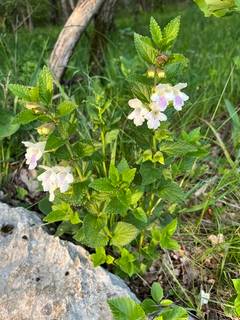
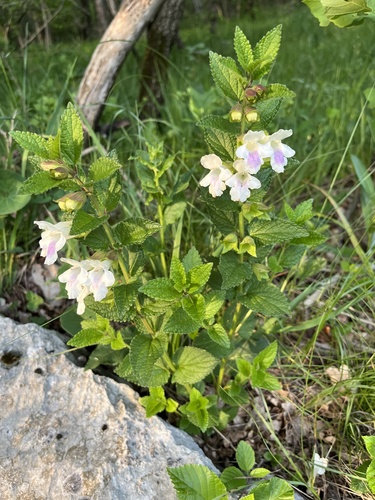
Melittis is a genus in the mint family (Lamiaceae) represented by the single species Melittis melissophyllum, known as bastard balm. It is a herbaceous perennial native to woodland margins and clearings across western, central, and southern Europe. Plants form upright clumps of four-angled stems 8-28 inches (20-70 cm) tall, clothed in opposite, ovate leaves 2-3 inches (5-8 cm) long with toothed margins and a wrinkled surface. The foliage carries a honey-like scent that strengthens as it dries. From late spring into early summer, large two-lipped flowers open in the upper leaf axils, each 1-1.5 inches (2.5-4 cm) long, white with a pink to purple lower lip, though wholly white and wholly pink forms occur. The flowers are large relative to the plant compared with most other European members of the family. Long-tongued bumblebees are the main visitors and pollinators. The genus establishes slowly and does not transplant well once settled. Plants grow in the dappled light and humus-rich, lime-influenced soils of woodland edges, and decline in hot, dry, or fully exposed positions. Foliage dies back over winter and reappears in spring.
Native Range
Melittis melissophyllum, the only species in the genus, is native to deciduous woodland and shaded banks across western, central, and southern Europe, from Spain and Britain east to Ukraine. It grows mainly on calcareous soils within this range.Suggested Uses
Grown in shaded and woodland gardens, along the cool edges of borders, and in wildlife plantings where bumblebees are a focus. The genus suits naturalistic schemes on chalky or limy soils. Container culture is possible in humus-rich compost kept out of strong afternoon sun.How to Identify
Appearance
Size & Dimensions
Height8" - 2'4"
Width/Spread1' - 1'6"
Bloom Information
Detailed Descriptions
Flower Description
White with pink to purple lower lipFoliage Description
GreenGrowing Conditions
Sun Requirements
Requires 2-6 hours of direct sunlight daily
• Full Sun: 6+ hours of direct sunlight
• Partial Shade: 3-6 hours of direct sunlight
• Full Shade: Less than 3 hours of direct sunlight
Care & Maintenance
Care Guide
Plants grow in partial shade, matching the woodland-edge habitat of the genus, and tolerate morning sun where soils stay cool and moist. Humus-rich, free-draining soils over chalk or limestone give the steadiest results, though neutral soils are also tolerated. Established clumps need little attention but resent root disturbance, so division and transplanting are kept to a minimum. Growth is slow, and plants may take two or three seasons to reach flowering size. Dry, exposed sites lead to scorched foliage and weak flowering. Mulching with leaf mold in autumn maintains soil moisture and fertility.Pruning
Little pruning is required beyond removing dead stems. Spent flowering stems can be cut back after blooming to tidy the clump, and old foliage is cleared in late autumn or early spring as the plant dies down. Hard cutting into the woody base is slow to regrow and is generally left undone.Pruning Schedule
Prune: July & November
summerfall
Container Growing
Suitable for container growing
Minimum container size: 3 gallons