Melicytus, Genus, spp., Multiple species,
- Genus
- Multiple species
mahoe
New Zealand, eastern Australia, and the Pacific
Overview
Melicytus is a genus of about ten to twelve evergreen shrubs and small trees in the violet family (Violaceae), native to New Zealand, eastern Australia, and some Pacific islands. The most familiar species is M. ramiflorus, mahoe or whiteywood, a fast-growing small tree to 30 ft (10 m) with brittle, white wood and pale, blotched bark. Other members are low, tangled, divaricating shrubs with interlaced wiry branches, an adaptation common in the New Zealand flora. The alternate leaves are oval to lance-shaped and bluntly toothed, mid- to dark green. Small greenish to yellow flowers, often fragrant, cluster directly on the older stems and branches in spring and summer; most species are dioecious, with male and female flowers on separate plants. Female plants carry rounded berries that ripen through violet to deep purple or near black, eaten and spread by birds. The genus grows in forest, forest margins, and scrub, from coast to mountains. Plants take sun to part shade on moist, well-drained soils and tolerate wind and coastal exposure, but most have only light frost tolerance. Mahoe regrows readily from cut stumps, while the divaricating species are slow and wiry.
Native Range
Melicytus is native to New Zealand, southeastern Australia, Norfolk Island, Fiji, and other Pacific islands. M. ramiflorus is one of the commonest small trees in New Zealand lowland and coastal forest.Suggested Uses
Grown as shelter, screening, and revegetation plants in native and coastal gardens across New Zealand and mild parts of Australia. Mahoe is used for quick shelter and as a frame for forest restoration, while divaricating species suit textural and habitat plantings. The berries and dense growth support native birds.How to Identify
Appearance
Size & Dimensions
Height3' - 33'
Width/Spread3' - 20'
Bloom Information
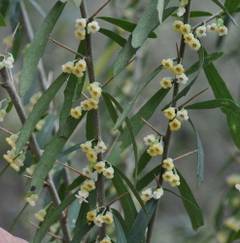
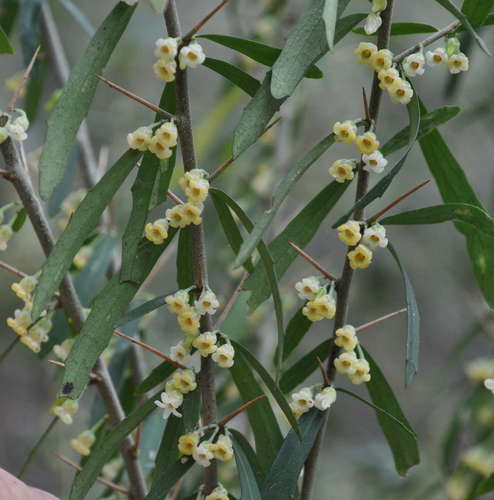
Flowering is mainly in spring and summer, with small greenish to yellow flowers, often sweetly scented, clustered along the older branches. The flowers draw bees, flies, and other insects, and separate male and female plants are needed for fruit. Berries ripen from late summer into autumn, turning violet to purple-black.
Detailed Descriptions
Flower Description
greenish to yellowFoliage Description
mid to dark greenGrowing Conditions
Sun Requirements
Requires 4-9 hours of direct sunlight daily
• Full Sun: 6+ hours of direct sunlight
• Partial Shade: 3-6 hours of direct sunlight
• Full Shade: Less than 3 hours of direct sunlight
Care & Maintenance
Care Guide
Melicytus species grow in sun to part shade on moist, well-drained soils and tolerate wind, salt spray, and coastal sites. Mahoe is fast-growing and establishes quickly in open or disturbed ground, while the divaricating shrubs are slow and dense. Steady moisture suits most species, though established plants handle short dry spells. Frost tolerance is generally low to moderate, limiting the genus to mild and coastal climates. Plants are raised from fresh seed, which birds help clean and distribute, or from cuttings. Both male and female plants are needed for berries, as the species are dioecious.Pruning
Mahoe and other tree species are pruned in the warm season to shape the crown and remove brittle, damaged, or crossing wood. They resprout readily from cut stumps and tolerate hedging. Divaricating shrubs need little pruning beyond removing dead stems from the tangle.Container Growing
Suitable for container growing
Minimum container size: 5 gallons