Overview
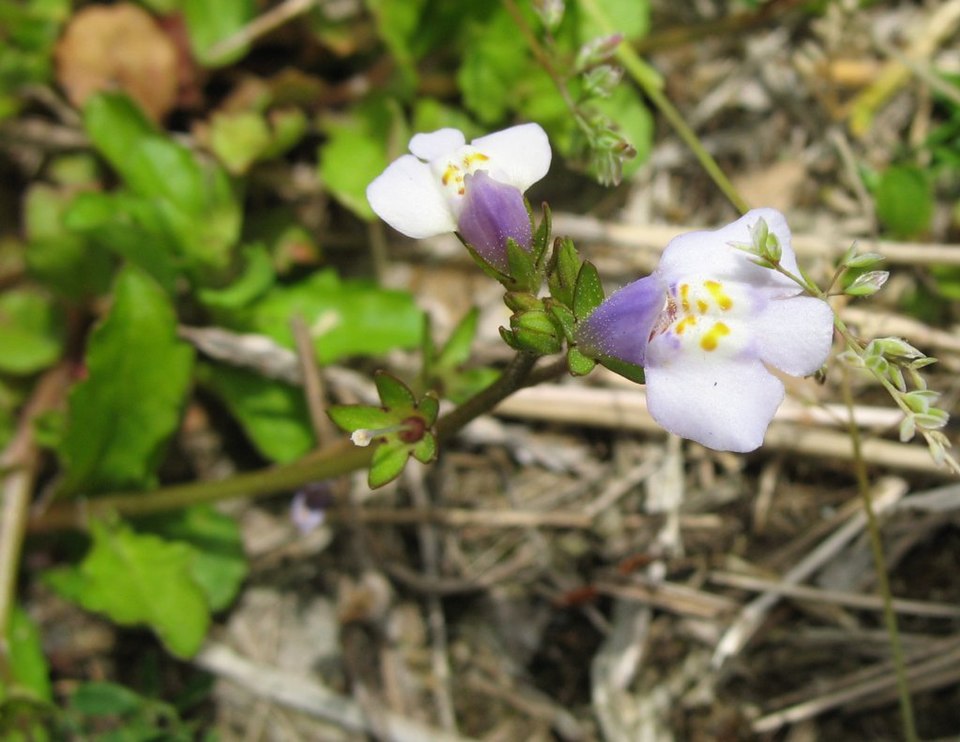
Mazus pumilus is a small annual herb growing 2-6 inches (5-15 cm) tall with weak, ascending to sprawling stems that branch from the base. The opposite to alternate leaves are spoon-shaped to oblong, 0.4-1.6 inch (1-4 cm) long, with a few coarse teeth along the margins. Flowers are small, 0.2-0.4 inch (5-10 mm) long, two-lipped and tubular, pale lilac to violet-blue with a white, yellow-spotted lower lip. Blooms appear from late spring through autumn in loose clusters at the stem tips. The fruit is a small rounded capsule splitting to release minute seeds. It grows in damp, disturbed ground such as lawns, rice paddies, ditches, and path edges, completing its life cycle in a single season. Native to eastern Asia, it has naturalized as a weed in parts of North America and elsewhere. It self-seeds freely and can spread into turf and moist beds, which limits its garden use.
Native Range
Mazus pumilus is native to eastern and southern Asia, including China, Japan, Korea, and India. It has naturalized in moist disturbed sites across parts of North America, Australia, and Europe. It grows in damp lawns, fields, ditches, and the margins of rice paddies.Suggested Uses
Sometimes grown as a low filler in moist, informal plantings and container edges. It is more often encountered as a volunteer in damp lawns and disturbed ground. The small flowers draw tiny bees and other insects.How to Identify
Appearance
Size & Dimensions
Height2" - 6"
Width/Spread4" - 10"
Bloom Information
Detailed Descriptions
Flower Description
pale lilac to violet-blueFoliage Description
greenGrowing Conditions
Sun Requirements
Requires 4-10 hours of direct sunlight daily
• Full Sun: 6+ hours of direct sunlight
• Partial Shade: 3-6 hours of direct sunlight
• Full Shade: Less than 3 hours of direct sunlight
Water & Climate
Water Needs
Care & Maintenance
Care Guide
Grow Mazus pumilus in full sun to part shade in consistently moist soil. It tolerates a range of soils and a pH from 5.5 to 7.5 but needs damp ground and withers quickly in drought. As an annual it completes its cycle in one season and relies on self-sown seed to return. The seed germinates on the soil surface in warm, wet conditions. It spreads readily into lawns and moist beds by self-seeding. No feeding is needed in average soil.Pruning
No pruning is needed. Shearing or mowing before the seed sets reduces spread into surrounding turf. Plants die back completely at the end of the season.Container Growing
Suitable for container growing
Minimum container size: 1 gallons
Toxicity
Non-toxicPlanting Guide
Planting Methods & Timing
Planting Method
direct sow
Days to Maturity
60–90 days
Plant Spacing
6 inches