Matricaria, Genus, discoidea, Species,
- Genus & species
pineapple weed
Northeastern Asia; native status in northwestern North America is debated, with some evidence supporting native origin in the region and other populations clearly introduced from Asia.
SunFull Sun – Part Shade
Overview
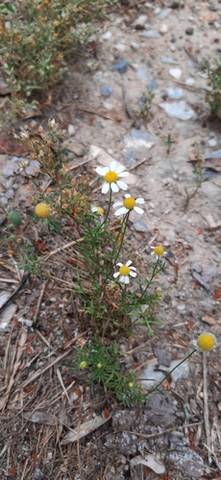
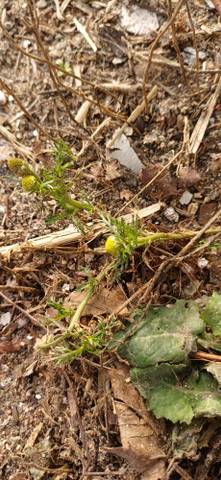
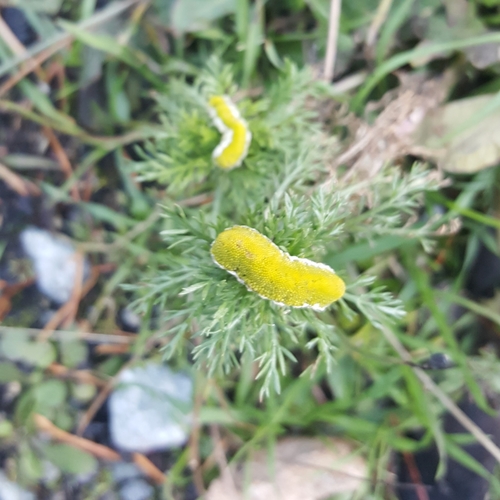
Matricaria discoidea (synonym M. matricarioides) is a low aromatic annual reaching 2-12 inches (5-30 cm) tall and 4-12 inches (10-30 cm) wide, with prostrate to ascending freely branching smooth stems. Leaves are 2-3 pinnately dissected into short narrow smooth segments, bright yellow-green, producing a feathery fern-like texture; crushed foliage releases a sweet pineapple scent that serves as a rapid identification test. Flower heads are cone-shaped 0.2-0.4 inch (5-10 mm) in diameter, composed entirely of yellow-green disc florets with no ray florets. The receptacle is hollow when split lengthwise, a key separation from Anthemis cotula (stinking mayweed) which has a solid chaffy receptacle and an unpleasant odor. A single plant produces 500-7,500 seeds, dispersed primarily by foot traffic, vehicle tires, and water. Plants occupy compacted heavily trafficked surfaces: gravel paths, driveways, playground edges, trailheads, and spaces between pavers, and the species tolerates soil compaction beyond the range of most herbaceous weeds. In Pacific Northwest mild winters, flowering occurs nearly year-round. Native status in North America is debated: some evidence supports native origin in northwestern North America, while other populations are clearly introduced from Asia. All parts are edible and the dried flower heads have a long record of use in folk medicine as a chamomile substitute for tea.
Native Range
Matricaria discoidea is native to northeastern Asia, with evidence that populations in northwestern North America may also be native (the question is debated in the botanical literature). Plants grow in compacted disturbed ground, paths, roadsides, and waste areas from sea level to approximately 8,000 feet (2,400 m). The species has naturalized across all temperate regions of North America, Europe, and Australasia, and populations follow the distribution of human foot traffic and vehicle routes.Suggested Uses
The species is used in weed identification courses as a scent-based identification exercise because the pineapple fragrance allows species-level identification without flowers or a hand lens. Flower heads and foliage have a long record of use in folk medicine as a chamomile tea substitute (M. discoidea is closely related to German chamomile, M. chamomilla, and the two species share a similar flavor profile). The species is included in Asteraceae morphology exercises for teaching disc-only versus radiate flower heads and hollow versus solid receptacle construction, and is used as a soil compaction indicator in site assessment for land managers.How to Identify
Appearance
Size & Dimensions
Height2" - 1'
Width/Spread4" - 1'
Bloom Information
Cone-shaped flower heads 0.2-0.4 inch (5-10 mm) in diameter open continuously from April through September, with a total bloom span of 12-16 weeks in the Pacific Northwest. Individual heads mature over 5-7 days, and seeds mature 2-3 weeks after head opening. In Pacific Northwest mild winters, flowering occurs nearly year-round. Flowers are self-pollinating; the absence of ray florets and the inconspicuous disc florets give no insect-attraction signal.
Detailed Descriptions
Flower Description
Yellow-green cone-shaped flower heads 0.2-0.4 inch (5-10 mm) in diameter composed entirely of disc florets, with no ray floretsFoliage Description
Bright yellow-green; 2-3 pinnately dissected into short narrow smooth segments giving a feathery fern-like texture; crushed foliage releases a sweet pineapple scentGrowing Conditions
Sun Requirements
Requires 4-12 hours of direct sunlight daily
• Full Sun: 6+ hours of direct sunlight
• Partial Shade: 3-6 hours of direct sunlight
• Full Shade: Less than 3 hours of direct sunlight