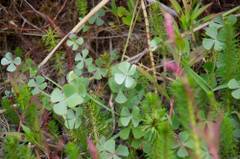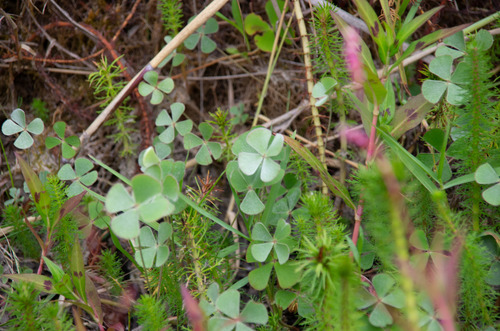
Marsilea, Genus, spp., Multiple species,
- Genus
- Multiple species
water clover
Worldwide in warm-temperate and tropical wetlands
Overview
Marsilea is a genus of about 65 aquatic and semi-aquatic ferns in the family Marsileaceae, found in warm-temperate and tropical wetlands worldwide. Despite the fern classification, the long-stalked leaves carry four wedge-shaped leaflets arranged like a four-leaf clover, floating on still water or standing above wet mud. Plants spread by slender creeping rhizomes that root at the nodes, often forming dense mats across pond margins and seasonal pools. Leaf size and stalk length adjust to water depth, from a few inches in mud to over 12 in (30 cm) in deeper water. Reproduction is by spores held in hard, bean-like sporocarps at the leaf bases rather than by flowers. The sporocarps are long-lived and survive years of drying, germinating when water returns. M. drummondii, the Australian nardoo, produces sporocarps that were ground into flour by Aboriginal peoples, though raw or poorly prepared sporocarps contain thiaminase and are unsafe to eat. Several species, including M. mutica and M. quadrifolia, can spread aggressively and are treated as weeds in some waterways. Cold-climate plants die back in winter and regrow from rhizomes in spring.
Native Range
Marsilea occurs nearly worldwide in warm regions, with species native to Africa, Eurasia, Australia, and the Americas. The genus is concentrated in seasonally wet habitats of warm-temperate and tropical zones.Suggested Uses
Grown in ponds, water gardens, bog gardens, and aquariums as floating or marginal groundcover. M. drummondii and other species are kept in container water features where their spread can be limited. The clover-like foliage adds textural contrast at the water surface.How to Identify
Appearance
Size & Dimensions
Height2" - 1'
Width/Spread1' - 4'
Bloom Information
Ferns in this genus do not flower; they reproduce from spores housed in hard sporocarps at the leaf bases. Sporocarps form mainly through the warm season and can stay dormant for years until flooding triggers release. New plants also arise vegetatively as the rhizomes spread.
Detailed Descriptions
Foliage Description
greenGrowing Conditions
Sun Requirements
Requires 4-10 hours of direct sunlight daily
• Full Sun: 6+ hours of direct sunlight
• Partial Shade: 3-6 hours of direct sunlight
• Full Shade: Less than 3 hours of direct sunlight
Water & Climate
Water Needs
Care & Maintenance
Care Guide
Marsilea species grow in full sun to part shade in shallow standing water, saturated mud, or pond margins. They take a wide pH range and tolerate seasonal drying once the rhizomes and sporocarps are established. Growth is fast in warm water, and unconfined plants can overrun small ponds, so container culture in submerged pots keeps them in check. Hardy species die back in winter and resprout in spring, while tropical species stay active year-round. Still or slow-moving water suits them better than fast current. Algae and excess nutrients are the main problems in closed water features.Pruning
Crowded leaves and rhizomes are thinned through the growing season to control spread in ponds and containers. Dead foliage is removed as it yellows in autumn. Lifting and dividing the rhizome in spring rejuvenates and propagates plants.Container Growing
Suitable for container growing
Minimum container size: 2 gallons