Maranta, Genus, leuconeura, Species,
- Genus & species
prayer plant
Southern Brazil; lowland tropical rainforest understory
Overview
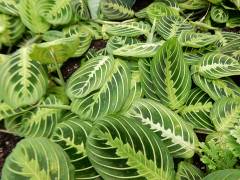
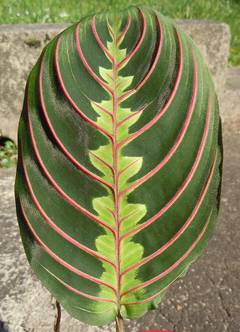
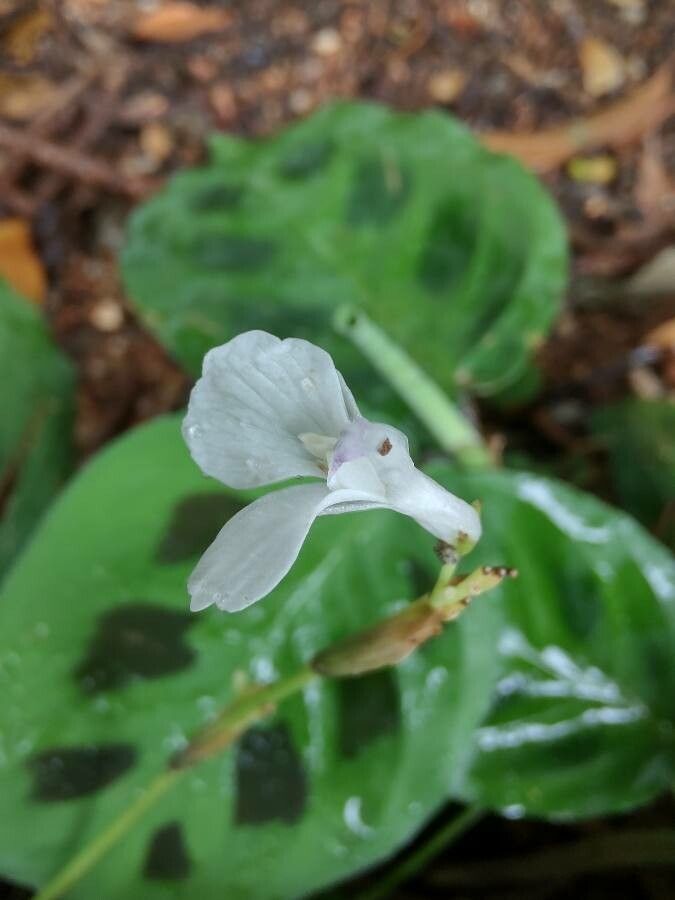
Maranta leuconeura is an evergreen rhizomatous perennial from southern Brazil, growing 6–12 inches (15–30 cm) tall and 12–18 inches (30–45 cm) wide as a low spreading mound of broadly oval leaves. Leaves are 3–6 inches (7.5–15 cm) long, broadly oval, mid- to dark-green with prominent pale-green or silver veins on the upper surface, and pale red-purple on the underside. Several recognized varieties differ in leaf marking: M. leuconeura var. erythroneura (Red Prayer Plant) carries red veins on a dark-green background; var. kerchoveana (Rabbit's Foot Maranta) carries dark-green to brown blotches between the lateral veins; and var. leuconeura carries silver feather-like markings along the central vein. Leaves fold vertically upward at night and reopen in the morning — the nyctinastic movement that gives the plant the common name 'prayer plant.' Indoor plants flower rarely; outdoor specimens in tropical zones 11–12 produce small white flowers with purple spots on slender stalks. The plant is non-toxic to dogs, cats, and humans. M. leuconeura is sensitive to chemicals in tap water — chlorine, fluoride, and dissolved salts cause leaf-tip browning over weeks; rainwater, distilled water, or tap water left to outgas overnight reduces this damage. Cold-tender: leaf damage occurs below 55°F (13°C) and plant death below 40°F (4°C). Air humidity below 50% causes leaf-edge curling and browning. Common indoor pests include spider mite, thrips, and mealybug.
Native Range
Native to subtropical and tropical lowland rainforests of southern Brazil. Grows in deep shade on the rainforest floor under closed canopy.Suggested Uses
Grown as an indoor specimen for the patterned foliage and the nyctinastic leaf movement in temperate climates, and as a shade groundcover in tropical zones 11–12. Container culture in 6–10 inch (15–25 cm) wide shallow pots with rich, moisture-retentive potting mix supports the typical indoor mature size. Used in hanging baskets where the trailing rhizomatous habit produces cascading foliage.How to Identify
Appearance
Size & Dimensions
Height6" - 1'
Width/Spread1' - 1'6"
Bloom Information
Indoor plants flower rarely. Outdoor specimens in tropical zones 11–12 produce small white flowers with purple spotting on slender stalks 4–6 inches (10–15 cm) tall, sporadically through the year. Bloom duration is 2–3 weeks per inflorescence.
Detailed Descriptions
Flower Description
White with purple spots on slender stalks (rare in cultivation)Foliage Description
Mid- to dark-green with pale-green, silver, or red venation; pale red-purple underside; broadly oval 3-6 inches (7.5-15 cm)Growing Conditions
Sun Requirements
Requires 2-4 hours of direct sunlight daily
• Full Sun: 6+ hours of direct sunlight
• Partial Shade: 3-6 hours of direct sunlight
• Full Shade: Less than 3 hours of direct sunlight
Care & Maintenance
Care Guide
Grows in bright indirect to medium light at 65–80°F (18–27°C). Direct sun scorches the patterned upper leaf surface within hours. Watering occurs when the top 1 inch (2.5 cm) of potting mix has dried — typically every 4–7 days. Tap water left in an open container overnight reduces leaf-tip browning from chlorine and dissolved salts. Air humidity 60–80% supports full leaf development; humidity below 50% causes leaf-edge curling and browning over weeks. Plants are re-potted every 1–2 years into a wide shallow container — the rhizomes spread laterally rather than downward.Pruning
Damaged or yellowing leaves are removed at the petiole base at any time of year. Plants are divided at the rhizome every 2–3 years at re-potting; each division requires at least 2–3 leaf-bearing stems to establish. Tip cuttings of 4–6 inch (10–15 cm) stem sections root in moist potting mix or water within 4–6 weeks.Container Growing
Suitable for container growing
Minimum container size: 1 gallons