Image 1 of 13
© EQUIPE PARQUE ESTADUAL DO IBITIPOCA, some rights reserved (CC-BY-NC) · iNaturalist
1 / 13
Mandevilla, Genus, sanderi, Species,
- Genus & species
pink mandevilla
Overview
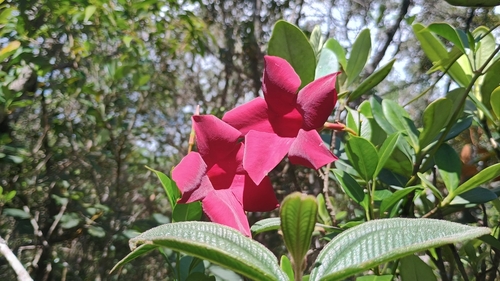
Mandevilla sanderi is a twining tropical vine, climbing 60–120 inches (150–300 cm) on a support. Pink funnel-shaped flowers 3–4 inches (7–10 cm) with a yellow throat, produced continuously from late spring through frost. The vine twines around supports (trellises, obelisks, arbors, mailbox posts) — it does not have aerial roots or tendrils, so the support must be narrow enough for the stem to wrap around (wire, string, slim stakes). Dark green glossy ovate leaves 3–6 inches (7–15 cm). In the dogbane family (Apocynaceae) — all parts exude a milky white latex when cut. The latex and all plant parts are toxic to dogs, cats, and humans (cardiac glycosides). In cold zones (below zone 10), grown as a seasonal annual or overwintered indoors: cut back to 12 inches (30 cm) in fall, move to a cool bright location (50–60°F / 10–16°C), reduce watering, and resume growth in spring. Native to Rio de Janeiro state, Brazil. Full sun (6+ hours) for heavy flowering — shade reduces bloom production. Well-draining soil. Spider mites in dry conditions. Mealybugs and whitefly. Deer-resistant. Hummingbird-visited. Growth rate is fast in warm conditions. Containers of 3–5 gallons (12–20 liters). Frost-tender — foliage blackens at 32°F (0°C). Zones 10–11 outdoors year-round.
Native Range
Native to Rio de Janeiro state, Brazil, growing in tropical and subtropical forests.Suggested Uses
Grown on trellises, obelisks, and arbors in containers of 3–5 gallons (12–20 liters) or in the ground in zones 10–11. Full sun. Continuous bloom from late spring to frost. Overwinter indoors in cold zones. All parts toxic. Deer-resistant. Hummingbird-visited.How to Identify
Appearance
Size & Dimensions
Height5' - 10'
Width/Spread2' - 4'
Bloom Information
Detailed Descriptions
Flower Description
Pink, funnel-shaped with yellow throatFoliage Description
Dark green, glossy, ovateGrowing Conditions
Sun Requirements
Requires 6-10 hours of direct sunlight daily
• Full Sun: 6+ hours of direct sunlight
• Partial Shade: 3-6 hours of direct sunlight
• Full Shade: Less than 3 hours of direct sunlight
Care & Maintenance
Care Guide
Full sun (6+ hours) for heavy flowering. Well-draining soil. Frost-tender — overwinter indoors in cold zones (cut back, cool bright location, reduce water). Twining vine — provide narrow support. Milky latex; all parts toxic (cardiac glycosides). Spider mites, mealybugs, whitefly. Deer-resistant. Hummingbird-visited. Zones 10–11.Pruning
Prune in early spring before new growth. Cut back to 12 inches (30 cm) for overwintering. In spring, remove dead or weak stems. The vine flowers on new growth — pruning promotes branching and more flowers.Pruning Schedule
Prune: March
spring
Container Growing
Suitable for container growing
Minimum container size: 3 gallons
