Malvaviscus, Genus, arboreus, Species,
- Genus & species
Turk's cap
Southern US, Mexico, Central and South America
Overview
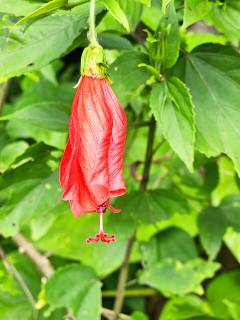
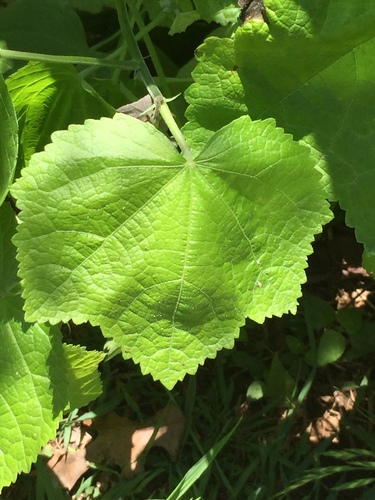
Malvaviscus arboreus, called Turk's cap or wax mallow, is a soft-wooded shrub or root-hardy perennial in the mallow family, growing 2-9 feet (0.6-2.7 m) tall depending on climate and pruning. It carries soft, light to medium green leaves that are broadly heart-shaped to shallowly lobed, 2-5 inches (5-13 cm) long, on arching stems that form a loose, spreading mound. The flowers are bright red and pendant, about 1-1.5 inches (2.5-4 cm) long; the five petals overlap and twist together so the bloom never opens flat, instead forming a swirled tube from which the red staminal column protrudes, suggesting a small turban. Flowering continues over a long season from late spring until frost. The flowers draw hummingbirds and butterflies, and the small red fruit that follows is mealy and edible. The plant grows in sun or shade and tolerates heat, drought, and a range of soils once established. In cool-temperate gardens it is killed back by frost and behaves as a die-back perennial, and where conditions suit it can spread by suckers and seed into surrounding ground.
Native Range
Native from the southern United States, including Texas and Florida, through Mexico and Central America into northern South America. It grows in woodland edges, thickets, and stream banks.Suggested Uses
Planted in pollinator and hummingbird gardens, shaded borders, and naturalized woodland edges. It works in large containers and as an informal low hedge in mild climates. Its arching, spreading habit needs room in small beds.How to Identify
Appearance
Size & Dimensions
Height2' - 9'
Width/Spread3' - 6'
Bloom Information
Detailed Descriptions
Foliage Description
light to medium greenGrowing Conditions
Sun Requirements
Requires 3-8 hours of direct sunlight daily
• Full Sun: 6+ hours of direct sunlight
• Partial Shade: 3-6 hours of direct sunlight
• Full Shade: Less than 3 hours of direct sunlight
Care & Maintenance
Care Guide
Malvaviscus arboreus grows in full sun to fairly deep shade on most well-drained soils, flowering more freely with more light. It tolerates heat and drought once established but responds to occasional watering in dry spells with denser growth. In zones with hard frost the top growth dies back and regrows from the roots in spring, so it is cut to the ground in late winter. Elsewhere it is trimmed to control its spreading size. It needs little feeding and has few serious pests. Suckers and self-sown seedlings are taken out where spread is unwanted.Pruning
Cut frost-killed or leggy stems back to the ground or to a low framework in late winter to renew the plant. Shorten stems during the season to keep a compact shape. Take out suckers to limit spread.Container Growing
Suitable for container growing
Minimum container size: 5 gallons