Image 1 of 10
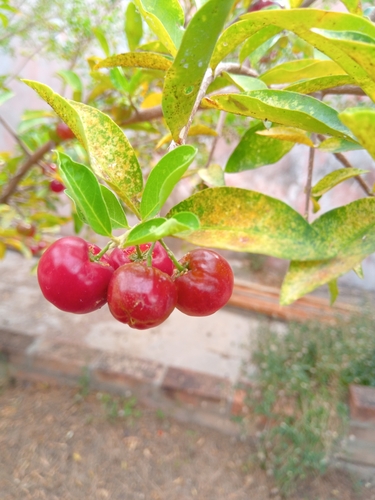
© Juan Yarza & Yaudimar Bermúdez, some rights reserved (CC-BY-NC) · iNaturalist
1 / 10
Malpighia, Genus, emarginata, Species,
- Genus & species
acerola cherry
Tropical Americas — Caribbean, Central America, and northern South America; the 'Barbados cherry' name references Barbados
Overview
Malpighia emarginata is the acerola cherry, growing 72–180 inches (180–450 cm) tall. Bright red cherry-like fruit 0.5–1 inch (12–25 mm) containing 20–30 times more vitamin C per gram than oranges. Not a true cherry — in the family Malpighiaceae, not related to Prunus. Repeat-blooming and fruiting from spring through fall, with multiple harvests per year possible in tropical conditions. The fruit is extremely perishable — it begins to ferment and deteriorate within hours of picking. Fresh fruit must be consumed immediately or processed (frozen, juiced, dried) the same day. This perishability is why fresh acerola is rarely sold commercially — most is processed into frozen pulp, powder, or supplements. Self-fertile. Pink to lavender flowers 0.5 inch (12 mm). Tropical: killed by frost. Zones 10–11 outdoors. Container culture with indoor winter storage possible at 10–15 gallons (40–60 liters). Full sun (6+ hours) for fruit production. Non-toxic — fruit is edible. Well-draining soil. Slightly acidic (pH 5.5–6.5). Native to the Caribbean, Central and South America. Nematodes are a concern in sandy soils. Growth rate is moderate to fast. The shrubby habit can be maintained as a hedge with shearing.
Native Range
Malpighia emarginata is native to tropical Americas — Caribbean, Central America, and northern South America.Suggested Uses
Grown in the ground in zones 10–11 or in containers of 10–15 gallons (40–60 liters) with indoor winter storage. Full sun. Self-fertile. Fruit must be consumed or processed within hours of picking. Non-toxic fruit.How to Identify
Appearance
Size & Dimensions
Height6' - 15'
Width/Spread6' - 10'
Colors
Bloom Information
Detailed Descriptions
Flower Description
Pink to pale lavender, small, five-petaled — attractiveFoliage Description
Dark green, glossy, small, evergreenGrowing Conditions
Sun Requirements
Requires 6-12 hours of direct sunlight daily
• Full Sun: 6+ hours of direct sunlight
• Partial Shade: 3-6 hours of direct sunlight
• Full Shade: Less than 3 hours of direct sunlight
Care & Maintenance
Care Guide
Full sun (6+ hours). Well-draining slightly acidic soil pH 5.5–6.5. Tropical — killed by frost. Self-fertile. Repeat-fruiting. Fruit extremely perishable — consume or process within hours. Non-toxic fruit. Nematodes in sandy soil. Zones 10–11.Pruning
Prune for shape and size control after harvest. Can be maintained as a hedge with shearing. Remove dead or crossing branches.Pruning Schedule
Prune: February–March
late winter
Container Growing
Suitable for container growing
Minimum container size: 15 gallons