Image 1 of 10
1 / 10
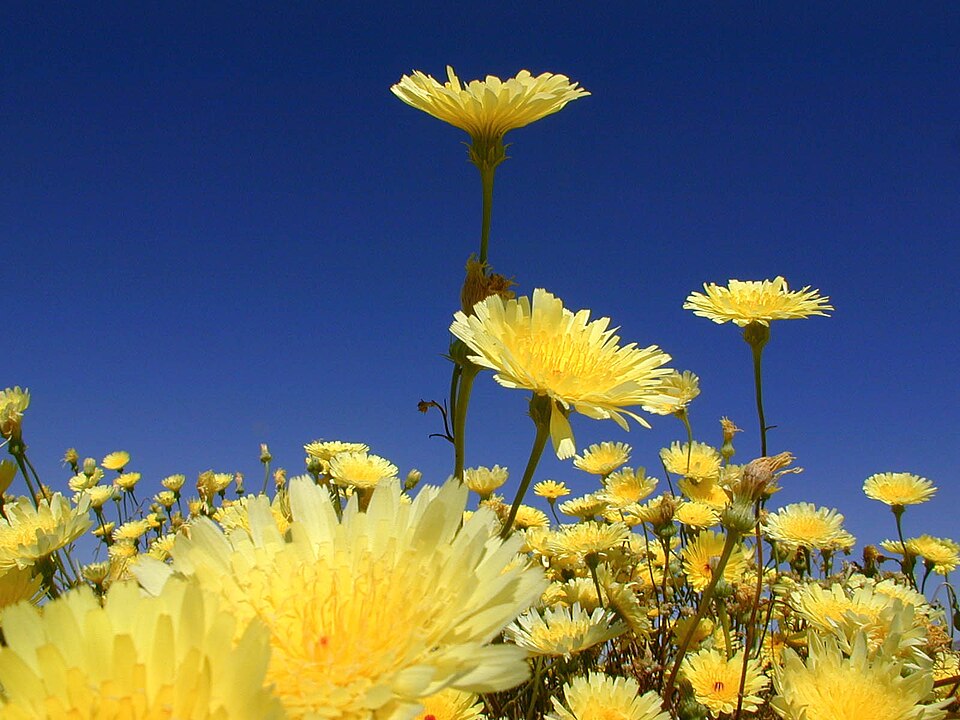
© Dawn Endico from Menlo Park, California, some rights reserved (CC-BY-SA) · Wikimedia Commons
Malacothrix, Genus, glabrata, Species,
- Genus & species
desert dandelion
Southwestern United States and northern Mexico deserts
Overview
Malacothrix glabrata is a spring annual in the aster family, native to the deserts of the southwestern United States and northern Mexico. From a rosette of gray-green leaves finely divided into narrow, thread-like lobes, the plant branches into a low, rounded mound 6-16 inches (15-40 cm) tall. Each stem ends in a dandelion-like flower head 1-1.75 inches (2.5-4.5 cm) wide, made entirely of pale yellow ray florets; the center is often marked by a small knot of deeper yellow or red buds. Bloom runs from late winter into spring, timed to winter rainfall, and can blanket open desert flats in wet years. The species grows in full sun on sandy, gravelly, and well-drained soils, and needs little or no irrigation. In dry years plants stay small and flower briefly, while wet winters produce larger, longer-blooming stands. As an annual, the whole plant dies after setting seed, which can lie dormant in the soil for years until rains return. The flowers draw native bees and other desert pollinators.
Native Range
Native to the deserts of the southwestern United States and northern Mexico, including the Mojave, Sonoran, and Great Basin deserts, from California and Nevada to Utah, Arizona, and Baja California. It grows on sandy flats, desert washes, and gravelly slopes.Suggested Uses
Grown in desert and dry-climate wildflower plantings, native annual seed mixes, and rock gardens. Sown at about 8 inches (20 cm) spacing, plants form low mounds that mass into spring color. Used to fill open ground among desert perennials and cacti.How to Identify
Appearance
Size & Dimensions
Height6" - 1'4"
Width/Spread6" - 1'
Bloom Information
Flowers open from late winter to spring, mainly March to May, and as early as February in the low desert. Bloom timing and length depend on winter rainfall, lasting only a few weeks in dry years. Heads open in the morning and close through the afternoon heat.
Detailed Descriptions
Flower Description
Pale yellow ray florets, often with a red central knobFoliage Description
Gray-green, finely divided into narrow lobesGrowing Conditions
Sun Requirements
Requires 6-12 hours of direct sunlight daily
• Full Sun: 6+ hours of direct sunlight
• Partial Shade: 3-6 hours of direct sunlight
• Full Shade: Less than 3 hours of direct sunlight
Water & Climate
Water Needs
Drought Tolerance
Drought tolerant when established
Care & Maintenance
Care Guide
Grows in full sun on sandy, gravelly, well-drained desert soils with little organic matter. Water is rarely needed beyond natural winter rain; the plant completes its life cycle on stored soil moisture. Sow seed in autumn for spring bloom, scattering it on open, weed-free ground. Overly rich or wet soil produces leafy growth and few flowers. As an annual, plants die after seeding and do not return, though self-sown seed germinates with later rains. No fertilizer or pruning is needed.Pruning
No pruning is needed. As an annual, the plant dies after setting seed, and spent plants can be cleared once seed has dropped. Leaving plants in place allows them to self-sow.Container Growing
Suitable for container growing
Minimum container size: 1 gallons
Toxicity
Non-toxicPlanting Guide
Planting Methods & Timing
Planting Method
direct sow
Direct Sow Timing
Sow in autumn (October to December) for spring bloom in desert regions.
Plant Spacing
8 inches