Macrozamia, Genus, spp., Multiple species,
- Genus
- Multiple species
burrawang
Overview
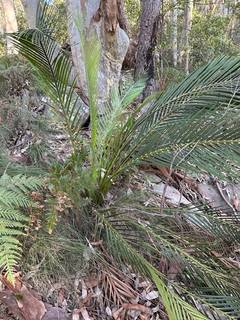
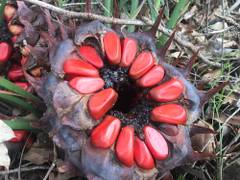
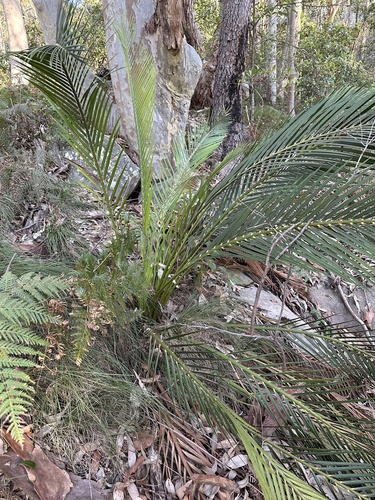
Macrozamia is a genus of about 40 species of cycads in the family Zamiaceae, found only in Australia, where they grow in dry forest, woodland, heath, and rocky country. Despite a palm- or fern-like appearance, cycads are unrelated to either group and reproduce by cones rather than flowers. Plants form a crown of stiff, pinnate, evergreen fronds 1.5 to 10 feet (0.5 to 3 m) long, arising from a stout trunk that is above ground in some species and largely buried in others. The genus is dioecious, with separate male and female plants bearing large cones; female cones can be very large and heavy and hold seeds with a fleshy, often red or yellow outer coat. The roots include specialized coralloid branches that house nitrogen-fixing cyanobacteria. All parts, especially the seeds, contain the toxins cycasin and macrozamin and are poisonous to people and livestock, causing liver damage and a paralytic condition known as the staggers. Many species resprout after fire, and some flush new fronds and cones heavily in the season after burning. Growth is slow, and plants are long-lived.
Native Range
Endemic to Australia, with species concentrated in eastern Queensland and New South Wales and others in central and Western Australia. They grow in eucalypt forest, woodland, heath, and rocky ranges, often on poor, sandy or stony soils.Suggested Uses
Grown as architectural specimens in dry, native, and water-wise gardens and in containers, where the stiff symmetrical fronds suit a bold, low-maintenance planting. They are used in fire-prone landscapes for their ability to recover after burning. Mature plants are slow to establish and are grown in cycad and botanical collections.How to Identify
Appearance
Size & Dimensions
Height1'6" - 10'
Width/Spread3' - 10'
Bloom Information
Cycads do not flower. Cones are produced at intervals, often irregularly and sometimes triggered by fire, typically maturing over many months. Pollination is carried out largely by specialized weevils that breed in the male cones, and seeds ripen with a colored fleshy coat that attracts birds and mammals.
Detailed Descriptions
Foliage Description
greenGrowing Conditions
Sun Requirements
Requires 5-12 hours of direct sunlight daily
• Full Sun: 6+ hours of direct sunlight
• Partial Shade: 3-6 hours of direct sunlight
• Full Shade: Less than 3 hours of direct sunlight
Care & Maintenance
Care Guide
Grows in full sun to light shade on well-drained sandy, gravelly, or rocky soils with a pH from about 5.5 to 7.5. Established plants withstand prolonged drought, heat, and fire, and resprout from the trunk base after burning. Growth is slow, and plants take many years to form a visible trunk or to cone. They tolerate poor soils, aided by nitrogen-fixing bacteria in the coralloid roots. All parts are poisonous if eaten, the seeds most of all, containing cycasin and macrozamin. Few pests trouble them apart from specialist cycad insects.Pruning
Little pruning is needed beyond removing old, dead, or damaged fronds at the base as they brown. The spent cones can be left to shed seed or cut away once they break up. Frequent removal of green fronds weakens the plant, which holds only one flush of leaves at a time in many species.Container Growing
Suitable for container growing
Minimum container size: 5 gallons