Lyperanthus, Genus, suaveolens, Species,
- Genus & species
brown beaks
Overview
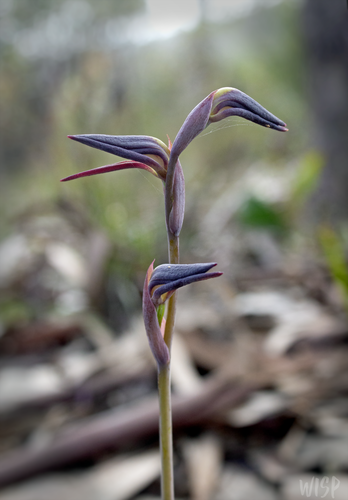
Lyperanthus suaveolens is a terrestrial orchid growing from an underground tuber, sending up a single erect flowering stem 8-16 inches (20-40 cm) tall. A solitary stiff, leathery, channelled leaf 4-8 inches (10-20 cm) long emerges from the base. The stem carries 2-9 flowers, each about 0.6-1 inch (15-25 mm) long, in reddish-brown to dark brown tones with a fringed white-and-red labellum, and the hooded column gives the flowers their beak-like look and common name. The flowers are sweetly scented, the feature behind the species name, and they blacken as they dry. It is native to southeastern Australia, where it grows in dry sclerophyll forest, heath, and woodland on sandy soils, often appearing in numbers after summer fire. Like most terrestrial orchids it relies on soil fungi to germinate and establish, which makes it difficult to transplant or cultivate. The plant is dormant through the dry months, persisting as a tuber below ground.
Native Range
Lyperanthus suaveolens is native to southeastern Australia, occurring in Queensland, New South Wales, Victoria, Tasmania, and South Australia. It grows in dry forest, heath, and woodland on sandy and well-drained soils.Suggested Uses
Grown only in specialist terrestrial orchid collections and conservation plantings. It is not suited to general garden beds or containers because of its fungal dependency, fire-linked flowering, and summer dormancy.How to Identify
Appearance
Size & Dimensions
Height8" - 1'4"
Width/Spread4" - 8"
Bloom Information
Flowering occurs in spring, mainly September to November in its native range. The sweetly scented brown flowers open along the upper stem over 2-4 weeks. Flowering is often heavier in the season after a summer fire and sparse in unburnt sites.
Detailed Descriptions
Flower Description
reddish-brown to dark brownFoliage Description
greenGrowing Conditions
Sun Requirements
Requires 4-8 hours of direct sunlight daily
• Full Sun: 6+ hours of direct sunlight
• Partial Shade: 3-6 hours of direct sunlight
• Full Shade: Less than 3 hours of direct sunlight