Lycopodium, Genus, spp., Multiple species,
- Genus
- Multiple species
ground and creeping clubmosses
Nearly cosmopolitan; mainly Northern Hemisphere temperate and boreal forests
Overview
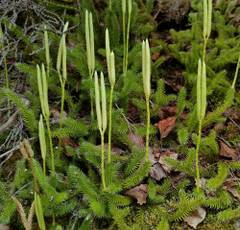
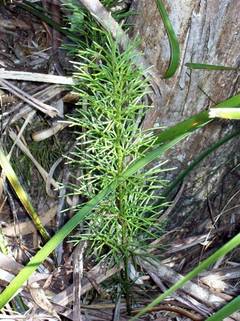
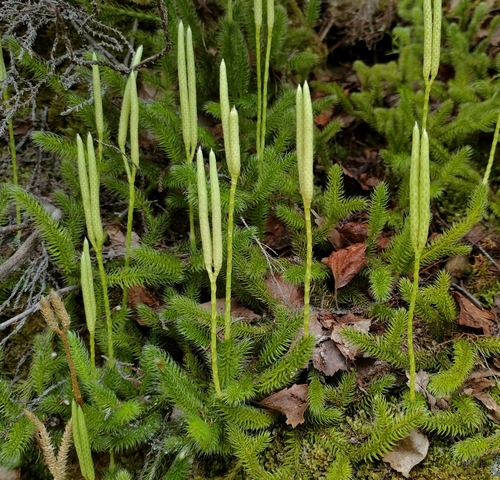
Lycopodium is a genus of evergreen, spore-bearing vascular plants in the family Lycopodiaceae, the clubmosses, allied to ferns rather than to true mosses despite the name. In the traditional broad sense the genus spans many species worldwide, concentrated in temperate, boreal, and montane forests of the Northern Hemisphere. Plants have creeping or trailing horizontal stems, often running along or just beneath the surface, from which erect or arching leafy shoots 2-12 in (5-30 cm) tall arise. The stems are densely clothed in small, simple, needle- or scale-like leaves (microphylls) arranged in spirals or ranks. Lycopodium produces no flowers or seeds; instead it reproduces by spores released from small, cone-like clusters called strobili held at the shoot tips, and by spreading stems. The yellow spores are powdery and flammable and were once collected as lycopodium powder. Most species grow in moist, acidic, humus-rich woodland and heath, in part to full shade, and depend on soil fungi, which makes them slow and difficult to establish in cultivation. They tolerate little disturbance, transplant poorly, and many are slow to spread, so wild colonies recover slowly if damaged.
Native Range
Lycopodium in the broad sense is nearly cosmopolitan, with the greatest diversity in temperate and boreal forests of the Northern Hemisphere and on tropical mountains. Plants grow in moist, acidic woodland, coniferous forest, heath, and bog margins, usually in shaded, humus-rich ground.Suggested Uses
Lycopodium is grown in shaded woodland and native plantings, in cool acidic rock and bog gardens, and as evergreen groundcover where it can be established. The trailing evergreen shoots have long been cut for winter greenery and wreaths, though wild harvest has depleted some populations. It is used mainly by specialist growers in moist, shaded, acidic settings.How to Identify
Appearance
Size & Dimensions
Height2" - 1'
Width/Spread1' - 3'
Bloom Information
Lycopodium does not flower. Spore-bearing strobili mature in late summer and autumn, generally August to October in temperate regions, when they release clouds of yellow spores. The evergreen shoots persist year-round, so the plant holds its form through all seasons.
Detailed Descriptions
Foliage Description
greenGrowing Conditions
Sun Requirements
Tolerates up to 4 hours of direct sunlight daily
• Full Sun: 6+ hours of direct sunlight
• Partial Shade: 3-6 hours of direct sunlight
• Full Shade: Less than 3 hours of direct sunlight