Overview
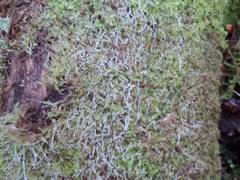
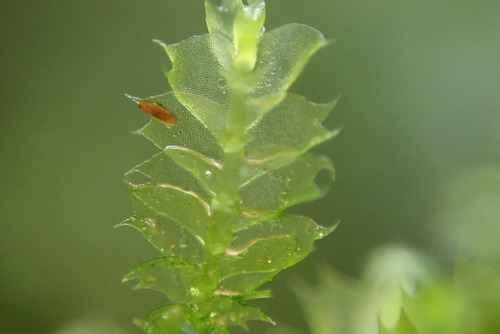
Lophocolea bidentata is a small leafy liverwort that forms thin, pale to mid-green mats over soil, lawns, leaf litter, and the bases of grass. The creeping shoots are 0.4–1.6 inches (1–4 cm) long and flattened, with two rows of overlapping leaves; each leaf is divided at the tip into two narrow, pointed teeth that give the plant its name. A row of smaller underleaves runs along the underside. It is a non-vascular plant without true roots, anchoring by colorless rhizoids and absorbing moisture across its surface, and it often carries a faint resinous scent when crushed. The species grows in damp, shaded to half-open ground, including lawns, pasture, woodland floor, ditch banks, and the soil among taller plants, on neutral to slightly acidic substrates. It is common across Britain, Europe, and into North America. Spore capsules are infrequent, black and rounded, splitting into four to release spores on a short translucent stalk. It is intolerant of deep drought and dense, dry turf, and is often treated as a weed where it spreads across lawns and the surface of pot plants.
Native Range
Lophocolea bidentata is native across Europe, parts of Asia, and North America in cool, moist temperate regions. It grows on damp soil in lawns, grassland, woodland, and shaded banks on neutral to slightly acidic ground.Suggested Uses
Used in liverwort and moss displays, terraria, and damp shaded ground-cover plantings where a low green film is wanted. It also appears uninvited on lawns, bare soil, and the surface of container plants.How to Identify
Appearance
Bloom Information
As a liverwort, it produces no flowers. Black, rounded spore capsules form occasionally in spring on short translucent stalks and split into four to shed spores. It spreads mainly by growth and fragmentation of the shoots.
Detailed Descriptions
Foliage Description
pale to mid-green