Lomatia, Genus, myricoides, Species,
- Genus & species
river lomatia
SE Australia (New South Wales, Victoria, ACT; riverbanks, moist gullies, forest margins in Great Dividing Range; 1000-5000 ft / 300-1500 m)
Overview
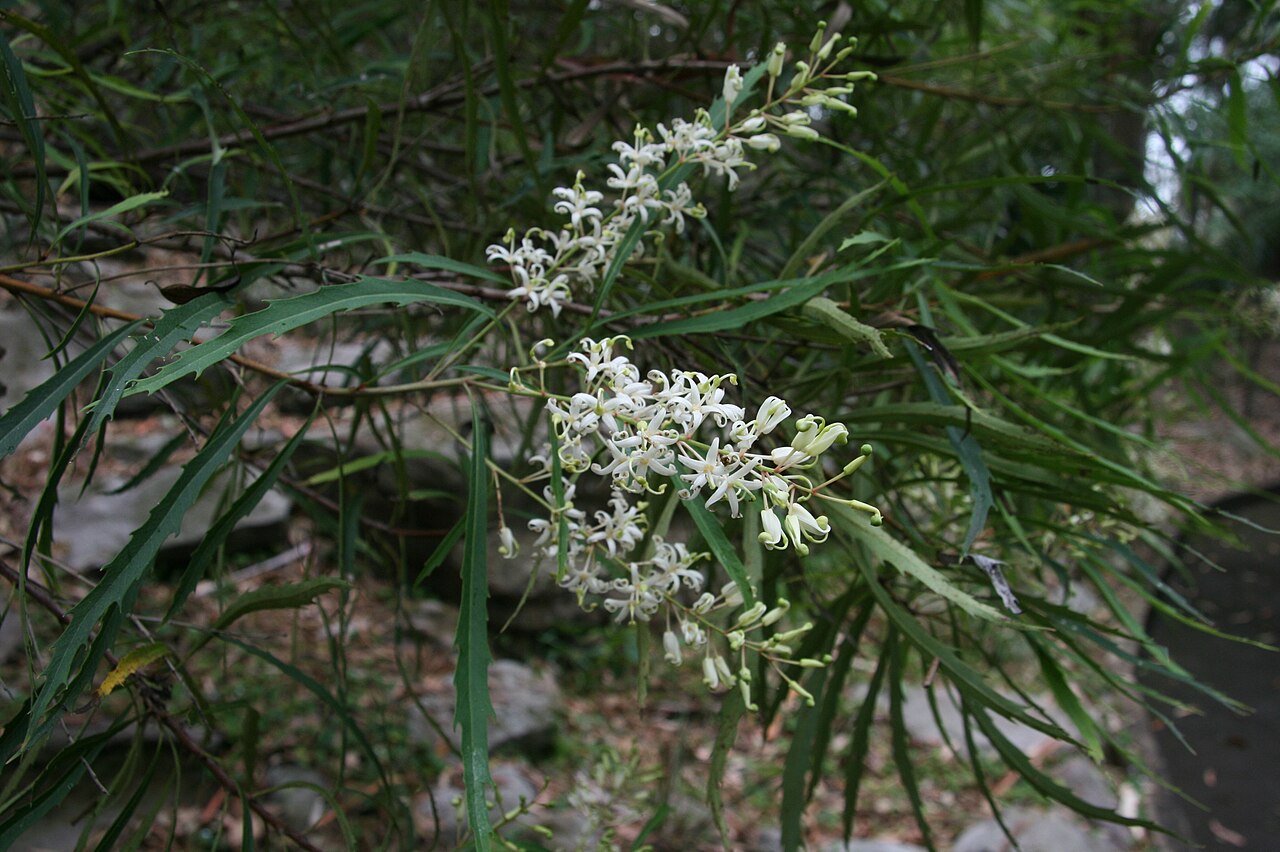
Lomatia myricoides is an evergreen upright shrub reaching 6–12 feet (1.8–3.6 m) tall with a spread of 4–8 feet (1.2–2.4 m). This southeastern Australian member of the Proteaceae carries narrow lance-shaped to linear leaves 3–6 inches (8–15 cm) long and 0.2–0.5 inches (5–12 mm) wide that run dark green and leathery with serrated margins and resemble willow or bayberry foliage—the specific epithet 'myricoides' translates directly to 'resembling Myrica' and references this leaf-shape similarity. Small creamy-white to ivory flowers 0.3–0.5 inches (8–12 mm) across with recurved tepals in the typical Proteaceae pattern open in axillary racemes 2–4 inches (5–10 cm) long. Bloom timing in the native Southern Hemisphere range runs December through February; in Northern Hemisphere cultivation the bloom shifts to June through August. Woody boat-shaped follicle fruit develops after the flowers and splits open at maturity to release winged seeds. Gray-brown smooth bark on young wood develops shallow fissures on older trunks. Growth rate is moderate. Hardy to zone 8.
Native Range
Lomatia myricoides is native to southeastern Australia across New South Wales, Victoria, and the Australian Capital Territory, growing along riverbanks, in moist gullies, and at forest margins in the Great Dividing Range at 1,000–5,000 feet (300–1,500 m) elevation. The species' riparian and gully-margin native ecology translates in garden cultivation to a preference for consistent soil moisture combined with the sharp drainage characteristic of sloping watercourse positions.Suggested Uses
Planted as a specimen, evergreen screen, or woodland-garden shrub at 4–6 foot (1.2–1.8 m) spacing in zone-8-and-warmer gardens. Narrow willow-like evergreen foliage supplies narrow-textured year-round screening and contrasts with broad-leaved companion shrubs in mixed plantings. Proteaceae family membership makes the species of botanical interest in plant collections and Australian-native garden designs. Sensitivity to high-phosphorus fertilizers requires adapted soil-nutrition management that differs from standard garden shrub care. Acidic soil is required for successful cultivation. Limited cold hardiness restricts the species to zone 8 and warmer or to sheltered zone-7 microclimate positions. Alkaline soils, exposed cold sites, and heavy clay with poor drainage are poor fits for the species.How to Identify
Appearance
Size & Dimensions
Height6' - 12'
Width/Spread4' - 8'
Bloom Information
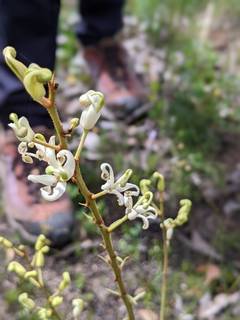
Small creamy-white to ivory flowers 0.3–0.5 inches (8–12 mm) across with recurved tepals open in axillary racemes 2–4 inches (5–10 cm) long from June through August in Northern Hemisphere cultivation. Active bloom duration is 4–6 weeks. Woody boat-shaped follicles develop after flowers and split open at maturity to release winged seeds, which supplies a secondary seasonal ornamental feature on the shrub following the summer bloom.
Detailed Descriptions
Flower Description
Creamy-white to ivory; small 0.3-0.5 inches with recurved tepals; axillary racemes 2-4 inches; woody boat-shaped follicles followFoliage Description
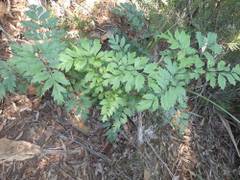
Dark green, leathery, narrow lance-shaped to linear 3-6 inches long, 5-12 mm wide; serrated margins; willow-like appearanceGrowing Conditions
Sun Requirements
Requires 4-7 hours of direct sunlight daily
• Full Sun: 6+ hours of direct sunlight
• Partial Shade: 3-6 hours of direct sunlight
• Full Shade: Less than 3 hours of direct sunlight
Care & Maintenance
Care Guide
Partial shade to full sun in moist acidic well-drained soil (pH 5.0–6.5) matches the species' cultivation needs. Hardy to zone 8 (10°F / −12°C). Acidic soil is required—alkaline conditions and lime-rich soils are not tolerated and cause chlorosis followed by decline. Phosphorus-rich fertilizers damage Proteaceae roots and are not used on this genus; the species evolved in phosphorus-poor Australian soils and carries specialized proteoid cluster roots that are damaged by high-phosphorus soil chemistry from standard NPK fertilizer applications. Consistent soil moisture without waterlogged conditions matches the native riparian ecology. Shelter from cold dry winter winds in zone 8 positions reduces foliage desiccation during cold-snap weather.Pruning
Light pruning after the flowering window maintains the shrub's form and encourages branching at the cut points. Any dead or frost-damaged growth is removed in early spring as new growth emerges. Moderate pruning is tolerated, though recovery from hard renovation cuts runs slow and the species does not regenerate reliably from bare woody stems. The natural upright form is maintained through selective branch removal rather than size-reduction cuts.Pruning Schedule
Prune: August–September
summer
Container Growing
Suitable for container growing
Minimum container size: 7 gallons