Livistona, Genus, chinensis, Species,
- Genus & species
Chinese fan palm
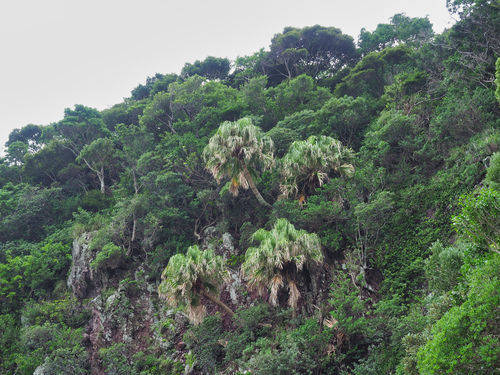
Southern Japan (the southernmost Ryukyu islands), Taiwan, and southeastern China (Hong Kong and Guangdong province); subtropical lowland and montane forest understory and forest-margin habitats with warm-summer mild-winter climate, partial-shade exposure beneath broader-leafed canopy trees, and well-drained substrate.
Overview
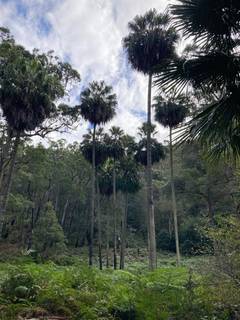
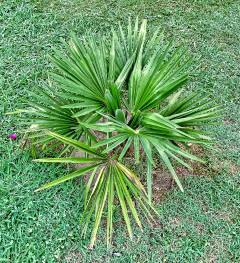
Livistona chinensis is the Chinese fan palm (also called fountain palm), a medium-scale palm species in the palm family (Arecaceae) growing 4-8 feet (120-240 cm) tall as an indoor houseplant and reaching 20-30 feet (600-900 cm) tall as an outdoor specimen tree across the species' subtropical cold-hardy range. The species' principal physical character is the large bright medium green fan-shaped (palmate) fronds 24-48 inches (60-120 cm) across with 60-90 narrow leaflet segments radiating from a central point at the petiole-frond junction; the outer segments droop downward gracefully producing the species' signature 'fountain' cascade effect that gives the species the alternate common name 'fountain palm'. The drooping outer-segment habit distinguishes the species from the stiff-segment fan palms (Washingtonia robusta, Washingtonia filifera, Trachycarpus fortunei) which hold the frond segments in a flat horizontal plane without drooping, and the fountain-cascade form is one of the species' principal field-identification characters at the foliage level. The palm family (Arecaceae) carries two principal frond architectures: palmate (fan-shaped) fronds where leaflet segments radiate from a single central point on the petiole, as in Livistona, Sabal, Trachycarpus, and Washingtonia, and pinnate (feather-shaped) fronds where leaflet segments are arranged in pairs along a central rachis, as in Phoenix, Cocos, Howea, and Chamaedorea. The palmate-vs-pinnate distinction is one of the principal teaching points for palm-family recognition, and L. chinensis is a working teaching example for the palmate-frond category. The species is among the more cold-hardy fan palms in commercial cultivation: mature outdoor specimens tolerate brief temperature drops to 20°F (-7°C) without serious damage, and the species is grown outdoors across USDA zones 9-11 in the southeastern United States, coastal California, and other subtropical climate zones. Indoor cultivation extends the species' usable range through 3-8 (cold zones) where the species is grown as a slow-growing indoor specimen plant in 10-gallon (38-liter) or larger containers. The growth rate is exceptionally slow under indoor conditions — a 6-foot indoor specimen may be 15-20 years old, and the species produces only 2-4 new fronds per year under typical indoor light and watering. The single-trunked unbranched habit means the species cannot recover from damage to the terminal growing tip (the apical meristem at the crown of the trunk produces all new fronds), and accidental damage to the apical bud kills the entire plant — a cultivation point worth specific attention because the apical bud is sometimes mistaken for a removable spent frond by inexperienced gardeners. The species is non-toxic to humans and pets, distinguishing the species from the toxic Cycas revoluta (sago palm, actually a cycad rather than a true palm) that is sometimes confused with palm species at the field-identification level. Native to subtropical lowland and montane forest habitats of southern Japan (the Ryukyu islands), Taiwan, and southeastern China, the species' subtropical-forest-understory native habitat reflects a physiological tolerance of partial shade, warm summers, mild winters, and well-drained substrate. Hardy outdoors across zones 9-11 with reliable performance in the warm-temperate to subtropical climate range.
Native Range
Livistona chinensis is native to subtropical East Asia with a continuous native range across southern Japan (the southernmost Ryukyu islands including Okinawa), Taiwan, and southeastern China (Hong Kong, Guangdong province, and parts of southern Fujian province). The species occurs in subtropical lowland and montane forest understory and forest-margin habitats with warm-summer mild-winter climate, partial-shade exposure beneath broader-leafed canopy trees, well-drained substrate, and consistent year-round moisture from subtropical-monsoon rainfall patterns. The species has been introduced into ornamental cultivation broadly across subtropical and tropical regions worldwide and is grown outdoors in coastal California, Florida, Hawaii, the Mediterranean basin, southeastern Australia, and other subtropical climate zones, and indoors as a slow-growing houseplant in cold-climate zones across the temperate Northern Hemisphere.Suggested Uses
Used as a slow-growing indoor specimen palm in lobby plantings, atrium positions, large-scale residential indoor plantings, and other indoor positions where the 4-8-foot scale and the fountain-cascade frond form supply the design contribution. The species is non-toxic to humans and pets, distinguishing the species from the toxic Cycas revoluta (sago palm) that is sometimes confused with palm species, and the non-toxic profile makes the species suitable for households with pets or children where ornamental-foliage toxicity is a concern. Outdoor cultivation in subtropical zones 9-11 produces a 20-30-foot specimen tree appropriate for tropical-themed and Mediterranean-style outdoor garden compositions. The species pairs with companion subtropical-foliage indoor and outdoor plantings including Strelitzia (bird of paradise), Phoenix roebelenii (pygmy date palm), Chamaedorea elegans (parlor palm), Dracaena cultivars, and broad-leafed companion houseplants for a multi-species tropical-foliage indoor or subtropical outdoor planting where the Livistona fan-shaped palmate fronds contribute a textural contrast against the pinnate fronds and broad-leafed companion foliage.How to Identify
Appearance
Size & Dimensions
Height4' - 8'
Width/Spread3' - 6'
Colors
Bloom Information
The species rarely flowers in indoor cultivation. When flowers appear (typically only on outdoor mature specimens in subtropical zone-9-11 outdoor cultivation), the inflorescences are long pendulous branched panicles carrying small cream to pale yellow flowers, produced seasonally and developing into small blue-black drupe fruits 0.5-0.75 inch (12-18 mm) in diameter following pollination. Pollination is principally by wind in the typical Arecaceae pattern, supplemented by bee visitation to the small cream-colored flowers. Indoor specimens almost never reach the mature-flowering size (typically 15+ feet) that triggers regular flowering.
Detailed Descriptions
Flower Description
Cream to pale yellow in long pendulous branched inflorescences carried among the fronds (the species rarely flowers in indoor cultivation; outdoor mature specimens produce inflorescences seasonally that develop into small blue-black drupes following pollination)Foliage Description
Bright medium green; large fan-shaped (palmate) fronds 24-48 inches (60-120 cm) across with 60-90 narrow leaflet segments radiating from a central point at the petiole-frond junction; the outer segments droop downward gracefully producing the species' signature 'fountain' cascade effect, distinguishing the species from the stiff-segment fan palms (Washingtonia, Trachycarpus) which hold the frond segments in a flat horizontal plane without droopingGrowing Conditions
Sun Requirements
Requires 4-8 hours of direct sunlight daily
• Full Sun: 6+ hours of direct sunlight
• Partial Shade: 3-6 hours of direct sunlight
• Full Shade: Less than 3 hours of direct sunlight
Care & Maintenance
Care Guide
Place in bright indirect light to partial shade with 4-8 hours of indirect or filtered light. The species tolerates bright filtered light and moderate-shade conditions but is damaged by intense direct afternoon sun in indoor settings (the leaflet segments scorch under harsh direct light), and the species also struggles in extremely low light conditions where a fan palm's photosynthetic requirement is not met. Water when the top 1-2 inches (2.5-5 cm) of soil dries to the touch — the species tolerates moderate drought but performs better with consistent moisture across the active growing season. Well-draining substrate at pH 6.0-7.5 supports the species reliably. Fertilization is at half-strength every 2-3 months during the active growing season (spring through summer) using a balanced liquid fertilizer or a palm-specific fertilizer that supplies the magnesium and manganese that palms commonly require. The slow indoor growth rate (2-4 new fronds per year) means the species rarely needs repotting more than every 3-5 years; over-frequent repotting disturbs the root system without benefit. Hardy outdoors across zones 9-11; in cold zones the species is grown indoors in 10-gallon (38-liter) or larger pots and may be moved outdoors during warm summer weather and brought back indoors before the first fall frost. The single-trunked unbranched habit means the species cannot recover from damage to the terminal growing tip (apical meristem) — careful handling around the crown of the trunk is essential because the apical bud produces all new fronds and damage to the bud kills the entire plant. The species is non-toxic to humans and pets.Pruning
Remove dead lower fronds by cutting at the trunk attachment point once the frond has fully browned and dried. Live green fronds are not removed because each living frond contributes to the plant's photosynthetic capacity and premature removal of green fronds reduces plant vigor. The terminal growing tip (apical meristem) at the crown of the trunk produces all new fronds and is essential to the plant's continued growth — damage to the apical bud kills the entire plant, and the bud is therefore handled with extreme care during repotting and frond removal. The species does not benefit from active pruning for shape or growth control because the slow growth rate and the single-trunked habit produce a self-limiting structural form.Container Growing
Suitable for container growing
Minimum container size: 10 gallons