Lithotoma, Genus, axillaris, Species,
- Genus & species
rock isotome
Overview
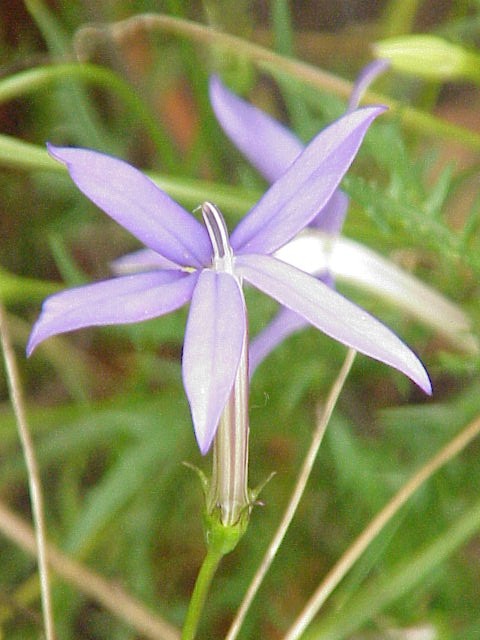
Lithotoma axillaris is a tufted perennial herb forming a rounded mound 8-16 inches (20-40 cm) tall and wide, often grown as an annual in cooler climates. The leaves are narrow and deeply lobed or toothed, 1-3 inches (2.5-8 cm) long, mid-green, on slender stems. Blue to mauve star-shaped flowers about 1-1.5 inches (25-40 mm) across are carried singly on slender stalks from the leaf axils, opening over a long period from spring into autumn. The plant produces a milky sap when stems or leaves are broken; the sap can irritate skin and eyes. It grows naturally on rocky outcrops and in crevices in well-drained sites. In cold-winter areas it is short-lived or treated as an annual, while in mild climates it persists for several seasons.
Native Range
Native to eastern Australia, in inland and coastal parts of Queensland, New South Wales, and Victoria. Grows on rocky outcrops, cliffs, and crevices, and in shallow, well-drained soils in open, sunny sites.Suggested Uses
Planted in rockeries, containers, and the front of borders at 8-12 inch (20-30 cm) spacing, and in hanging baskets where the mounded form spills over the edge. It suits sunny, well-drained positions and is grown as an annual in cold-winter climates. Broken stems release a milky sap that can irritate skin and eyes.How to Identify
Appearance
Size & Dimensions
Height8" - 1'4"
Width/Spread8" - 1'4"
Bloom Information
Flowers over a long season from spring into autumn, mainly September to April in mild climates. Individual flowers last about one to two weeks, and the plant blooms in flushes through the warm months. Flowering slows in cold weather and in deep shade.
Detailed Descriptions
Flower Description
Blue to mauveFoliage Description
Mid-greenGrowing Conditions
Sun Requirements
Requires 5-9 hours of direct sunlight daily
• Full Sun: 6+ hours of direct sunlight
• Partial Shade: 3-6 hours of direct sunlight
• Full Shade: Less than 3 hours of direct sunlight
Care & Maintenance
Care Guide
Grows in full sun to part shade in light, well-drained soils and tolerates dry, rocky sites once established. Water during dry spells to extend flowering, as the plant flowers less in prolonged drought. It grows poorly in wet, poorly drained soils, which can rot the roots. The milky sap can irritate skin and eyes when stems are cut or broken. In cold-winter regions plants are short-lived and are often replaced each year. Trimming after the first flush of flowers encourages further blooming.Pruning
Trim plants back by about one-third after the main flush of flowers to encourage a second flush and keep the mound compact. Remove spent flower stalks through the season to prolong blooming. Cut back frost-damaged growth in spring in cooler areas.Container Growing
Suitable for container growing
Minimum container size: 2 gallons