Lithophragma, Genus, spp., Multiple species,
- Genus
- Multiple species
woodland stars
Overview
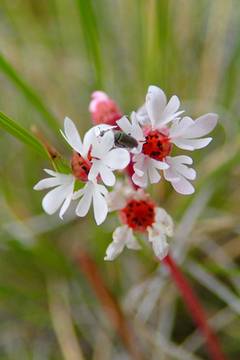
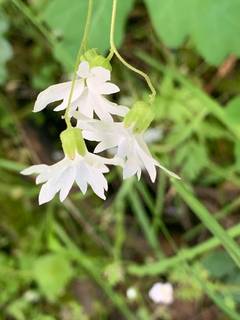
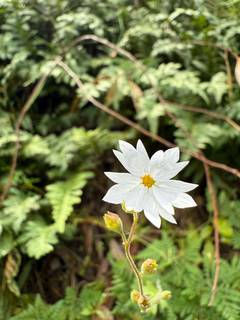
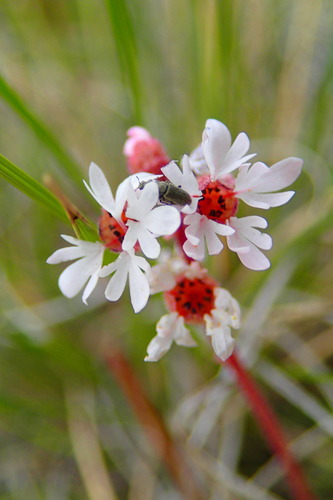
Lithophragma is a genus of about nine species of small perennial herbs in the saxifrage family, native to western North America. Plants grow from slender rhizomes bearing tiny bulblets and reach 4-12 inch (10-30 cm) tall in flower. Basal leaves are rounded and palmately lobed or divided, 0.4-1.6 inch (1-4 cm) across, on long petioles. Flowering stems are slender and nearly leafless, carrying a few star-shaped flowers along the upper stalk. Each flower is 0.3-0.8 inch (8-20 mm) wide with five white to pink petals that are deeply cut into three to five narrow lobes, giving a fringed outline. The fruit is a small capsule releasing numerous seeds. Several species are pollinated by Greya moths, whose larvae also feed in the developing seed capsules. Plants emerge and flower in early spring, then die back to the rootstock by early summer as the soil dries, so they are visible above ground for only a short season. Most species grow in open woodland, grassland, and rocky slopes with seasonal moisture.
Native Range
Lithophragma is native to western North America, from British Columbia south through Washington, Oregon, California, and east into the northern Rocky Mountains. The genus is most diverse in California and the Pacific Northwest.Suggested Uses
Grown in native plant gardens, woodland edges, and rock gardens within its native range. Suited to spring displays that tolerate summer dormancy. Rarely offered outside specialist native nurseries.How to Identify
Appearance
Size & Dimensions
Height4" - 1'
Width/Spread3" - 6"
Bloom Information
Flowering occurs in early to mid spring, generally March through May depending on elevation and latitude. Bloom lasts about three to five weeks at a given site. Plants then set seed and wither as soils dry in early summer.
Detailed Descriptions
Flower Description
White to pinkFoliage Description
GreenGrowing Conditions
Sun Requirements
Requires 3-8 hours of direct sunlight daily
• Full Sun: 6+ hours of direct sunlight
• Partial Shade: 3-6 hours of direct sunlight
• Full Shade: Less than 3 hours of direct sunlight
Care & Maintenance
Care Guide
Grows in part shade to full sun in moist, well-drained soil during the spring growth period. Plants tolerate summer drought by going dormant after seed set, so dry summer soil is normal rather than harmful. Rich woodland or gritty loam holds the rhizomes well. Excess summer irrigation during dormancy can rot the rootstock. Propagation is by seed sown in autumn or by separating bulblets. Plants are slow to bulk up and are uncommon in general cultivation.Pruning
Pruning is not required. Foliage and flower stalks can be left to die back naturally and cleared once dormant. Removing seed capsules before they ripen limits self-sowing.Container Growing
Suitable for container growing
Minimum container size: 1 gallons