Lissanthe, Genus, spp., Multiple species,
- Genus
- Multiple species
native cranberry
Overview
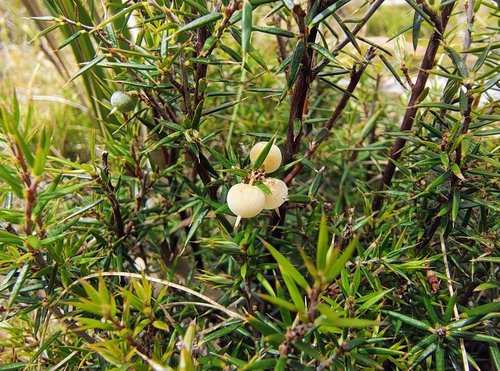
Lissanthe is a genus of about seven species of small evergreen shrubs in the heath family, Ericaceae (subfamily Styphelioideae), endemic to Australia. Plants are wiry, low to medium shrubs 8-40 inches (20-100 cm) tall, with small, stiff, narrow leaves that are often sharply pointed and crowded along the stems. In late winter and spring, short tubular flowers, white to pink and usually under 0.4 inch (10 mm) long, hang in small clusters along the branches and are followed by small, rounded, fleshy fruits. The fruits of some species, such as L. sapida, are edible and give rise to the common name native cranberry. The genus grows in well-drained, sandy or gravelly, low-nutrient soils in heathland, dry forest, and rocky sites, in full sun to light shade. Like many Australian heaths, it is adapted to poor soils and seasonal dryness and is sensitive to high phosphorus and to waterlogging. Plants are slow-growing and can be difficult to propagate and establish.
Native Range
Lissanthe species are endemic to Australia, occurring across southern and eastern regions in heathland, dry sclerophyll forest, woodland, and rocky outcrops, on sandy and gravelly low-nutrient soils.Suggested Uses
Grown in native and water-wise Australian gardens, heath and rockery plantings, and low-nutrient sandy beds, and used in habitat and revegetation plantings. The edible-fruited species are grown as bush-food plants in suitable climates.How to Identify
Appearance
Size & Dimensions
Height8" - 3'4"
Width/Spread1' - 3'4"
Bloom Information
Flowering occurs mainly in late winter and spring, generally August to November in the native Southern Hemisphere range. Small tubular white to pink flowers hang along the branches over several weeks. Rounded fleshy fruits ripen in spring and summer.
Detailed Descriptions
Flower Description
White to pinkFoliage Description
Green to grey-greenGrowing Conditions
Sun Requirements
Requires 6-10 hours of direct sunlight daily
• Full Sun: 6+ hours of direct sunlight
• Partial Shade: 3-6 hours of direct sunlight
• Full Shade: Less than 3 hours of direct sunlight
Care & Maintenance
Care Guide
Lissanthe grows in full sun to light shade in sharply drained, sandy or gravelly, low-nutrient and acidic soils. Like other Australian heaths, it is sensitive to high phosphorus fertilizers and to waterlogged soil, both of which cause decline. Established plants tolerate seasonal dryness and poor soils that limit many garden plants. Good drainage and air movement reduce root and foliage diseases. The genus is frost-tolerant only to a limited degree, suiting mild-temperate to warm climates. Propagation from seed and cuttings is slow and often unreliable.Pruning
Light tip pruning after flowering keeps plants compact and bushy. Only small amounts of growth are removed at a time, as these heaths respond poorly to hard cutting into old wood. Dead or damaged stems are cleared as needed.Pruning Schedule
late spring
Container Growing
Suitable for container growing
Minimum container size: 3 gallons
