Ligularia, Genus, spp., Multiple species,
- Genus
- Multiple species
leopard plant
Overview
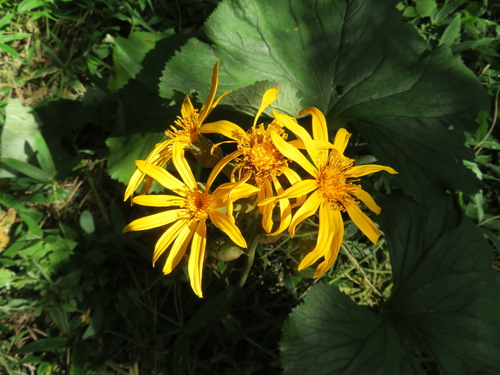
Ligularia is a genus of about 125 to 140 perennial species in the daisy family, Asteraceae, native to moist meadows, streamsides, and woodland margins across central and eastern Asia, with a few species in Europe. Plants form bold clumps of large, long-stalked basal leaves, rounded to kidney- or arrow-shaped, 6-18 inches (15-45 cm) wide, with toothed margins; foliage is green to deep purple-bronze in some species. From mid to late summer, upright stems 2-6 feet (60-180 cm) tall carry yellow to orange daisy flowers, either in tall narrow spikes as in L. stenocephala or in flat-topped clusters as in L. dentata. The genus grows in consistently moist to wet, fertile soil in partial shade and wilts visibly in midday sun or dry ground, recovering as temperatures fall. Slugs and snails feed heavily on the foliage, leaving holes in the large leaves. Plants die back to the ground in winter and re-emerge in spring. Most species are hardy to USDA zone 4, performing where soil never dries out through the growing season.
Native Range
Ligularia species are native to central and eastern Asia, including China, Japan, Korea, and the Russian Far East, with a small number in Europe, where they grow along streams, in wet meadows, and at moist woodland edges.Suggested Uses
Used in bog gardens, pond and stream margins, rain gardens, and shaded borders with reliable moisture. The large-leaved species serve as foliage features in damp woodland plantings, and spike-flowered species add vertical form among hostas and ferns.How to Identify
Appearance
Size & Dimensions
Height2' - 6'
Width/Spread2' - 4'
Bloom Information
Flowering occurs from mid to late summer, generally July to September. Yellow to orange daisy flowers open over several weeks, rising well above the foliage on dark stems. Spike-flowered species open from the bottom upward, while cluster-flowered species bloom in flat heads.
Detailed Descriptions
Flower Description
Yellow to orangeFoliage Description
Green to purple-bronzeGrowing Conditions
Sun Requirements
Requires 2-6 hours of direct sunlight daily
• Full Sun: 6+ hours of direct sunlight
• Partial Shade: 3-6 hours of direct sunlight
• Full Shade: Less than 3 hours of direct sunlight
Care & Maintenance
Care Guide
Ligularia grows in partial shade in deep, fertile soil kept consistently moist to wet. Plants wilt in direct afternoon sun and dry soil, so positions near ponds, streams, and in low, damp ground hold them upright through the day. Even moisture and a spring mulch reduce midday wilting. Slugs and snails are the main pest, feeding on the broad leaves. Most species are hardy to USDA zone 4 and tolerate winter cold once dormant. Growth is slow to establish but forms large clumps over a few seasons.Pruning
Spent flower stems are cut back after bloom to keep clumps tidy, and tattered leaves can be removed through the season. Foliage is left to die back naturally in autumn, then cleared once frost has blackened it. Clumps can be divided in spring to maintain vigor.Pruning Schedule
fall
Container Growing
Suitable for container growing
Minimum container size: 5 gallons